



Photograph courtesy The charley and Edie Harper Foundation
The late Charley Harper is one of Cincinnati’s most popular visual artists ever, due to his colorful, streamlined, and inventive nature art. So it isn’t surprising that the first museum retrospective of his career arrives at Cincinnati Art Museum this fall. He’s overdue.
What’s unusual is that a concurrent museum retrospective of his artist wife, the late Edie Harper—also a first—is happening at the Taft Museum of Art. And that’s a sign of her ongoing emergence as a major artist in her own right, supported by advocates in the local art world who see her talent and accomplishments on equal footing with Charley’s.
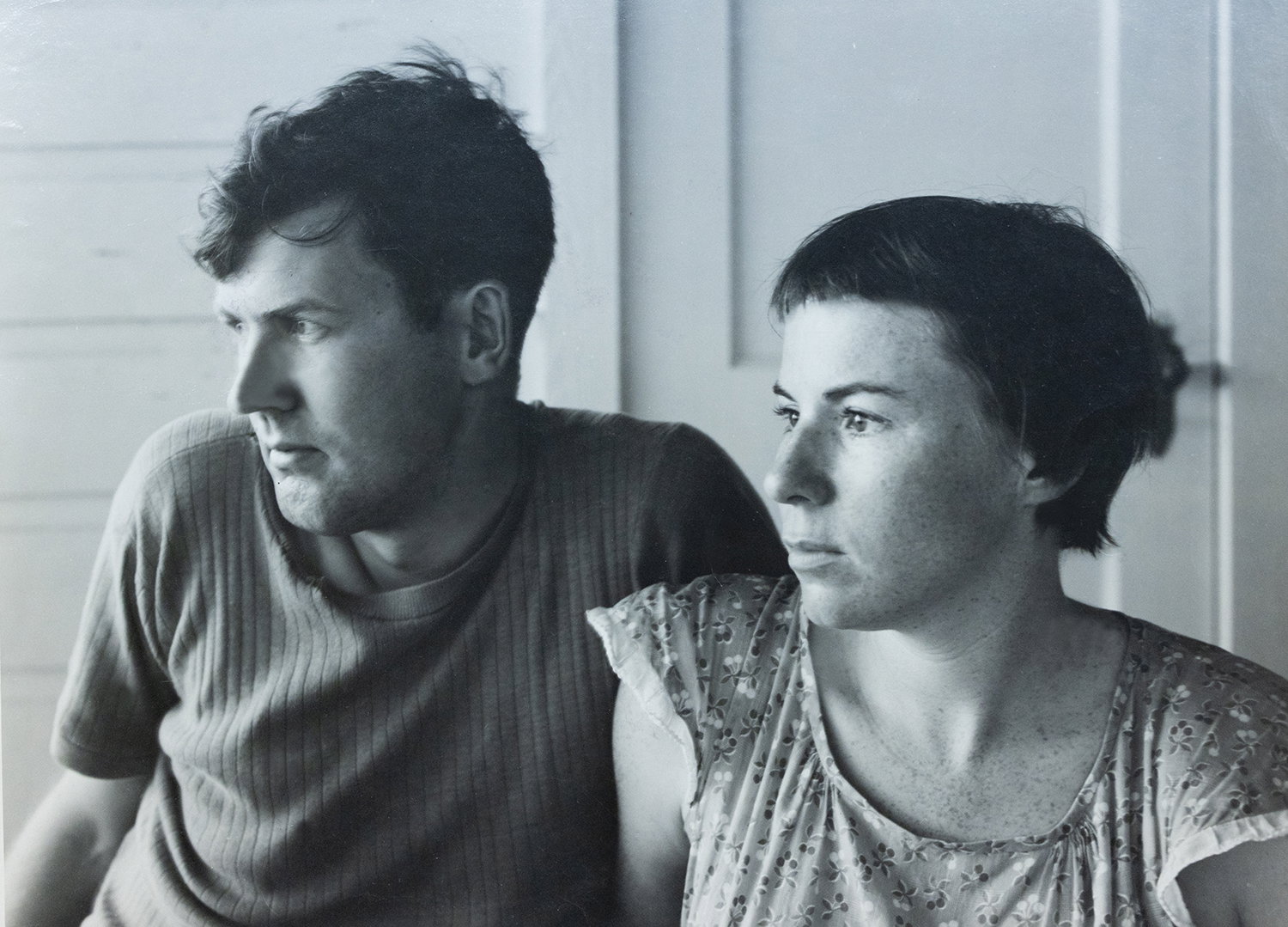
The two met on their first day as students at the Art Academy of Cincinnati in 1940; they married in 1947. Charley died in 2007 at age 84 and Edie in 2010 at 87. Neither was a Cincinnati native: Charley was from Frenchton, West Virginia, and Edie (McKee was her family name) from Kansas City, Kansas.
The Art of Charley Harper: Creatures Wild and Tame opens October 16 at Cincinnati Art Museum and runs through March 7, 2027, featuring some 150 objects. Edie McKee Harper: Modernist at Play opens October 17 at the Taft Museum of Art and runs through January 24, 2027, offering about 120 artworks. Both shows will have print catalogues.
While each exhibition is a product and vision of its curators, both benefit from the support and assistance of Brett Harper, Charley’s and Edie’s only child as well as president of the nonprofit Edie and Charley Harper Foundation. With his extensive collection of their artworks and archives, as well as connections to help get art for the shows, he played a crucial role.
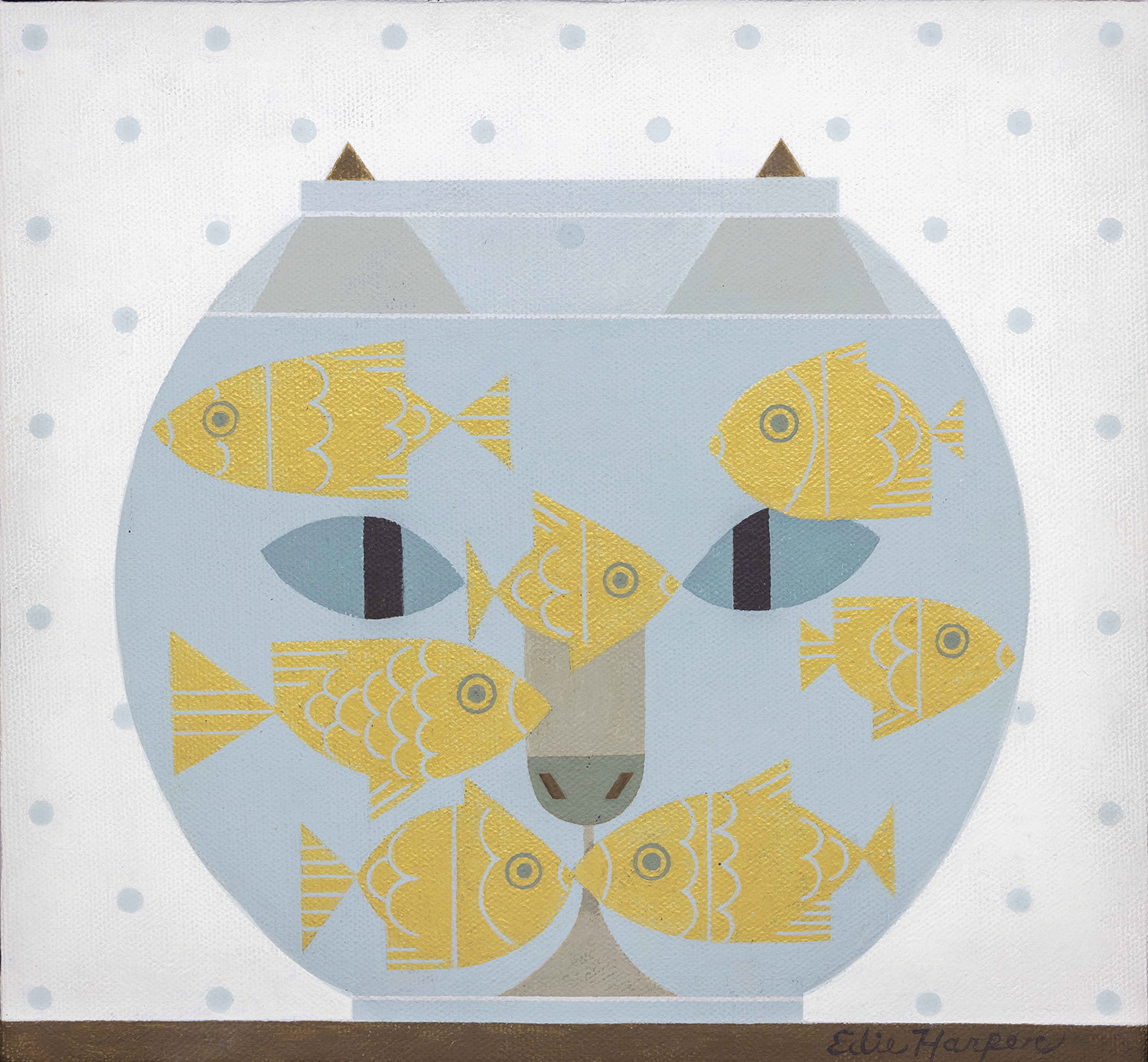
Image courtesy © Edie Harper
“For me personally, it’s about the legacy,” Brett says in an interview. “I think Charley and Edie were toe to toe in their ability and their visions. And I strongly believe in them as wonderful people and wonderful artists.”
Brett is dedicated to seeing his mother’s work—which can embrace mysteriously abstract images and feature vivid, dramatic colors—get evermore recognition. He also has ideas about why her art, at least until recently, lagged in recognition compared to Charley’s. “It was her subject matter back then, like childhood memories, cats, and Old and New Testament stories,” he says. “People were more comfortable putting nature art on their walls. That was more popular compared to the subjects she was doing.”
And Brett has a personal reason for championing Edie’s work. He’s paying her back. “An important motivation for me is to repay the great debt that I owe her for sacrificing a portion of the significant work she could have created if not for raising me.”
Photograph courtesy Miles Wolf
Charley Harper has long been popular in Cincinnati for his colorful and often stylized depictions of nature and those that inhabited it, but his work soared nationally when the noted designer Todd Oldham authored a coffee-table-sized book in 2007 devoted to his art. Books, calendars, posters, children’s books, and other products related to his artistry started being sold everywhere, including in museum gift shops.
Lately, both Charley’s and Edie’s work has benefitted from their early interest in abstraction and mid-century modernism. The latter is a worldwide art, design, and architectural movement that has many progressive elements, and the Taft show title is a nod to Edie’s modernist interests.
Julie Aronson, Cincinnati Art Museum’s curator of American paintings, sculpture and drawings, thought this would be an appropriate time to stage a retrospective for Charley. She hopes it will be popular, given all the posthumous attention he gets, though she knows she has to provide gravitas and museum-quality depth to the retrospective.
Image courtesy © Charley Harper
“Because of the popularity of the Harper merchandise, I committed to a project that encourages viewers and fellow curators to take him seriously as an artist,” she says. “Although one might think from the sleek simplicity of his works that they were easily made, there is great sophistication, thought, and craftsmanship behind them. He made numerous studies and rethought and reworked his compositions extensively to arrive at those we know and love.”
The Art of Charley Harper will include two works by Edie alongside his maquettes, drawings, screen prints, acrylic paintings, watercolors, and several cases with tools, photographs, books, magazines, and other ephemera. A show standout will be 10 large acrylic paintings on canvas that were commissioned by the National Park Service, probably in 1976. One at a time, the Park Service adapted each of Charley’s pieces into posters for sale to the public in a process lasting from 1976 to 1990.
The original paintings weren’t meant to be displayed, but they did get a show in Washington, D.C., in 1997. They’ve otherwise been in storage until now. “That’s kind of amazing considering how wonderful they are,” says Aronson. “And Brett thinks these 10 paintings will be the centerpiece of his father’s show.”
Photograph courtesy Miles Wolf
At the Taft Museum, President and CEO Rebekah Beaulieu was at first unaware of Edie Harper’s work when she came to town in 2022, though she’d heard of Charley. But Beaulieu is now a huge fan of both, acknowledging that she maybe favors Edie.
“I absolutely adore Charley’s work, but some of the things Edie does—and this is why we call her show Modernist at Play—are so playful and so interested in having fun with her art,” says Beaulieu. “She challenges you more, but it’s not done from a place of arrogance. She pushes herself and wants you along for the ride.”
The exhibition might challenge people to think about how the art world isn’t immune from other segments of American society when it comes to not always considering women equal to men in the same line of work. “Obviously, a major point here is seeing incredible female artists overshadowed by their partners,” says Beaulieu, who mentions as an example how Lee Krasner at first was overlooked as an artist because her husband was Jackson Pollock. “So when we looked at the opportunity for an Edie show that allowed her to have room and space to show all of the different varieties of her work, much of which hadn’t been seen before, this feels like we’re really able to do her justice.”
For Taft Museum’s Tamera Muente, team leader of the four curators charged with assembling the Edie Harper show, the great discovery was learning about her photography. (Edie had enrolled in the Art Academy of Cincinnati’s first photography class, she says.) “While still a student, she began doing portraiture assignments and quickly started trying her hand at abstract photography,” says Muente. “In the 1940s and ’50s, there were photographers who were experimenting with abstraction from the observed world, so she was on the forefront of that.”
There are compelling photographs in the show, such as a late 1950s print “Black Hole,” in which a large black circle—like a hole in the overall image—floats against what could be a cold, concrete room that belongs in The Brutalist.
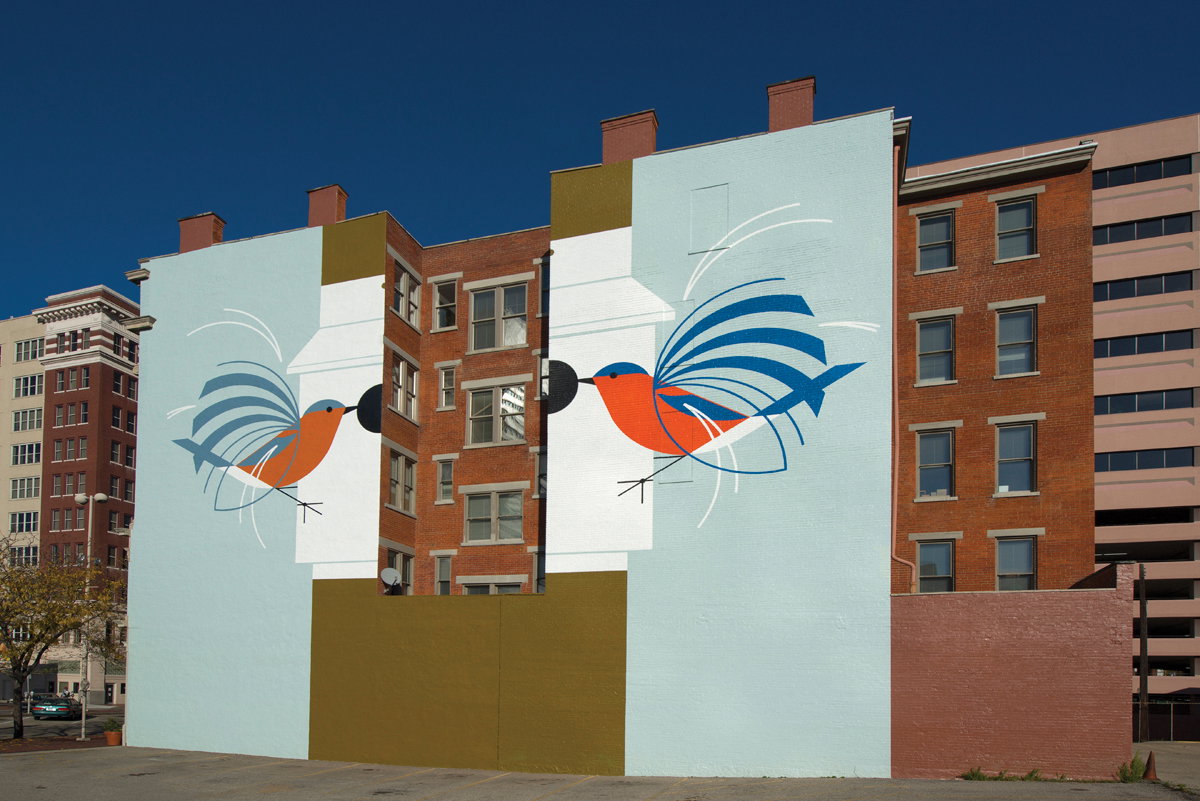
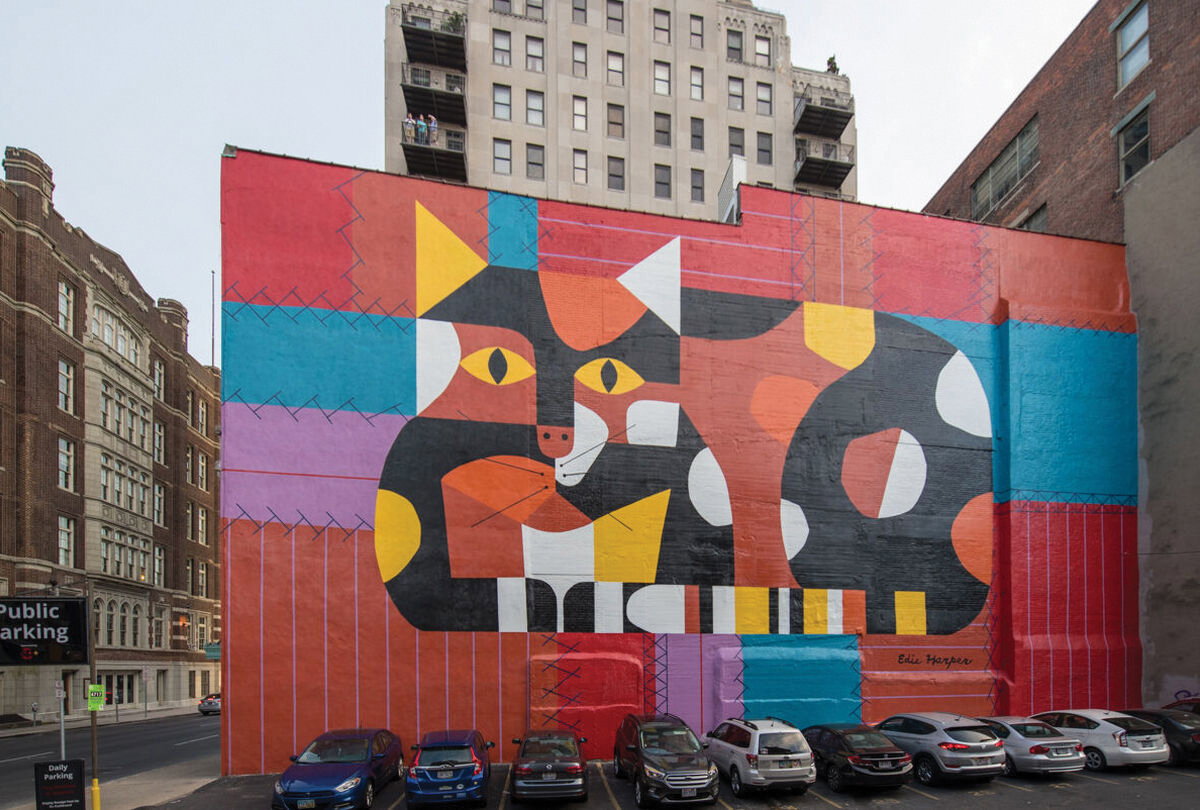
There are also memorable paintings on display like “Crazy Cat on Crazy Quilt,” an acrylic from the late 1990s. This painting is an experimental-minded, colorful depiction, somewhat psychedelic in its overall effect, yet it’s also warm, sweet, and inviting, just like a cat. It was adapted as an public mural downtown by ArtWorks (now 1001 Colors) in 2017. ArtWorks also erected Charley’s painting “Homecoming (Bluebirds)” as a downtown mural in 2012.
In the end, Cincinnati Art Museum Director Cameron Kitchin says he doesn’t view these two exhibitions as truly separate from one another. Just as the lives of their subjects overlap, so do the exhibits. “They were core figures in the life of Cincinnati during their lifetime,” he says. “So for us, as an art museum, this is a tandem—two individuals who were wonderful artmakers and educators and influential figures in the Cincinnati arts community. So Cincinnati Art Museum and the Taft Museum of Art have joined forces to break new ground here in understanding them.”