



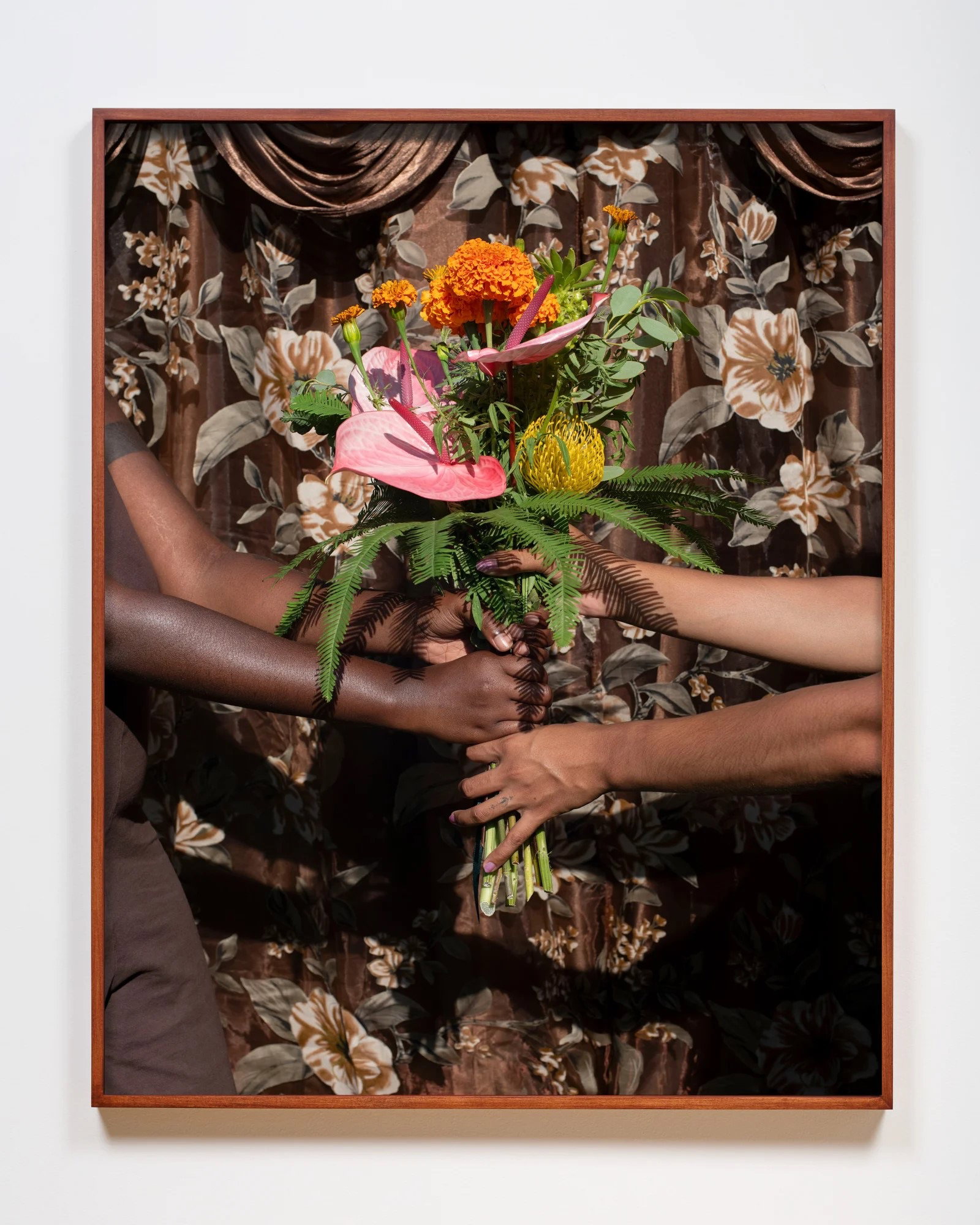
As part of the 2026 FotoFocus Biennial, the Contemporary Arts Center hosts the second-ever presentation of artist Widline Cadet’s first solo museum exhibition in the United States. Exploring Black diasporic life through Cadet’s reflection on her experiences immigrating from Haiti to the U.S., Widline Cadet: Seremoni Disparisyon (Ritual [Dis]Appearance) includes mainly photography, video, and vinyl murals, with some photo-sculpture hybrids, a few ceramic pieces, and multimedia installations.
Cadet is a visual artist born in Pétion-Ville, Ayiti (Haiti), and is currently based in Los Angeles. Her photography has been featured in various publications including Aperture, Foam Magazine, The New Yorker, TIME, The New York Times Magazine, and Financial Times. She earned a bachelor’s degree in studio art from the City College of New York and an MFA from Syracuse University. She is also a decorated artist, amassing numerous awards, fellowships, residencies—and now, her first solo museum exhibition, allowing her the opportunity to better tell her story through the design of the art center’s space.
“Even if you’re not personally part of a diaspora, there’s a lot to connect with in terms of how we engage memory and the unreliability of memory,” says CAC curator Jessica Orzulak. “How we connect to our family through things like photography.”
One of the primary motives for Cadet in creating her work is her family’s absence of a family photo archive. Seremoni Disparisyon is a reflection of Cadet’s efforts to create an archive that will help keep memories alive for future generations, as well as how to navigate the grief of losing clear, sharp memories over time. According to Orzulak, a central part of the storytelling is the question, “If you don’t have a family archive of photographs, how do you recreate something that can build that [archive], both to speak to the past, but also thinking about future generations and what will they have?”
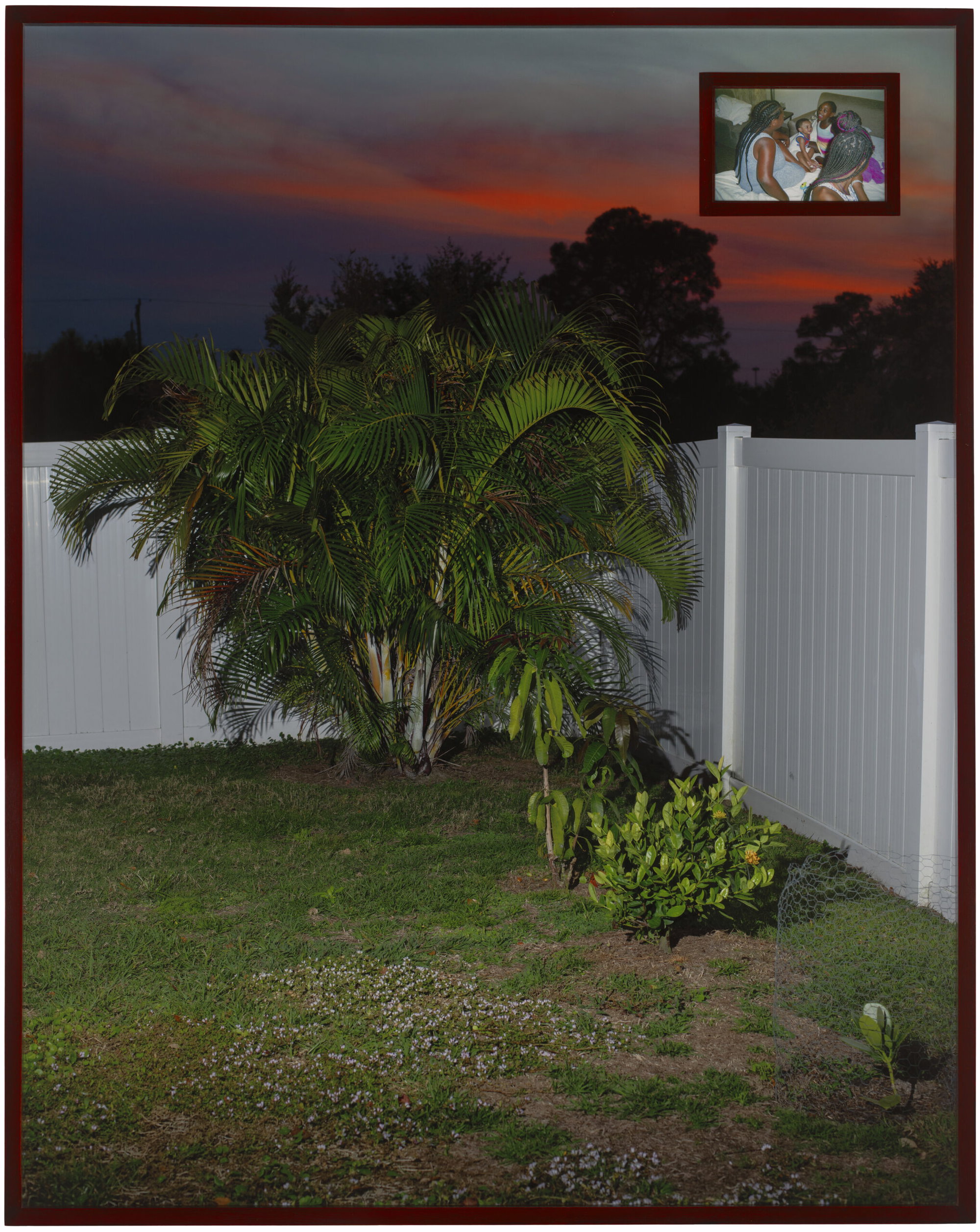
Cadet’s piece “I Put All My Hopes On You” exemplifies these themes. The image is of her sister’s backyard in the U.S., and in the top right corner, viewers can watch a small inset video, recorded in Haiti, before her family moved to the U.S. The backyard is devoid of people, creating a sense of longing. There’s ideas about how memories of a place fade with time, and how you bring those memories with you when you leave the place you once called home. Orzulak explains how the piece contributes to the theme of diaspora: “There’s this sense ‘here and there,’ and how do you bring that ‘there’ [Haiti] to ‘here?’ [the U.S.]”
Similarly, in some of Cadet’s other works, she pulls visual inspiration from her family themselves, such as patterns that remind her of her mother’s home in Haiti. One such video records Cadet and her mother in conversation with one another, but her mother speak only in Haitian Creole. “She didn’t want that translated because she wanted there to be this kind of present for people who spoke the language, that it was just for them,” says Orzulak.
This decision was an effort to explicitly speak to the idea of ‘the right to opacity’—the idea that there’s a right to cultural self-determination, a right to not be wholly visible to anyone at any time. When a community or culture wants to keep parts of it to itself, it has the right not to have its culture expressed in a consumable way for those outside.
Cadet’s work has a very narrative quality, but it’s not linear. In the creation of the CAC exhibit, she worked with Orzulak to design the space itself—another part of telling the story. “This space lets you play with the possibilities of how someone might move through the space. It really lets you play with scale and installations in ways that make the space feel very different,” says Orzulak.
Because of the exhibition’s non-linear narrative, there’s not one way to move through it, because the narrative doesn’t require you to follow a specific journey. “You can move things around and create different kinds of narratives with the work,” she adds. “It’s not a story that’s told from A to Z with a climax in the center. It moves very poetic.”