


Photograph by Mike James
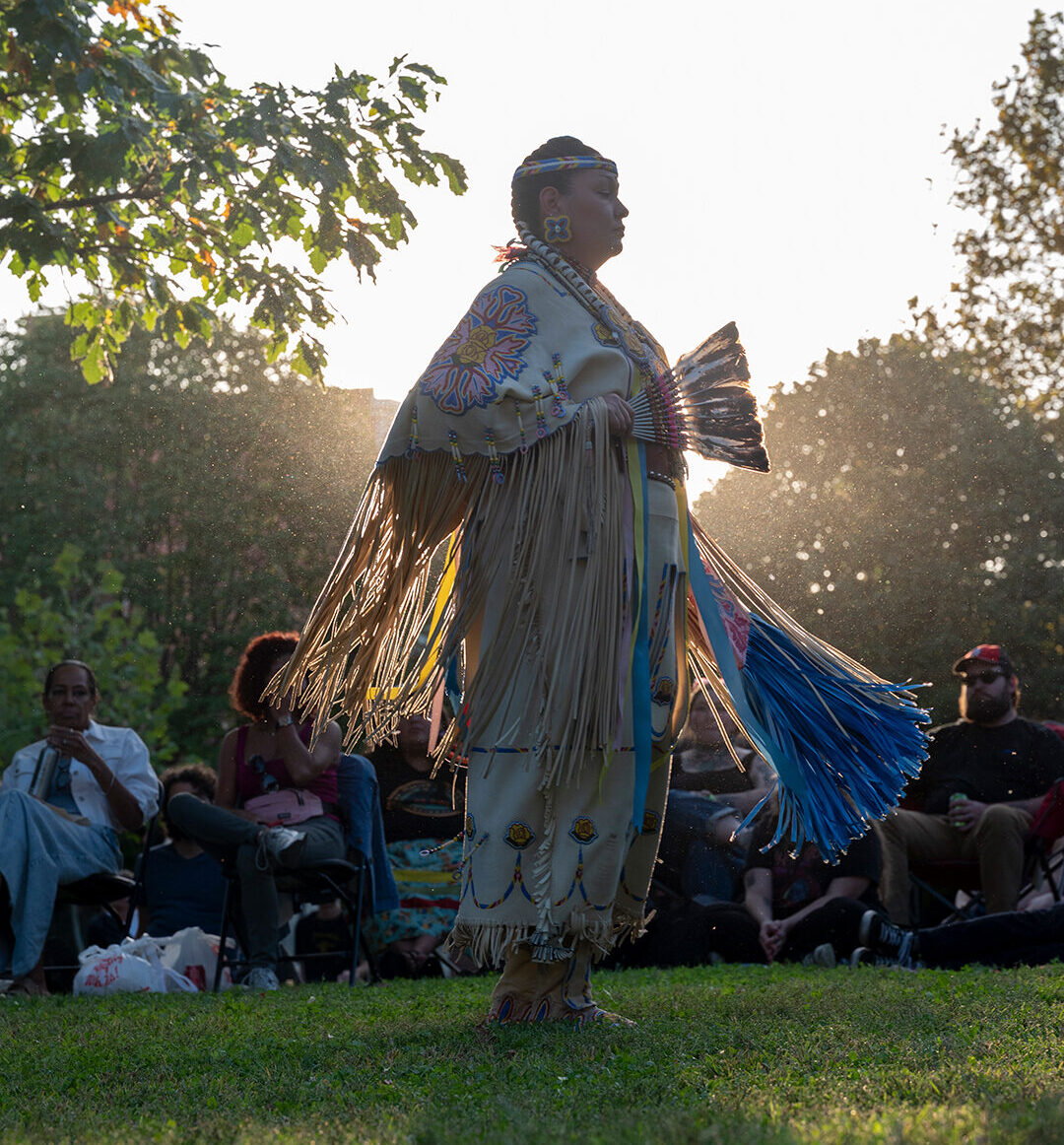
The last Tribal Nation of Ohi-yo was removed from the state on July 20, 1843. Nevertheless, the city’s indigenous population is alive and thriving. “We often get placed in historical context,” says Briana Mazzolini-Blanchard. “Ohio has the most Native school mascots of any state in the entire nation.” Mazzolini-Blanchard, the executive director of Urban Native Collective, adds, “We are not a people of the past. We are a people of the present, and we will be people of the future. We’re not defined by the historical trauma through which most folks know us.”
Multiple Indigenous Nations called the region home, including the Shawnee, Delaware, Potawatomi, Miami, Wyandot, Seneca, Chippewa, Ottawa, and Wapakoneta. While those Tribal Nations are no longer located in the city or state, Urban Native Collective still works with them to amplify their work.
Since the removal of those original Tribal Nations, the region’s Indigenous population of around 100,000 has rebuilt itself in a unique way. “The population of our region is intertribal and a mixture of many different Nations and communities that have found themselves here,” she says. “All of us are living away from our home. We’re looking and finding and grounding ourselves in community with other urban native people outside their homes.”
Photograph by Mike James
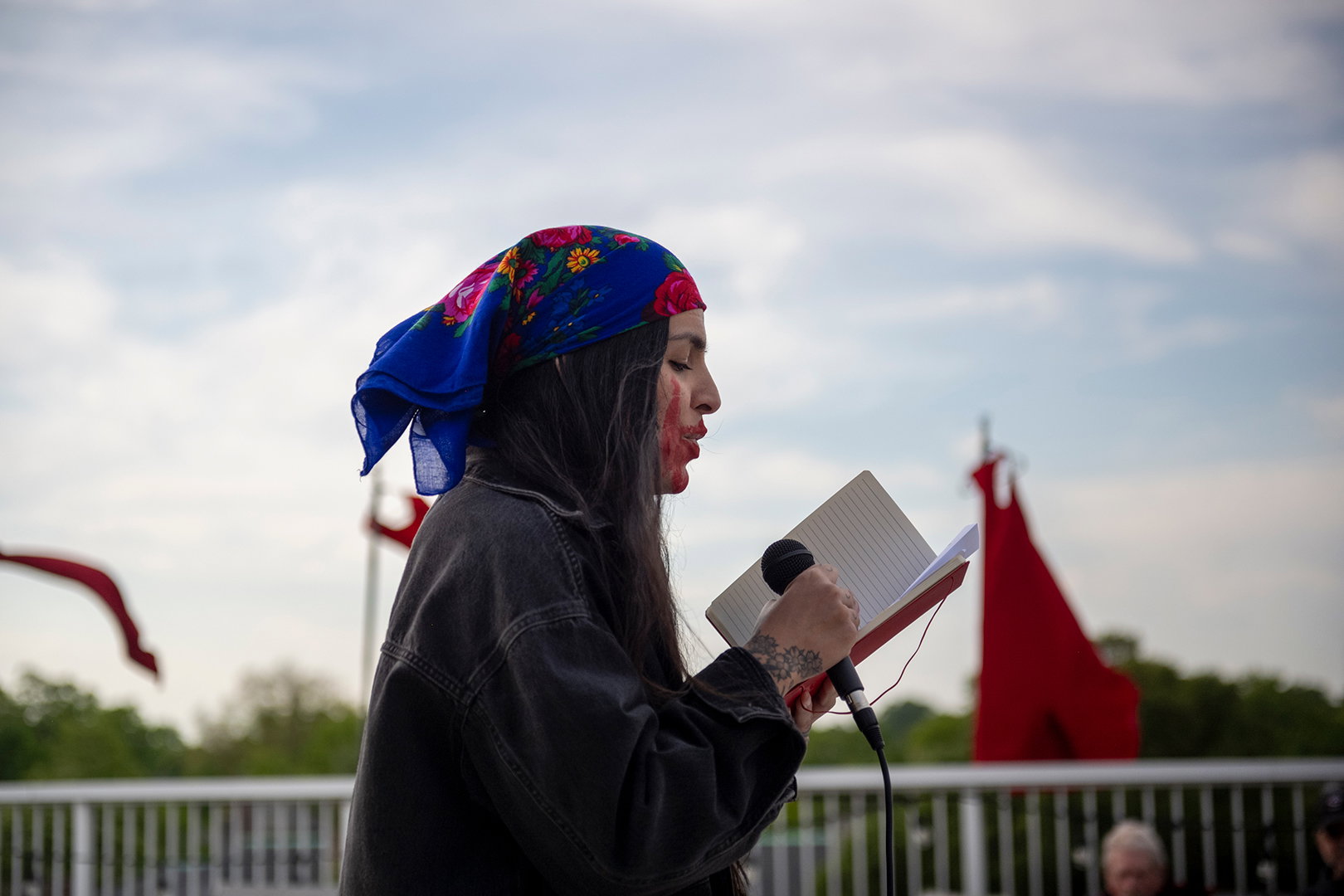
This blend of peoples from across Turtle Island (the Indigenous term for North and Central America) makes Urban Native Collective a melting pot of traditions, languages, and celebrations that all get the chance to be observed and showcased. “We’re not necessarily just doing ceremony in one way,” says Mazzolini-Blanchard. “Everyone brings their own uniqueness of their own culture and their own people to events. It’s really important that we’re creating space for everyone to feel like they can bring a part of themselves to our community in Cincinnati.”
UNC’s Native Sovereignty Center in Northside functions not only as an event space and advocacy hub, but also as an educational resource. The Indigenous Pages Lending Library is full of books by Native authors. “We’re a community that’s thriving and we’ll carry on for future generations with our values intact, our traditions intact, with our languages intact.”
You can join UNC from Oct. 9-12 for the group’s annual Indigenous Peoples’ Day Convergence. Events include an exhibition opening party at the CAC on Friday, the Speaker & Film Series at the Aronoff and the Indigenous Peoples’ Day Show at Heart of Northside on Saturday, and the Indigenous Peoples’ Day Feast at Hoffner Park on Monday. Attendance is free but registration is encouraged.