



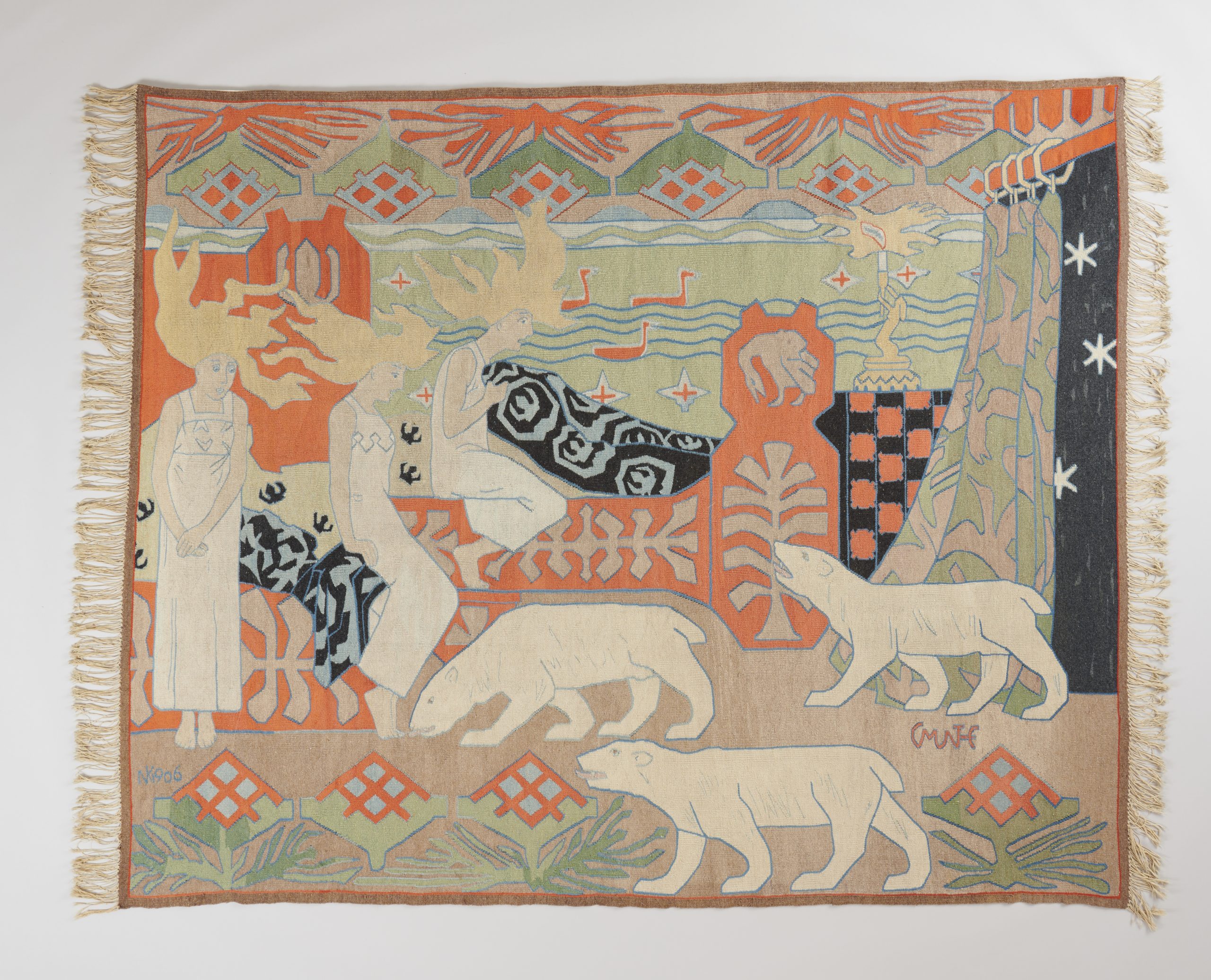
In the upper wings of the Taft Museum of Art lies a living collection of art, telling stories of belonging and identity in Scandinavian nations thousands of miles away. Rather than focus on these nations’ epic tales and feats throughout history, the stories behind each work take a more inward focus, offering a glimpse into what Scandinavians themselves called home.

The Scandinavian Home: Landscape and Lore was developed and organized by curators at The Frick Pittsburgh, a museum of history and art in the Steel City, and will show at the Taft through September 20. This collection demonstrates representations of home across Denmark, Finland, Norway, and Sweden, following movements throughout the late 19th and early 20th century when these Scandinavian nations were cultivating distinct cultures and identities.
Pennsylvania-based collectors David and Susan Werner lent around 75 pieces of media from their private collection to the exhibition, including paintings, furniture, ceramics, textiles, metalwork, and works on paper. “This period, 1880 to 1920, was unique in Scandinavia, in that two countries were getting independence—Norway and Finland, and other countries were identifying themselves as unique and different than the rest of the art world … it had relationships to the rest of Europe and European art, but it had its own inherent beauty,” says David Werner.

The exhibition begins with rural decorative, yet functional household items lining the wall. During this period, Nordic countries were undergoing a period of industrialization and political change, and household wares, decorative furniture, textiles, and tools—including “distaffs,” wooden tools used to hold unspun wool and flax while hand-spinning fibers—take viewers into the homes of Nordic farm families of that time. Odelsrett—Nordic property laws—gave people, often peasants, ownership and inheritance of their land, and the decorative, handcrafted handiwares on display represented national inheritance and acted as symbols of freedom and cultural identity within these communities. The rejection of mass-produced home goods as a product of industrialization reflected a focus on craftsmanship.

The exhibition also features a slew of works inspired by folk tales and mythology from Scandinavia, such as Tureen with the legend of Ragnar Lodbrok, a sterling silver dish crafted in 1906. The designs etched on the tureen follow the epic tale of Viking king Ragnar Lodbrok, who was captured in the kingdom of Northumbria and thrown in a snake pit to die. “There’s a lot of Icelandic sagas and Nordic poems in general that talk about the history of these countries,” says installing curator Ann Glasscock, who wrote a blog about the tureen and the rich historical text artists drew from. “And so, there was written text, [but] whether or not some of its fact or fiction, it’s hard to tell sometimes.”
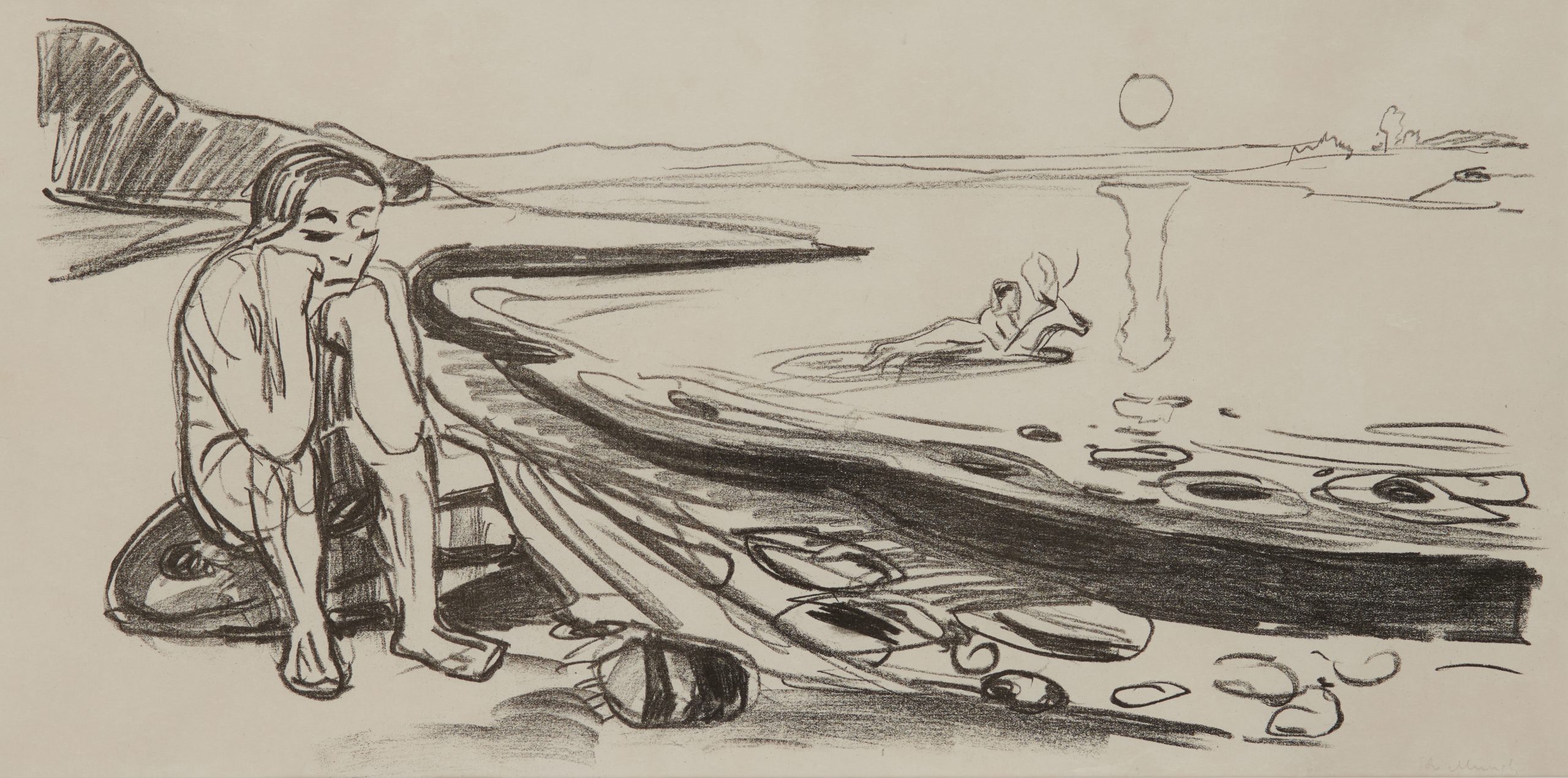
The art inspired by mythology was also a reaction to industrialization. The scientific developments occurring in Scandinavia proved many real things were intangible, such as sound waves and electrical currents. Many artists, as part of what was coined the “Symbolist Movement,” attempted to capture imaginary experiences and real, yet intangible feelings in their works, using European artistic influence to tell fictional tales in Scandinavian culture. Edvard Munch’s Omega’s Flight captures the story of “Alpha and Omega” by using lithography, an art technique utilized in magazine and newspaper illustrations.
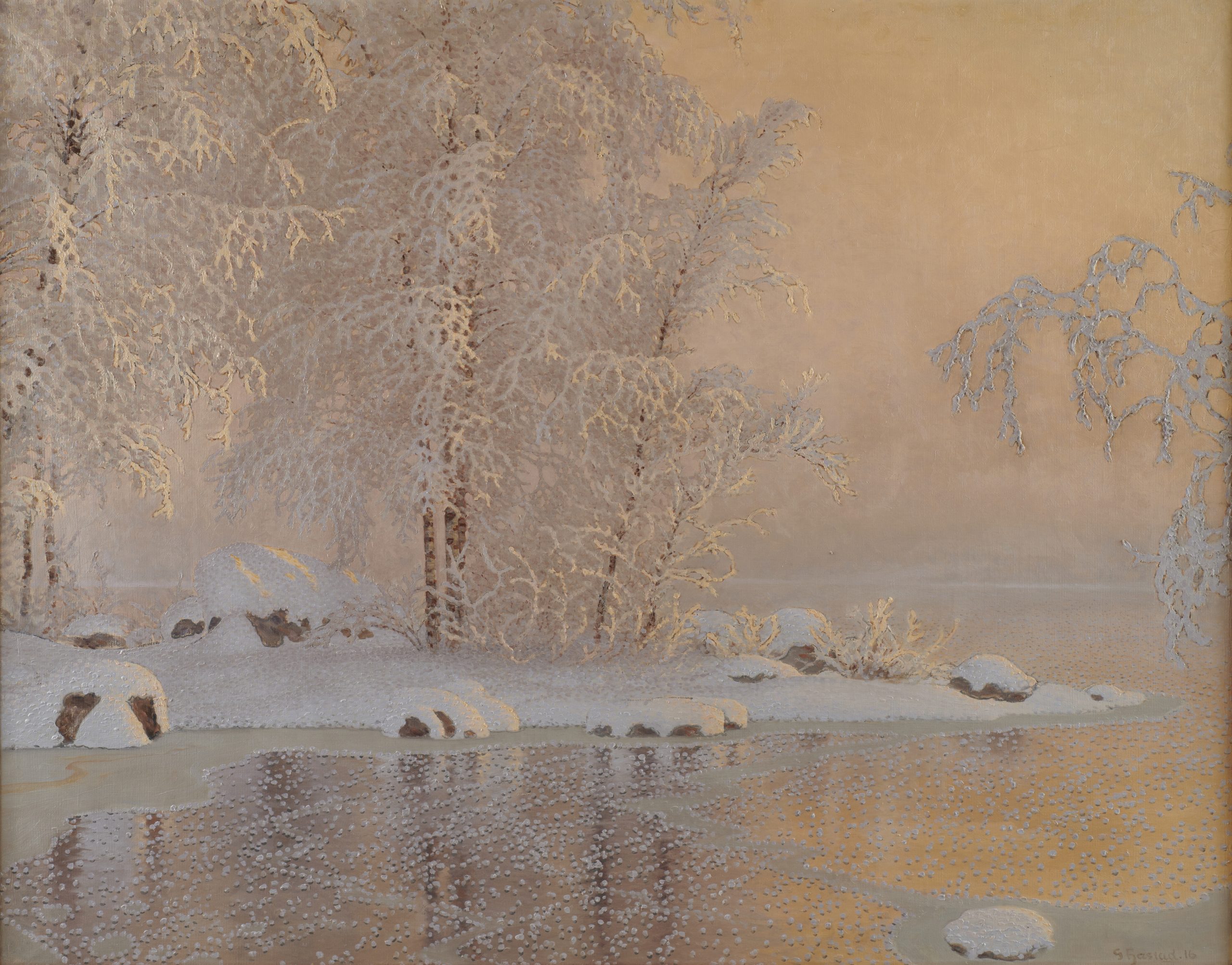
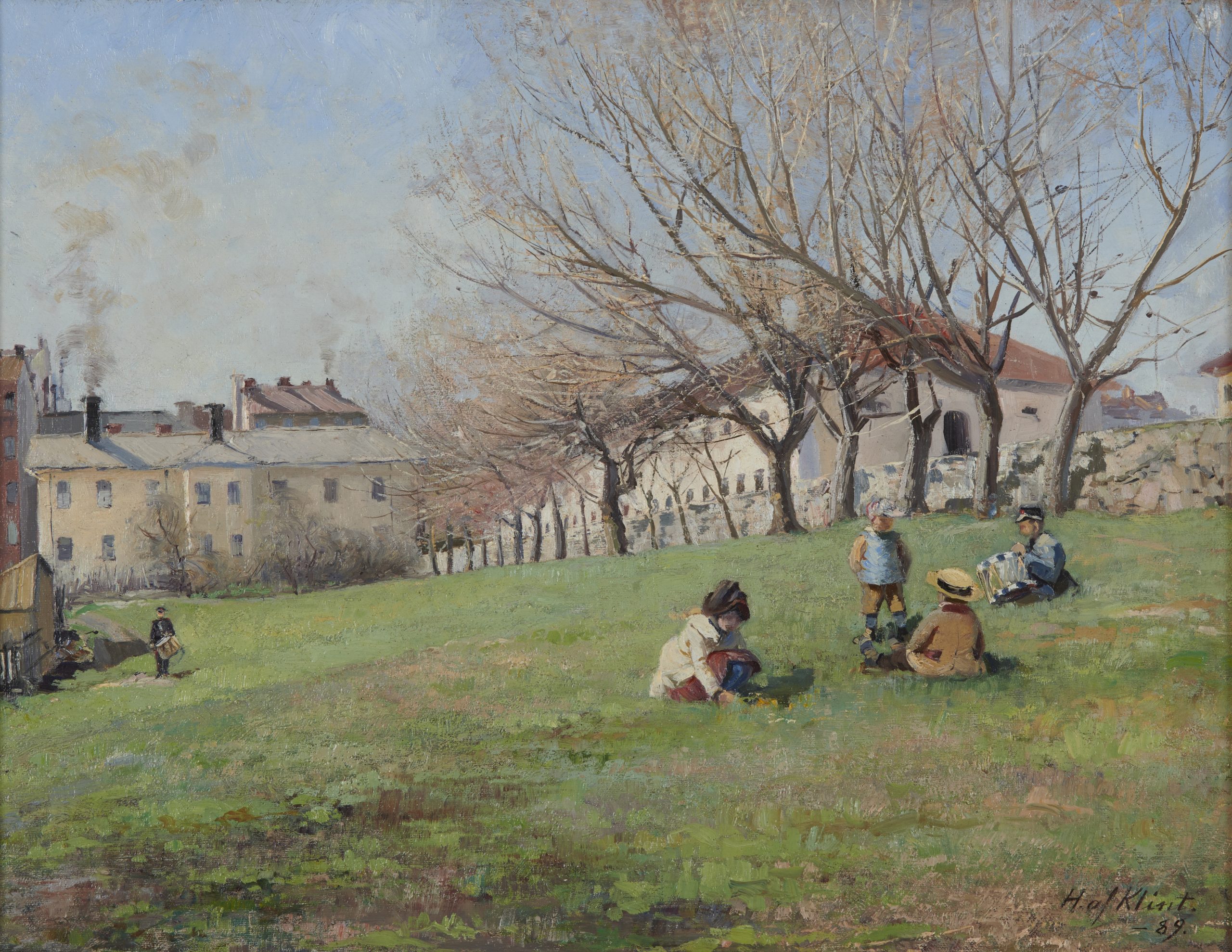
The Rackstad Colony focused on landscape paintings that appreciated Swedish nature, and Gustaf Fjaestad’s Winter Landscape with Hoar Frost is the Werners’ favorite piece from their collection. Other featured works captured portraits of everyday life, such as Hilma af Klint’s Stockholm Park with Playing Children, 1889. Jens Ferdinand Willumsen’s Study for Sun and Youth, 1909, painted children running on a beach, representing the Vitalist Movement in the early 20th century, where youth and revitalization were symbols of a national rebirth throughout Nordic countries.
The exhibition also features a collection of bowls, vases, and dishware crafted by local artisans, and furniture from renowned artist Gerhard Munthe. Its variety of designs tells a cumulative story of the region’s distinctive culture and artistic movements that stemmed from a sweeping National Romanticism.

An experience of the quiet beauty that lived within the culture and lives of the Nordic people, The Scandinavian Home is a visual image of the glimpses of home that gave these nations a distinct identity.
The Scandinavian Home: Landscape and Lore will be on display through September 20 at the Taft Museum of Art’s Fifth Third Gallery. Admission is $15 for adults, free on Sundays and Mondays.