


Photograph by Andrew Doench
In 2015, as Keith Klenowski snapped photos of his daughter, the 4-year-old asked what turned out to be a loaded question: “Dad, what are you doing?”
Klenowski looked down at the iPhone in his hand. “What am I doing?” he thought to himself, as memories of photo albums packed full of his childhood in the 1980s came flooding back to him.
“I take all of these photos, and they just sit on my phone,” he says. “I don’t even print them off. It’s such a different world from when I grew up.”
The era of physical photos is gone, and Klenowski, a digital photographer with more than 20 years of experience, knows it. His daughter’s question made him think back to what he calls a “life-changing” Intro to Photography course he took at Xavier University.
As a psychology major in his senior year in 2001, Klenowski didn’t anticipate that he’d swing in a completely new direction. “I was lucky to get into this hot elective class that kids loved to take,” he says. “I didn’t get in at first, but when the class was supposed to start, I ended up showing the professor where the classroom was. He allowed me to be in the class, and it changed the course of my life.”
After graduating with his psychology degree, Klenowski attended community college to get an associate’s degree in photography and began his career. He mostly focused on film photography and spent time in the darkroom, as digital photography wasn’t popular yet. “I loved seeing a picture come up in the chemicals on a piece of paper,” he says. “It’s magical.”
Reliving his early photography experiences thanks to his daughter’s prompt, Klenowski recalled a specific form of photography he learned about in those classes: tintypes. Invented in the 1850s, tintype photography captured much of American history during the Civil War and the decades that followed.
Photograph by Andrew Doench
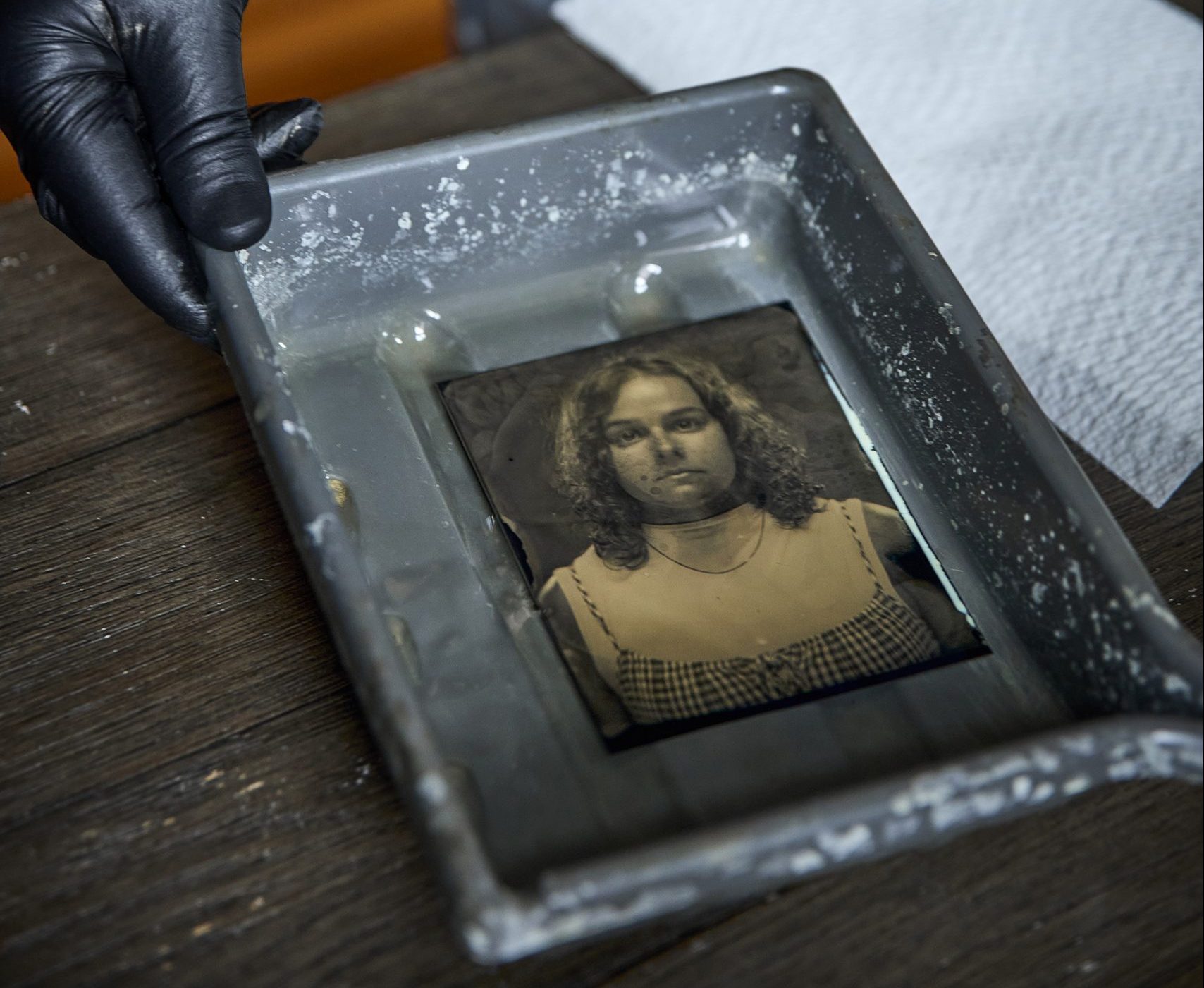
Because the image is developed on a tin plate, photos captured with this method can be preserved for much longer than photos on paper. Their permanent nature, as well as the unusual physical process of developing them, piqued Klenowski’s curiosity in 2015.
He sought out others who were interested in tintype photography. From Pittsburgh to the Carolinas, he began e-mailing people who were already involved in the art to ask how he should even start. “The biggest hurdle in my mind was knowing that I was going to put a lot of money into it and not see a return right away,” says Klenowski.
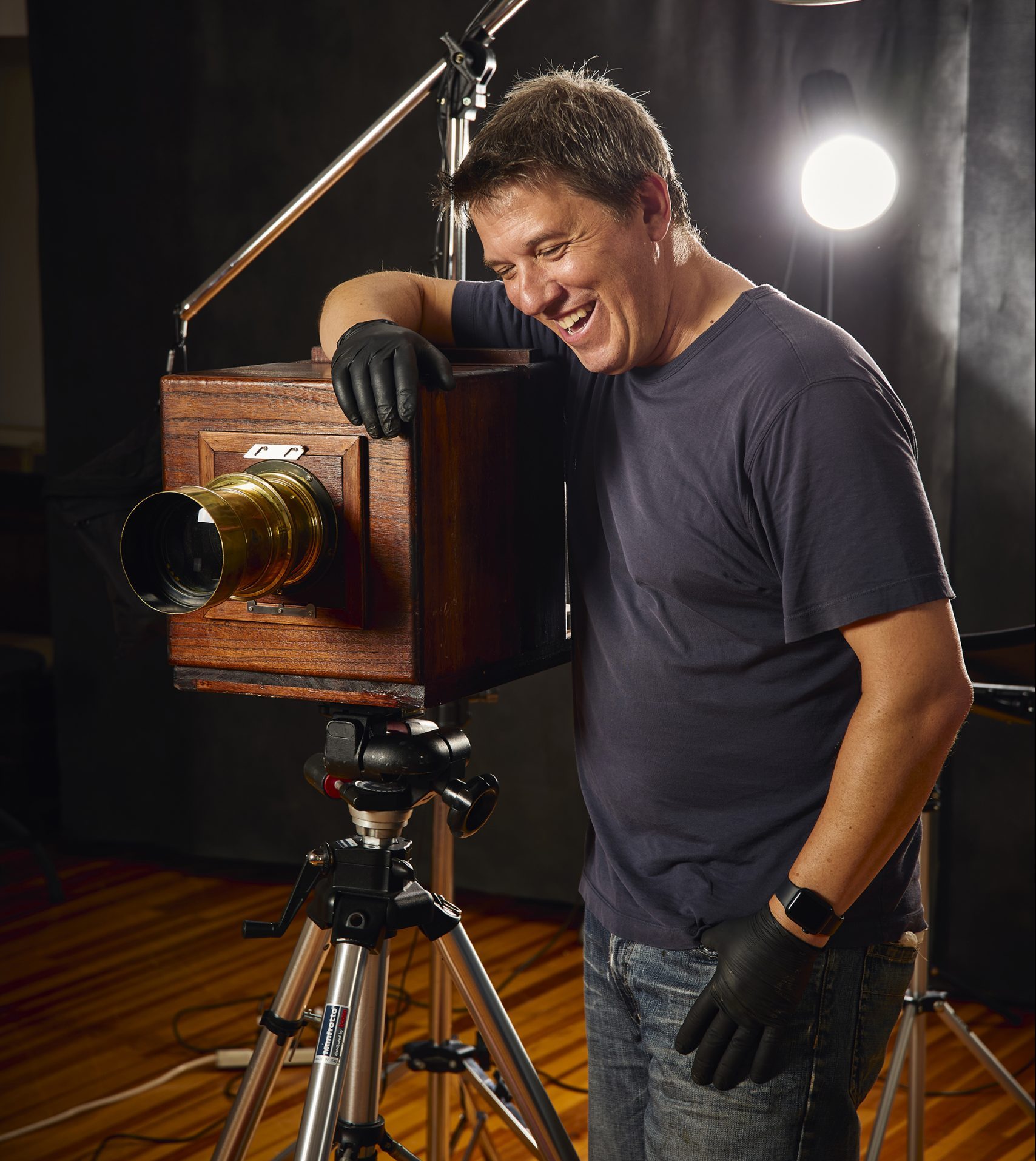
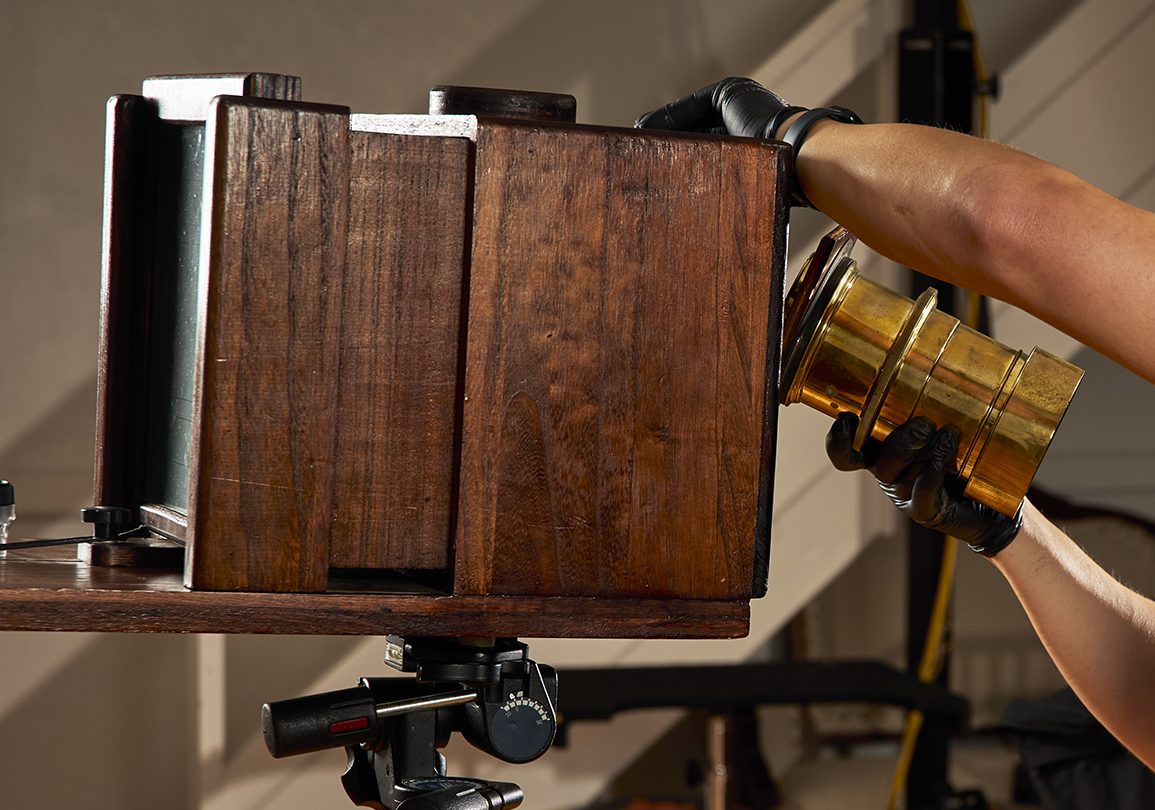
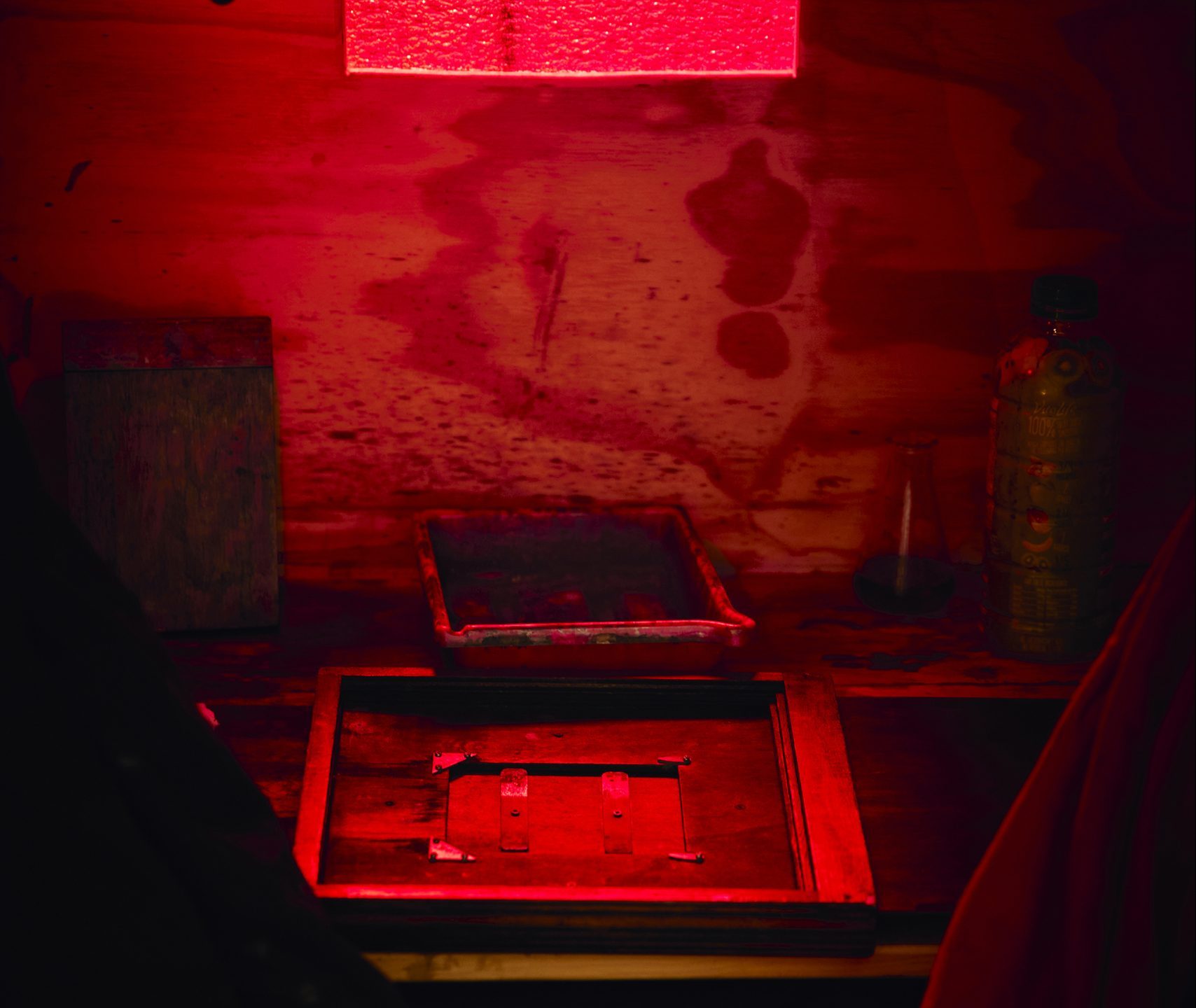
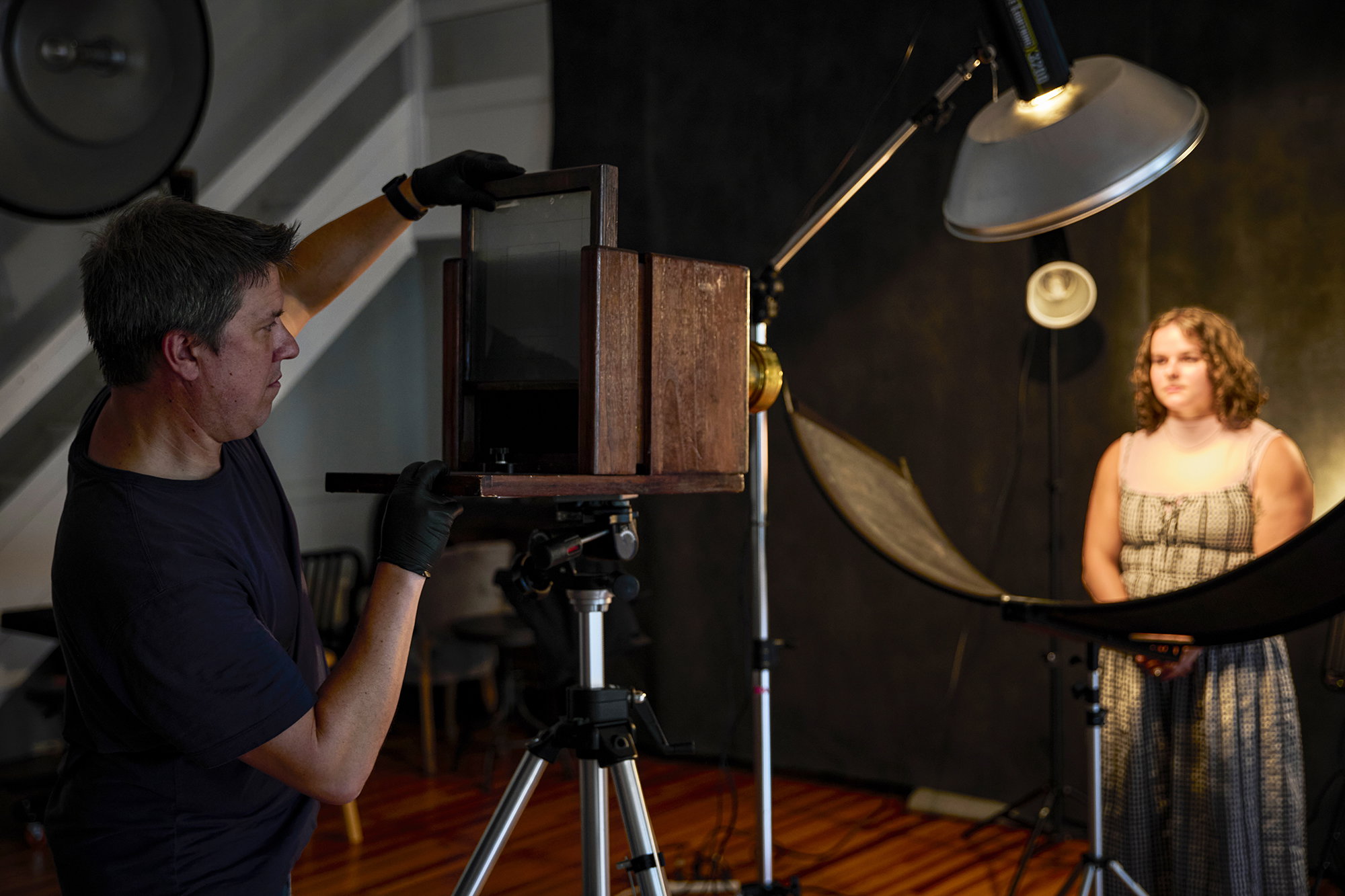
He sourced the required historical camera from eBay, had a dark box created for the developing process, and purchased the necessary chemicals, which he says was the most expensive part. “There is a steep learning curve,” he says. “You basically spend $250 on all the chemicals for this process and flush them down the toilet the first two times that you do it.”
Photograph by Andrew Doench
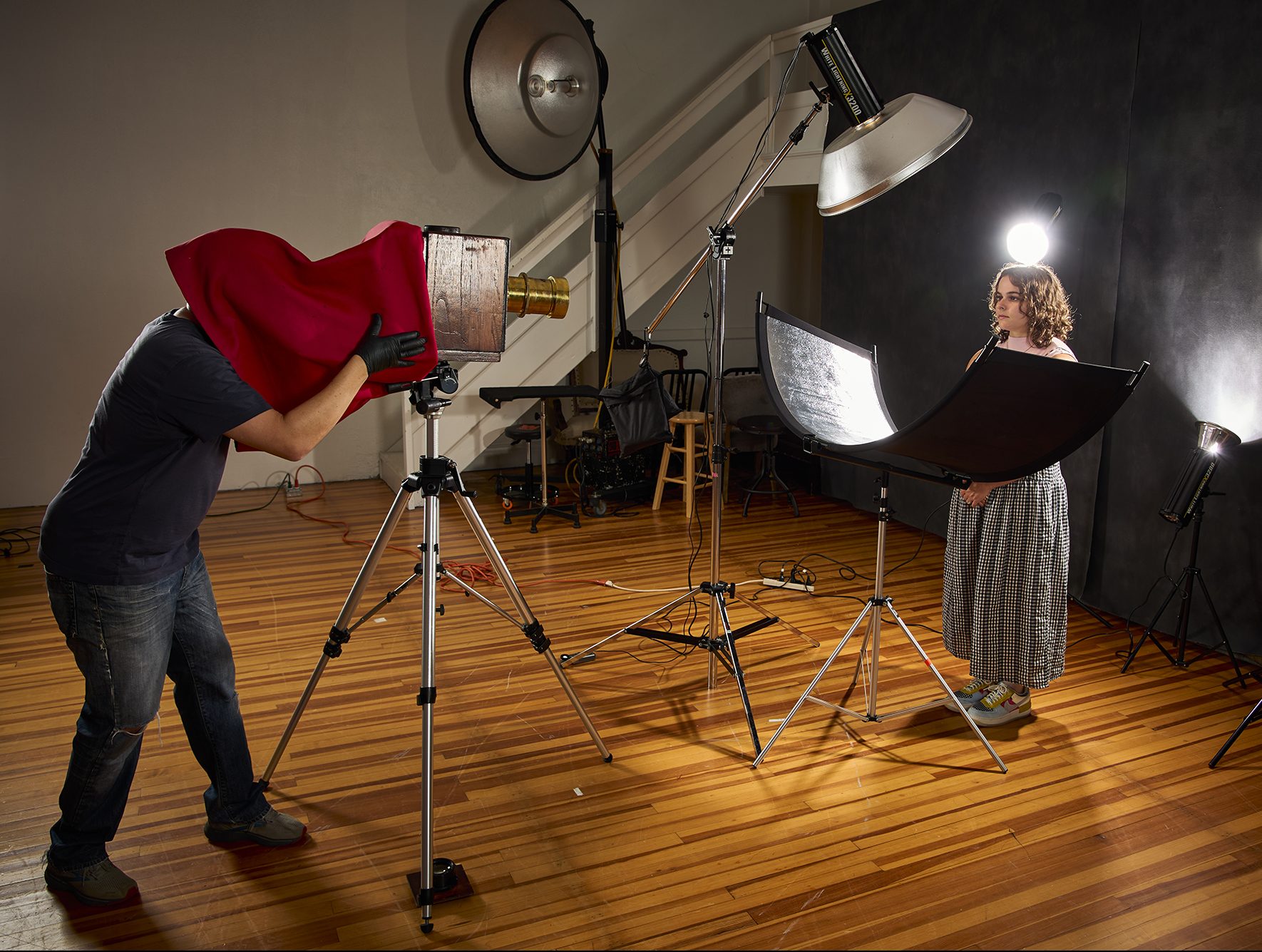
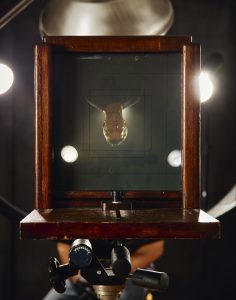
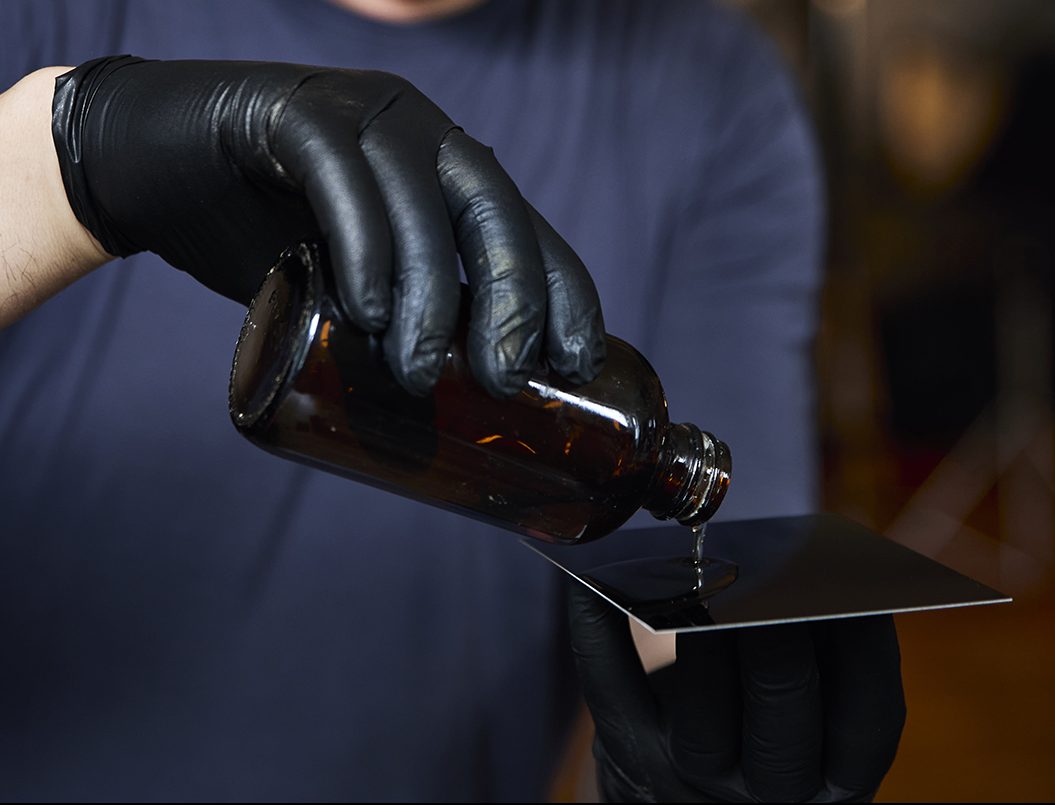
Here’s how it works: A 4-by-5-inch tin plate is dipped into collodion, a flammable chemical, and then into a box of silver nitrate. Klenowski poses his subject and adjusts the lightning. The plate is inserted into the camera, he uncovers the lens, and three or four huge lights “pop” on the subject (leaving them blinking for a few minutes). The plate is exposed, then removed from the camera and developed, the image emerging almost magically on the tin plate.
The process is extremely touchy; even the amount of humidity in the air can impact tintype photo results. Small changes in lighting or exposure time can sway the results too.
“Almost every single photo you’ve seen from the Civil War was taken as a tin plate,” says Klenowski. “So imagine someone being on a battlefield coming off to the side and sitting for 10 to 15 seconds for a portrait. It’s just mind blowing. It’s crazy to think that those finished photos are still around today.”
Because of the delicate process, it took him seven years or more to feel comfortable offering his tintype services to anyone outside of family and close friends. “We live in a world where we’re afraid to show our mistakes,” he says. “I didn’t believe in myself. Now I’ve learned that the mistakes are just as meaningful as a perfectly exposed and developed plate. The whole act of creating with my hands still speaks to me. Every time I make a plate, whether it’s a success or not, I love it.”
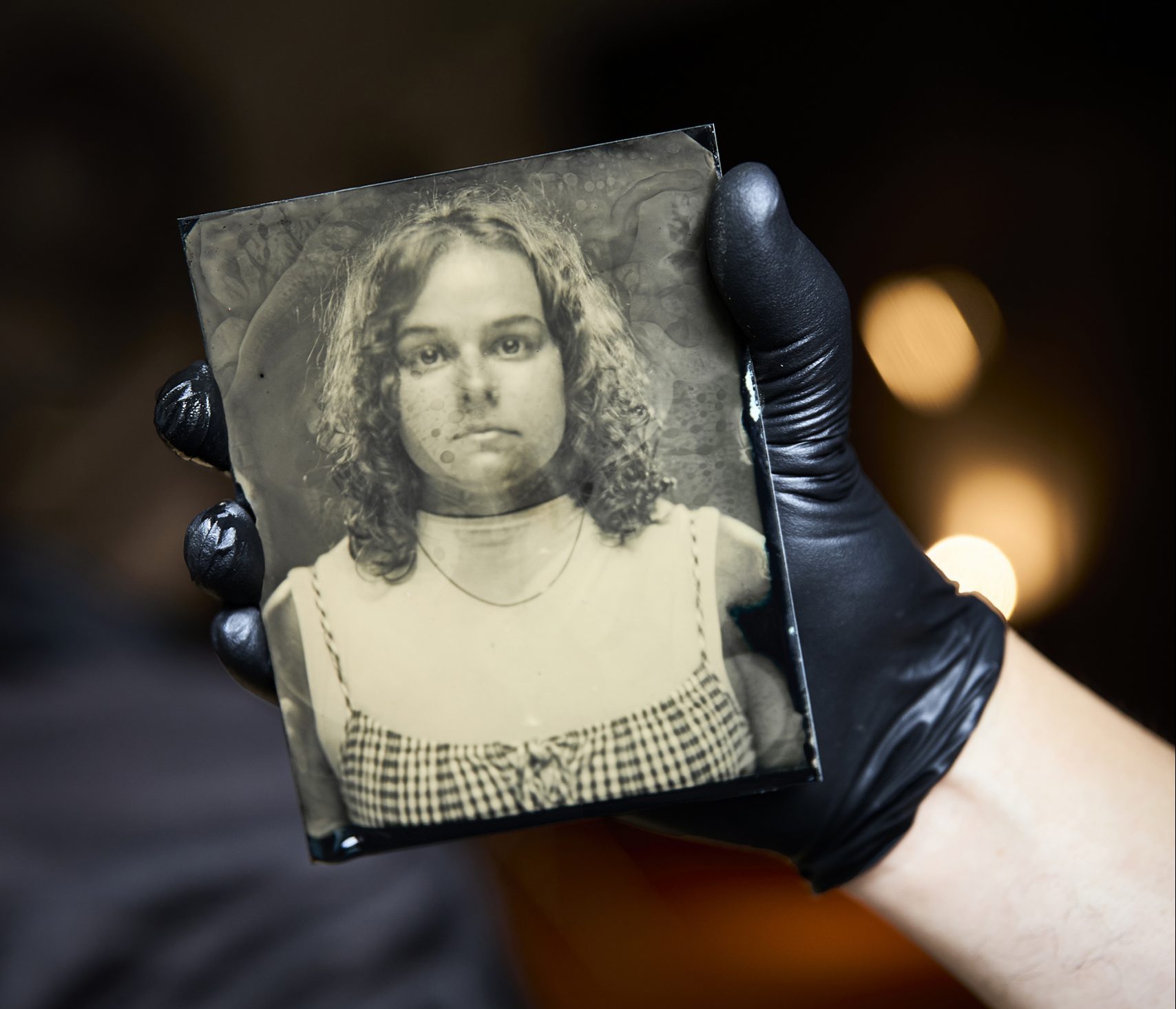
Having a tintype portrait taken is much slower process than snapping one with a digital camera, and as someone who offers both services, Klenowski appreciates the connection he makes with subjects through the tintype process. “With a digital camera, I can take 100 photos of you and Photoshop it to make you look the prettiest,” he says. “But this method captures who you really are at that moment in time, warts and all.”
With new well-earned confidence, Klenowski now offers portraits through open studio times via his Instagram and plans to host pop-ups at local events. Additionally, drawing from his career experience as a music photographer, he’s building a portfolio of tintypes of touring musicians and hopes to continue to photograph them as they come through Cincinnati.
“Getting back to my daughter’s philosophical question of ‘what am I doing,’ these are plates that a family would hand down to the children and grandchildren,” he says. “We live in a world where we take photos of everything, so it grounded me and reminded me to slow down. Certain images should mean something.”
Step by Step
Photograph by Andrew Doench
Photograph by Andrew Doench
Photograph by Andrew Doench
Photograph by Andrew Doench