


Photograph courtesy Ashley Lorraine/neworleans.com
At this time of year, a trip to New Orleans often involves colorful beads, larger-than-life floats, and drunken shenanigans. But don’t let Mardi Gras overshadow the city’s vast historical significance to the Black American experience.
Cultural Markers
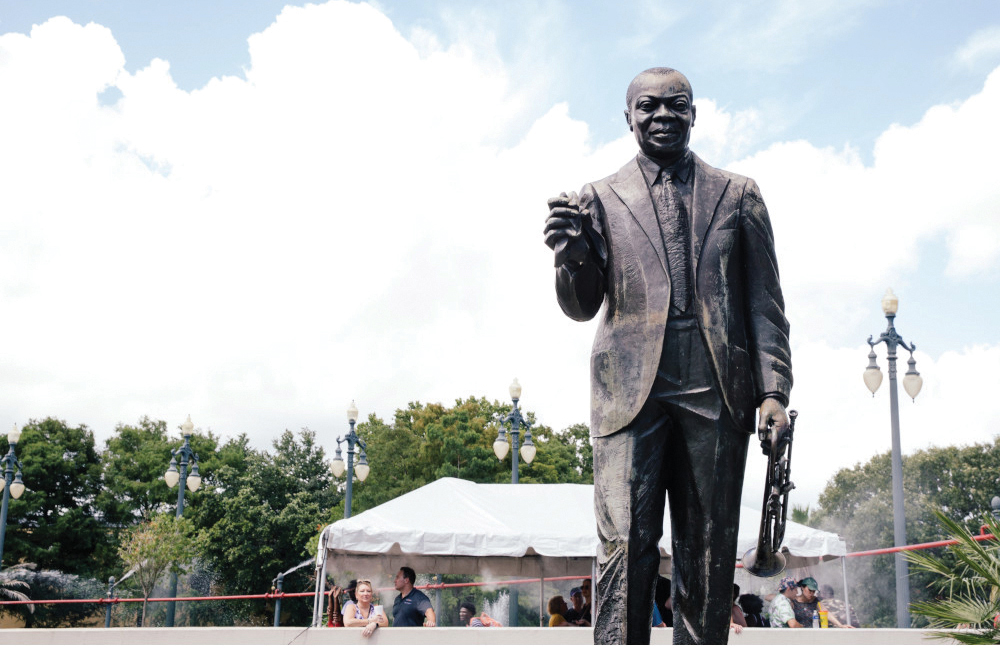
For a no-holds-barred look at New Orleans history, check out the Black Heritage & Jazz Tour. Lasting two and a half hours, the tour begins at Congo Square, where in the 19th century enslaved Africans and other people of color gathered to eat, drum, and dance. By law, the open-air space was the only place where the enslaved could gather once a week. It’s widely considered “the birthplace of jazz,” which is fitting because the square is located in Louis Armstrong Park, a 31-acre plot of land dotted with sculptures recognizing those who contributed to the city’s music scene. Armstrong is featured prominently with a full-sized statue, along with a bust of saxophonist/clarinetist Sidney Bechet and plaques dedicated to other jazz greats. After a drive through Tremé, the city’s oldest Black neighborhood, the tour ends at Bayou Road, a block of Black-owned businesses between Broad and Dorgenois streets, including a bookstore, a grocer, and a pastry shop.
Feeding Your Soul
Photograph courtesy Dooky Chase’s Restaurant
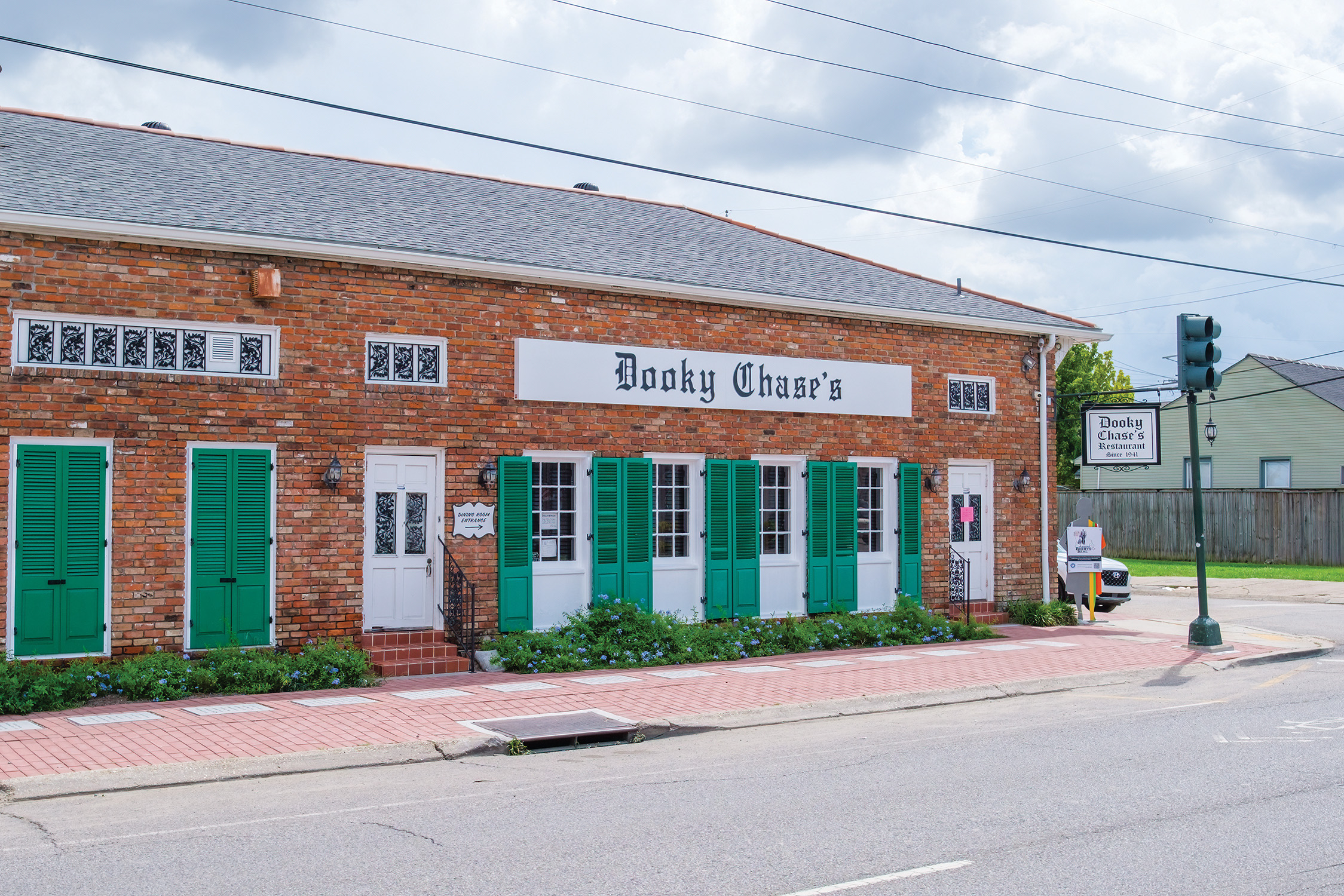
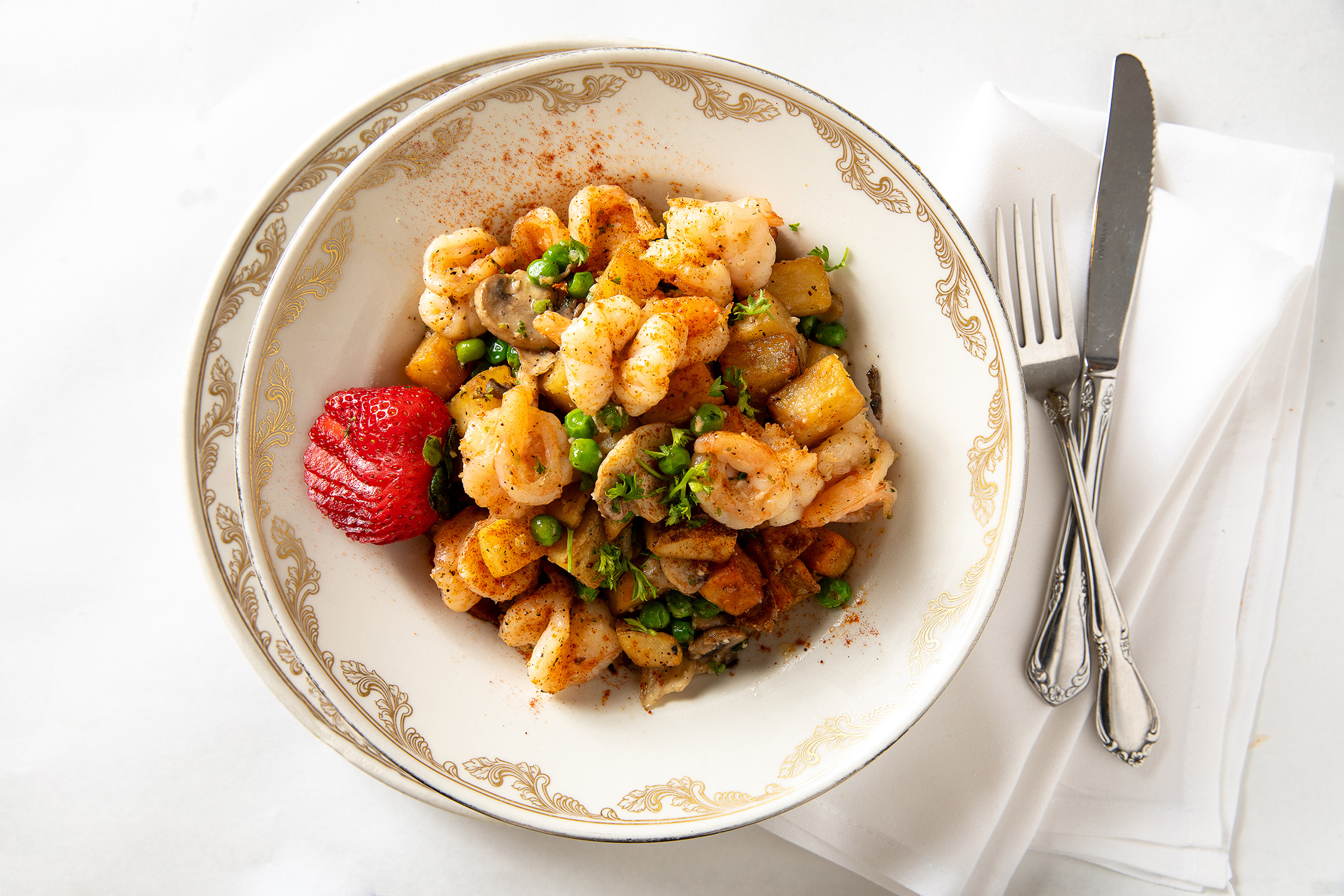
There’s no shortage of good food in the Crescent City, but get outside of the touristy areas if you can. Head to Dooky Chase’s Restaurant for authentic Creole cuisine. Opened in 1941 as a sandwich shop, the upscale eatery has been in the Chase family for four generations, serving classics like crawfish étouffée, southern fried chicken, and praline bread pudding to everyone from Duke Ellington to Barack Obama. For a more laidback vibe, visit Morrow’s for its boisterous crowd and signature dish: gumbo ramen. Made with sausage, crabs, mussels, chicken, shrimp, and vegetables, it’s the creation of co-owner chef Lenora Chong, who effortlessly fuses her Korean and Creole influences. And you can’t leave town without having a beignet. While Café du Monde is a rite of passage for many, Loretta’s Authentic Pralines has more variety. You can grab the regular version with powdered sugar, but snag some of the praline and crabmeat versions for the plane ride home.
Photograph courtesy Dooky Chase’s Restaurant
Music Makers
No visit to New Orleans is complete without a trip down Bourbon Street, but don’t stop there. Frenchmen Street is known for its jazz and blues clubs. Snug Harbor and the minimalistic basement setting of The Spotted Cat are intimate affairs for jazz heads, while Blue Nile is the place for blues, funk, and brass sounds. If you want to revel in the history of the city’s musical past, be sure to make a pit stop at New Orleans Jazz Museum. Located on the southern end of Frenchmen Street, the museum is home to It All Started in Jane Alley: Louis Armstrong in New Orleans, a permanent exhibition dedicated to the famed trumpeter.
Paying Respect
Photograph courtesy Paul Broussard/neworleans.com
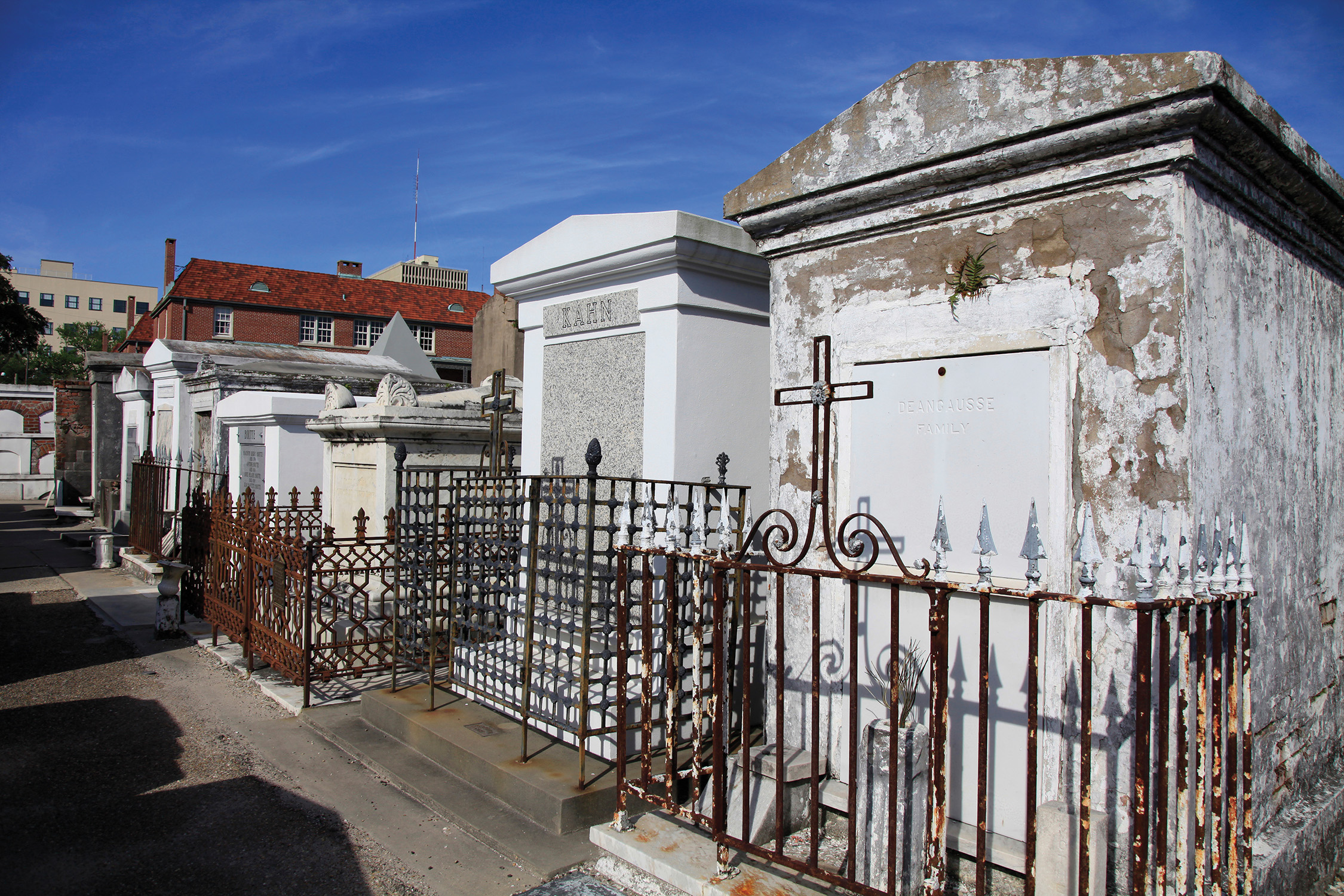
You can throw a rock here and hit a tour that scratches your spooky itch, but there are also plenty of self-guided and guided walking tours through a number of the city’s 42 cemeteries. Arguably, the best-known of these is St. Louis Cemetery No. 1, the oldest existing cemetery in New Orleans, dating back to 1789. Accessible only by permit or with a guide, the cemetery features above-ground tombs of the likes of herbalist, hairdresser, and Voodoo practitioner Marie Laveau and Plessy v. Ferguson plaintiff Homer Plessy. Check out The Katrina List: An Untold Story of Hurricane Katrina exhibition at the New Orleans African American Museum. Local resident Omar Casimere and his Katrina National Memorial Foundation have documented the stories of more than 10,000 survivors to commemorate the Category-5 storm’s 20th anniversary.
Suit Up
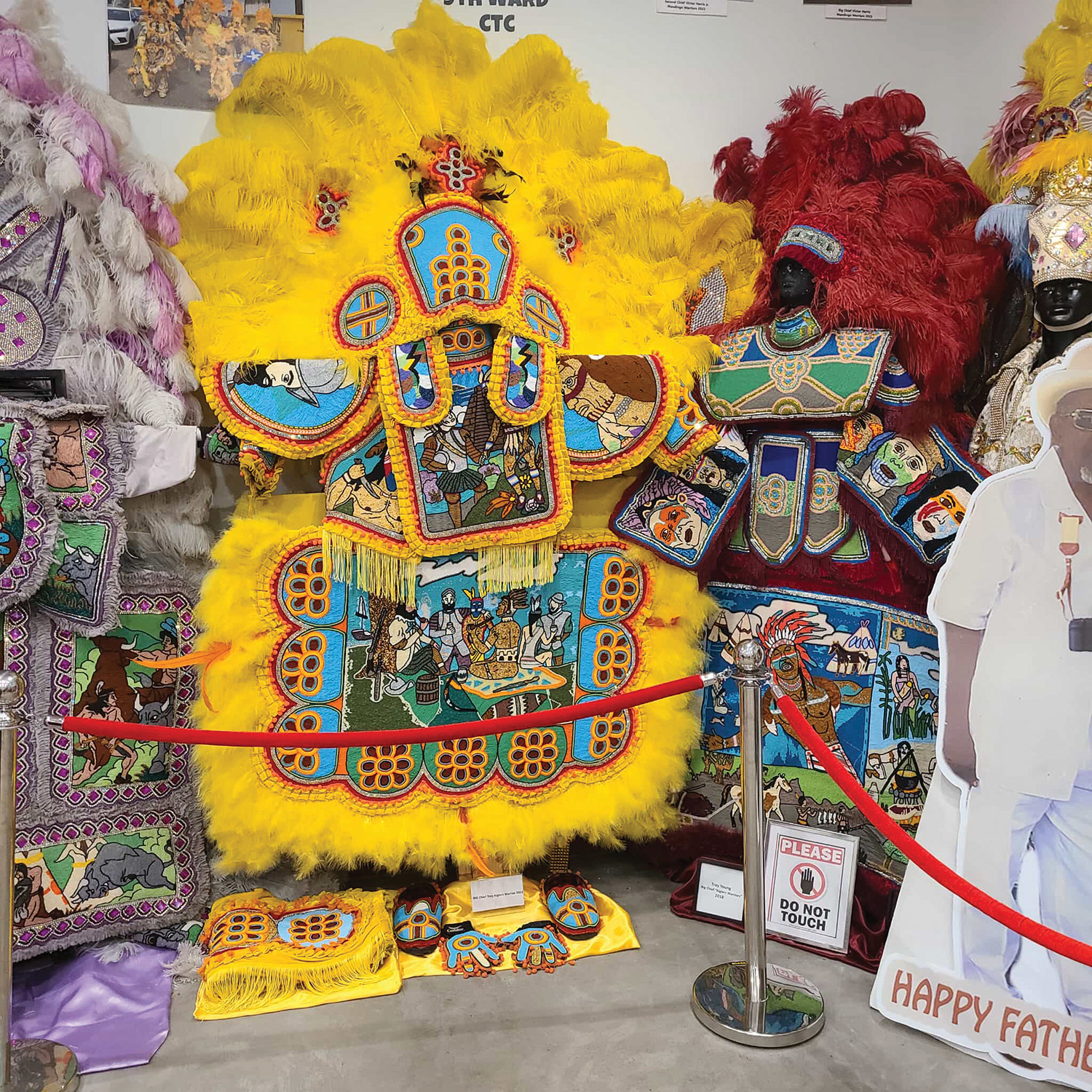
Photograph courtesy Backstreet Cultural Museum
If you can’t make Mardi Gras, be sure to stop by the Black Masking Indians exhibition at the Backstreet Cultural Museum. The colorful beaded and feathered “suits” are worn by Black Mardi Gras revelers to celebrate the indigenous people who helped enslaved Africans escape to freedom. In 1988, Sylvester Francis began displaying photos and memorabilia from the annual celebration in a two-car garage in Tremé, receiving a number of donated items from social aid and pleasure clubs known as “tribes.” Francis soon grew out of the space and moved to the museum’s current location.