



Photograph courtesy Art Academy of Cincinnati
Cincinnati boasts no shortage of noted writers and artists. Think of the bestselling novels by Emily Henry and Curtis Sittenfeld; ever-resonant poetry by Nikki Giovanni, who spent formative years in Lincoln Heights; and enduring appeal of native sons Charley Harper, Tom Wesselmann, and Jim Dine. Who are the next up-and-comers? Where is a one-stop compendium of the newest output by Cincinnati artists?
Zines occasionally come and go. And while The Cincinnati Review, published semi-annually out of University of Cincinnati (with weekly online content), is prestigious among art and literature journals, it doesn’t prioritize work by locals. Perhaps the radar screen is now detecting the newly expanding publication This Is WAAC.
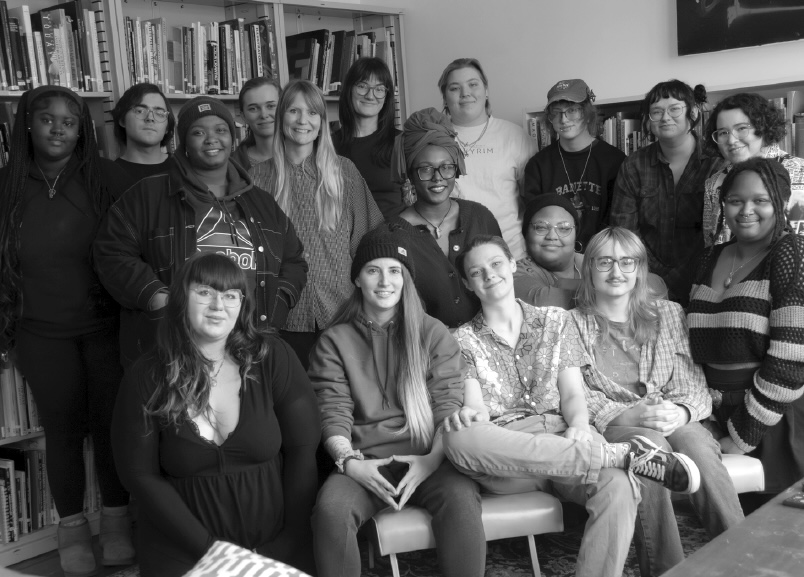
If the name is offbeat, so is the personal style of its 20something editors and layout designers. These are the young Turks you see buzzing around OTR, some using they/them pronouns and favoring goth get-ups or cartoon-inspired ensembles accessorized by dangling stuffed animals. You’d expect no less from students of the Art Academy of Cincinnati College of Art & Design. This Is WAAC is their annual journal of original prose, poetry, and art, and Issue 7 is hot off the presses with 126 pages of thick, glossy perfect-bound paper.
If you’ve never come across past issues, that’s because the small print runs were distributed only among contributors and supporters. Now, for the first time, This Is WAAC is available to the public—a handful of local indie bookstores will carry it (DownBound, Bookery Cincy) as well as AAC’s store. A public release party is 5:30-8 p.m. Wednesday at the school, 1212 Jackson Street in OTR.

Image courtesy Art Academy of Cincinnati
“Experimentation is deeply encouraged,” says Kae Ramsey, editor in chief this year, “and each year we up the ante.” The 2026 theme is “Dimensions Unknown.” “There is some emotionally charged work, but it’s not about just angsty feelings,” they say. “It’s more interpretive, reflective feelings compared to last year’s issue. It’s more wibbly-wobbly. Like, I’m 22 and an adult, but I’m still a little baby too.”
Like a spring foal, the collection ambles wide-eyed with innocence, energy, and the struggle to sort out feelings. The art ranges from surreal to figurative to intentionally cartoonish. “Midnight Hour,” an oil painting by Daniel Kelly, is a nuanced rendering of towels hung by an open door, a sumptuous moment of quotidian life. Robert Saphr’s “Lament 10” collage juxtaposes photos of a marching band, grainy asphalt, and worn photo-booth snaps. Autumn Fletcher’s photograph “Head in the Game” features a man whose head is noodled over by the net of a basketball hoop.
The short stories also cover broad territory, involving demon-summoning, a mysterious hum from the woods, and a macabre death by drill.
As for the poems, there’s a depiction of an awkward kiss. From “Maladaptive Daydreams, Delusions, and Other Tidbits of Tomfoolery” by Felix Jones: I had clumsily / crashed my mouth against the corner of / yours in a less than human, / terrified, / shaky attempt at a kiss– / nervously, / A bite, more than anything else, /really
And then there’s the absurd. From “We Gave Our Couch a Viking Funeral” by Kelsey Gallagher: those inevitable flames / quickly reached her insides, and ate up / what was left of her synthetic soul.
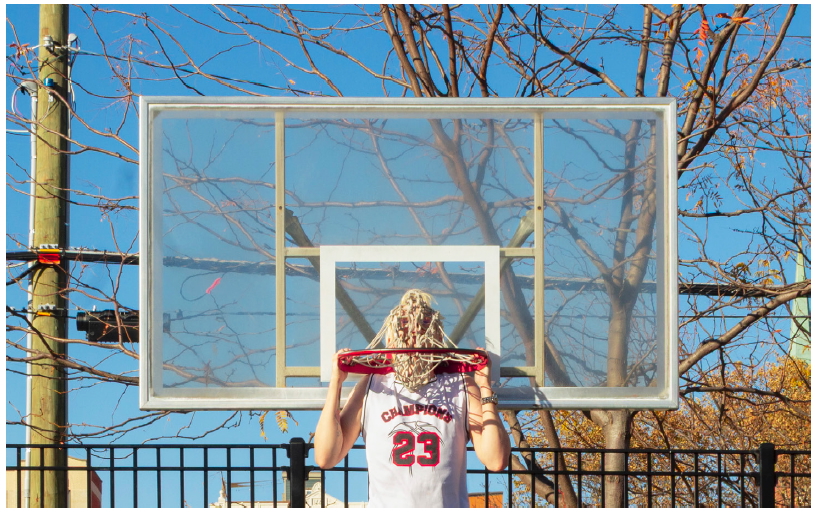
Image courtesy Art Academy of Cincinnati
Behind the scenes, a change in how the journal is produced helped it grow the audience. What began as the project of an after-school club became, last year, a for-credit class. That transition expanded the staff, giving students more person-power to produce the journal and to seek out artists beyond their ivory tower.
The journal predominantly features work by Art Academy students, faculty, and alumni, but each new volume welcomes a larger percentage of contributors with other ties to the city. This issue includes work by published author Annette Januzzi Wick and courtroom artist Marlene VonHandorf Steele. The only requirement is a genuine connection to Cincinnati. In that way, This Is WAAC may be the only annual literary and art journal that is in and of the Queen City.
“I have come to tell you of grave news,” writes Nimzward in their short story “Mother’s Call,” “but worry not, for there is good within.” The same could be said of This Is WAAC itself: a young and restless chronicle of Cincinnati’s creative present and a glimpse at what’s to come.