


Photograph by Catherine Grace
When Taste of Belgium shuttered its flagship Over-the-Rhine location in September 2025—its eighth closure in a year—then filed for bankruptcy protection a few months later, it was only natural to wonder what the hell happened. Diners who had grown accustomed to the restaurant’s dense, cake-like waffles were left scratching their heads.
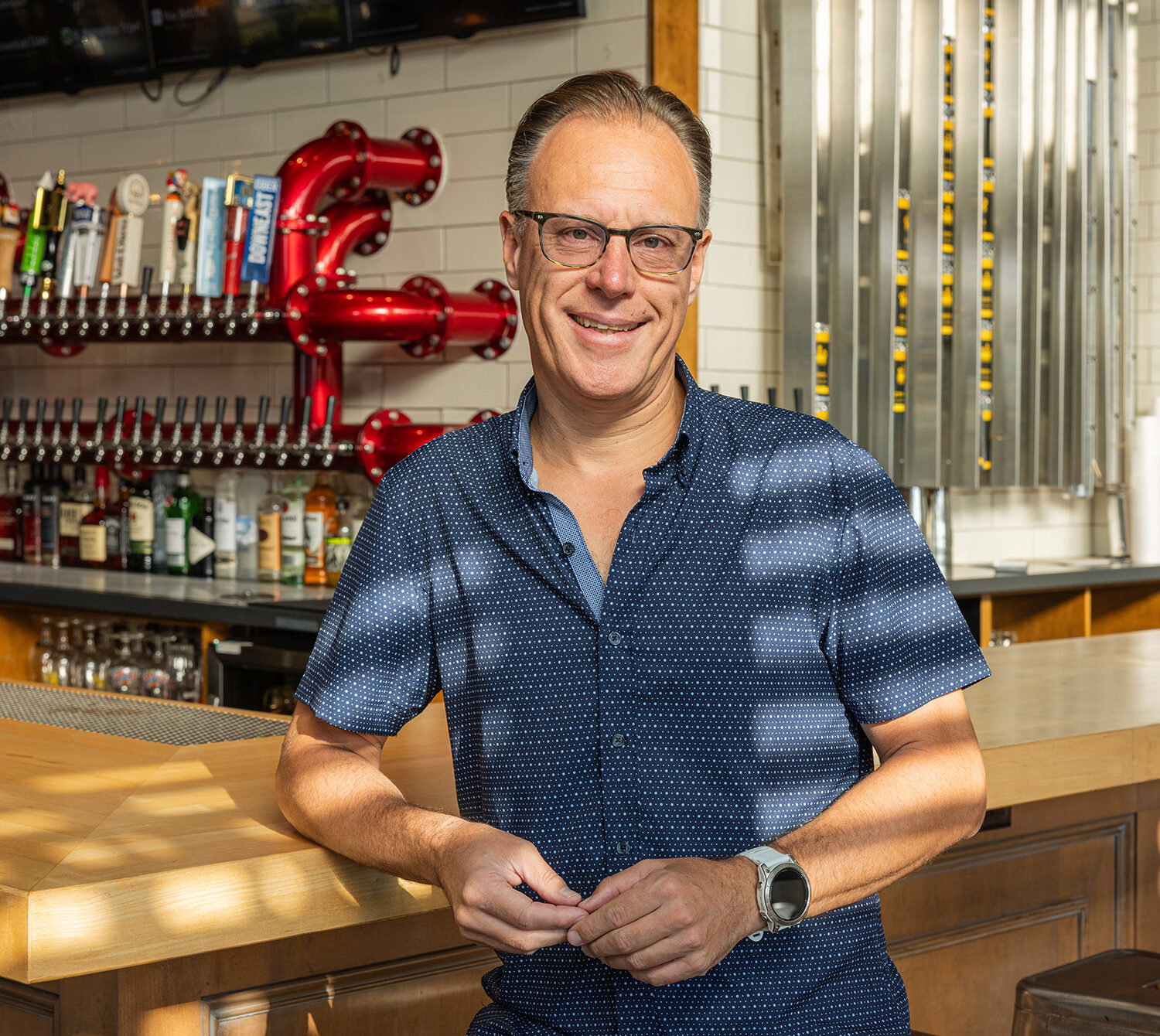
To understand how we got to a point where only a handful of locations—Norwood, The Banks, and the original stall in Findlay Market—remain to churn out hearty main courses, decadent sides, and a revered beer selection, we have to go back to the beginning. Specifically, to the man who established Cincinnati’s preeminent waffle haven, founder and “chief waffle officer,” Jean-François Flechet.
A native of Wallonia, Belgium, Flechet made his way to the U.S. in the late 1990s to pursue a third economics master’s degree at the University of Pennsylvania before eventually moving to Covington to work in statistical applications for Nielsen, the global research firm. At the same time, he tried to launch a hot-food vending machine endeavor that ultimately didn’t work out but led him to another idea.

Photograph by Catherine Grace
“I was missing the waffle that I grew up with back home,” he recalls. “I felt like that’s something that would be fun to get people to try, so I brought back a 120-pound cast iron waffle maker from Belgium.”
His first attempt at making and selling waffles was at the popular California music festival Coachella in 2007. Then he partnered with produce seller Bryan Madison, making and selling waffles at his Findlay Market stand. After a few weeks, Madison told him there was a problem. “ ‘My produce business is full of people eating waffles,’ ” Flechet recalls him saying. “That’s when I realized that maybe I’m on to something.” He moved his operation to a dedicated space in the market’s main building and the rest, as they say, is history.
Initially, he had no intention of getting into the restaurant business. With people lining up to buy his waffles, he created a plan with a friend, then began making and selling waffles to coffee shops and restaurants with resounding success. “It was really funny to see how it was welcomed by the community,” he says. “They kind of embraced me.”
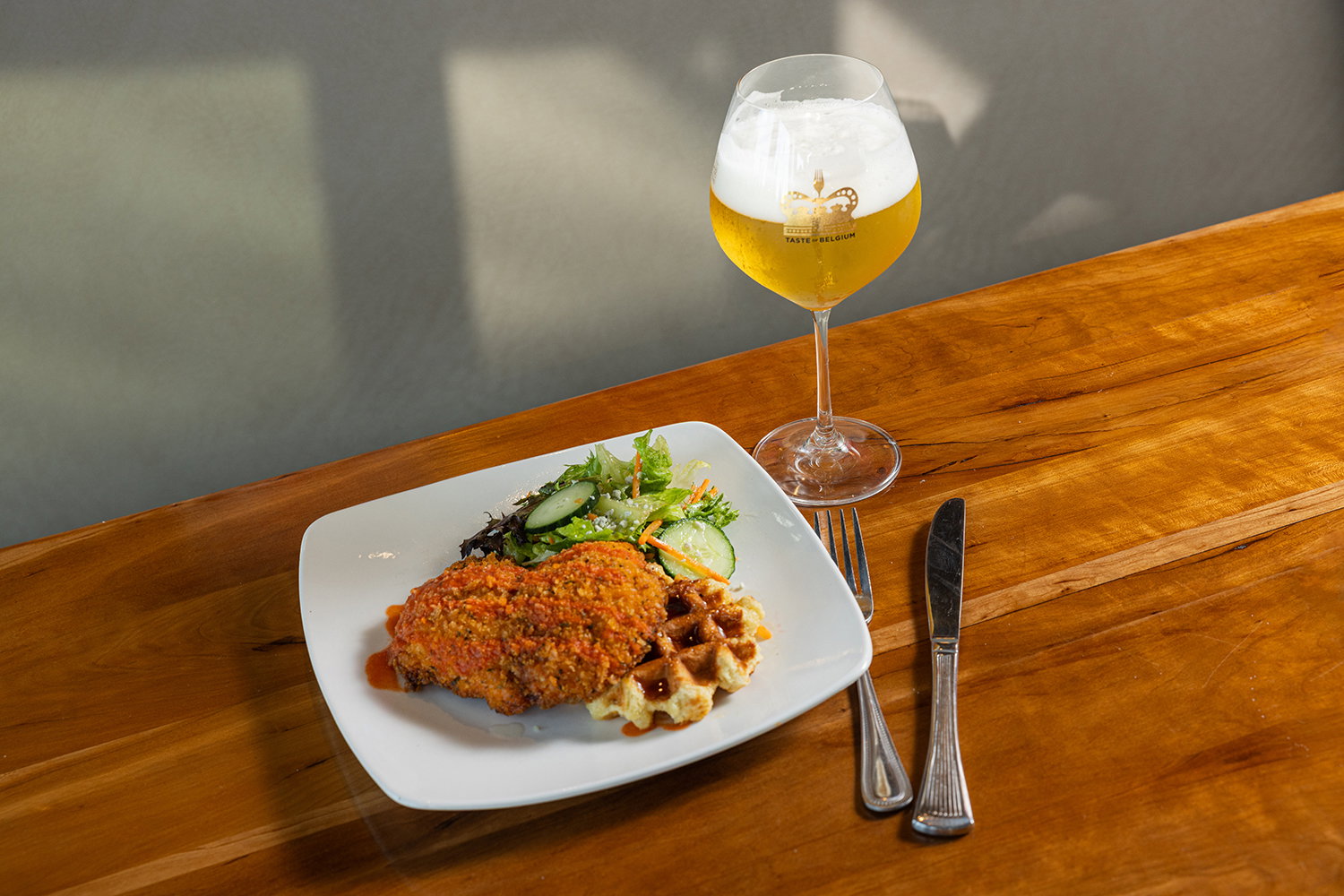
He officially joined Cincinnati’s culinary scene with the opening of the Over-the-Rhine flagship in 2011. He’s quick to point out that he and his team didn’t really know what they were doing, building their operation on the fly. “We were kind of clueless, but we were very willing,” he says.
Photograph by Catherine Grace
As they figured things out, the Taste of Belgium team opened more locations and centralized much of the operations at a main commissary. Flechet was pursuing an aggressive growth strategy when the pandemic hit, which complicated things but ultimately presented opportunity: Taste of Belgium signed short-term leases on recently closed restaurants to provide takeout and delivery orders. Cincinnati-area communities proved very welcoming, leading to the decision to convert the temporary operations into full-service restaurants at what he calls “the absolute worst time in the industry.”
This is where the downward turn starts to take shape. As a well-traveled economist, Flechet notes that while other countries subsidized employment to encourage people to stay in jobs during the crisis, the U.S. took a different approach. “We’re competing with the unemployment office at the exact same time that everybody wants to work for Uber and DoorDash, so all of a sudden, the restaurant industry is no longer the most flexible employer,” he recalls. “It just totally rocked our world.” In total, Taste of Belgium rotated its entire 500-person staff three times in 2021.
Photograph by Catherine Grace
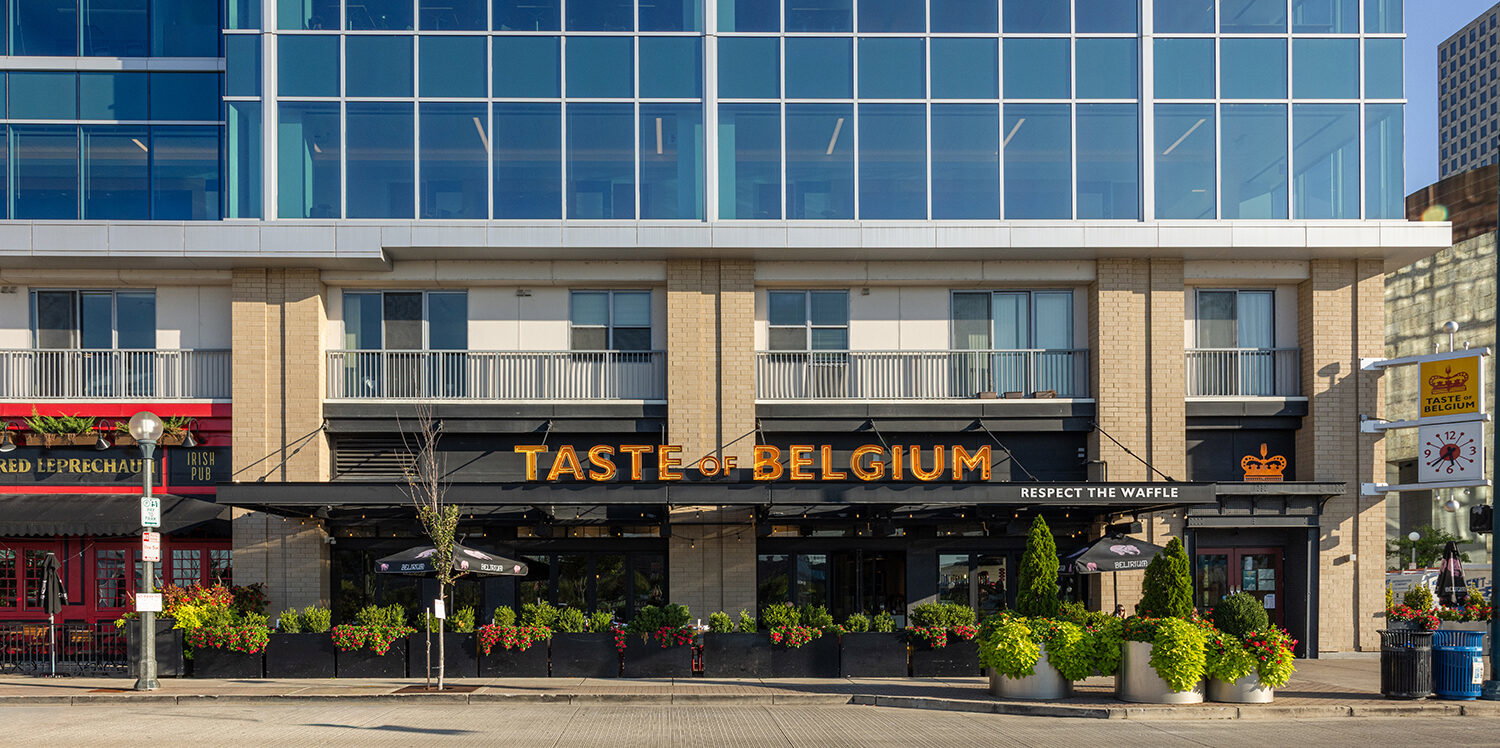
While the restaurant industry was generally transformed for the worse by the pandemic, the timing, coinciding with Taste of Belgium’s moves to double its presence, was especially devastating. Flechet notes some internal issues impacted operations and lists a number of factors—including remote work, a shift to online ordering, and drink and diet changes spurred by GLP-1 medications and sober living—that further contributed to an environment no longer supportive of large-scale restaurant expansions. He did what he had to do to save the brand, shuttering locations (including the flagship OTR spot, a heartbreaking turn) and ultimately filing for bankruptcy protection to restructure. “I always tell my team if we don’t die, we can rebuild,” he says.
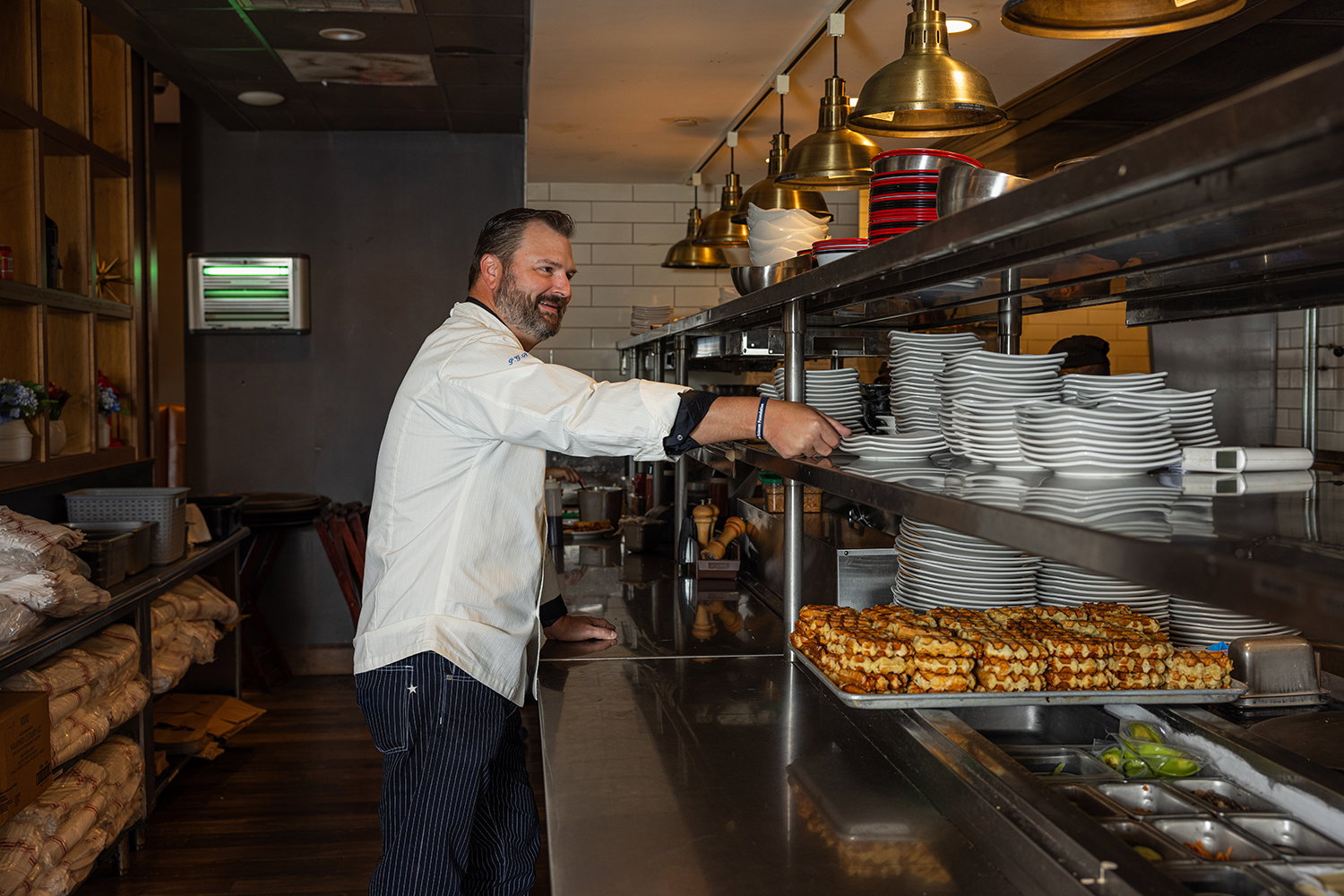
Flechet is cautiously optimistic about the path forward as he pivots to catering and downscaled menus in the remaining restaurants. He’s also seeking to grow the wholesale side and is excited to be listed on the online marketplace Goldbelly. In late September, he announced the Norwood location would add a night-service: Jacques, an elevated dinner-focused modern brasserie with a new menu, wine list, and cocktails.
Photograph by Catherine Grace
Growth isn’t currently part of the path forward for the business, which is instead focused on maintaining the two remaining full-service locations. If there are new locations in Taste of Belgium’s future, Flechet predicts they’d be a smaller, tighter concept.
Despite everything, he remains hopeful, noting that Cincinnati’s restaurant industry is resilient. He appreciates the national attention the local dining scene has enjoyed recently but also speaks cautiously, noting that, ultimately, customers will determine the failure or success of their favorite eateries.
“It’s still a lot of headwinds,” he says. “I encourage people to go and patronize their local restaurants.”
Taste of Belgium, 3825 Edwards Rd., Norwood, (513) 396-5800; 16 W. Freedom Way, downtown, (513) 396-5800; 1801 Race St., Over-the-Rhine, (513) 396-5800