



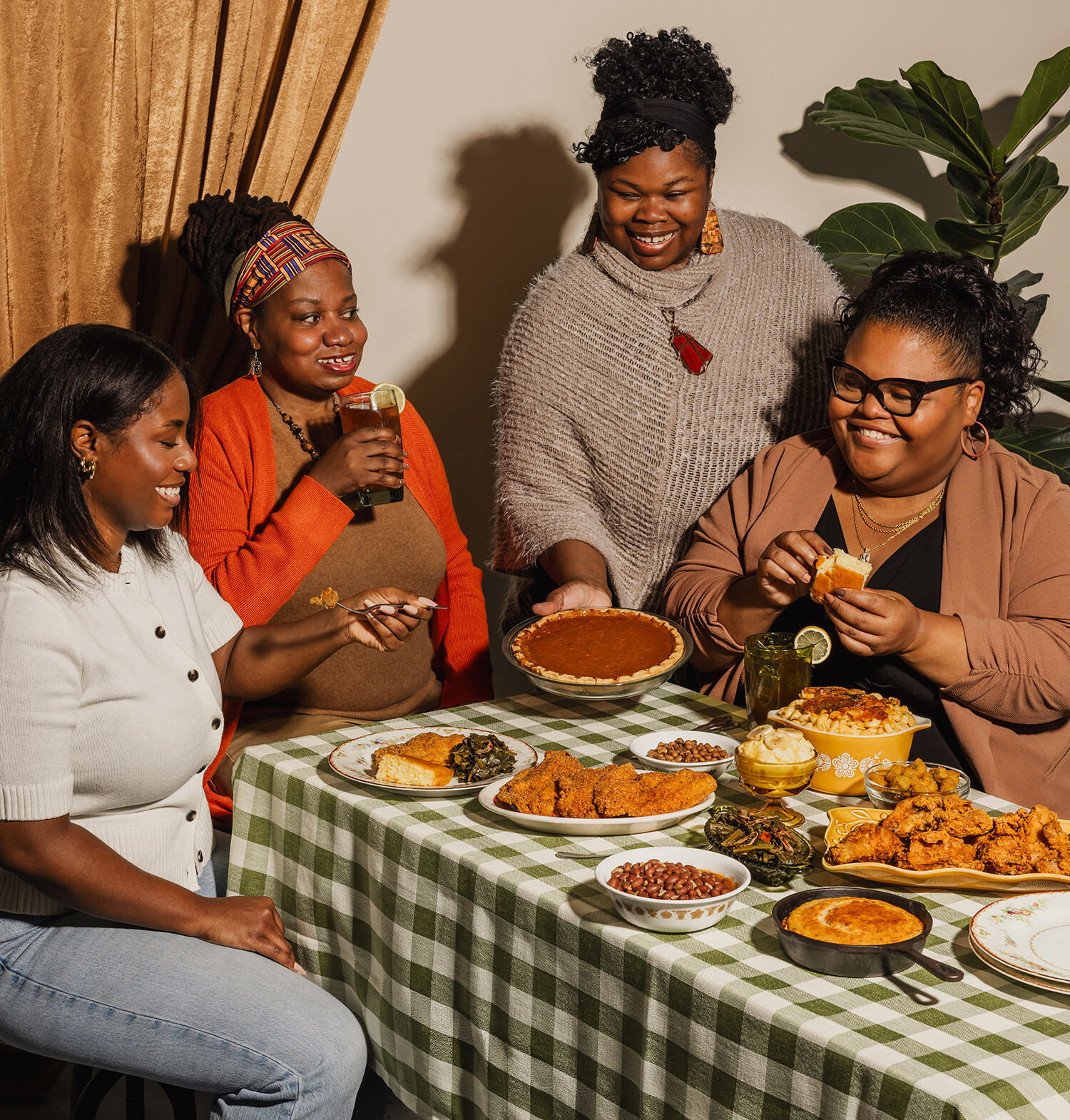
Photograph by Hailey Bollinger
There are times in history when a type of cuisine is so much more than simply sustenance, when, in fact, the weight of a culture can be carried on its back. Built from a singular devastation with long-lasting and far-reaching effects—chattel slavery—soul food is the history of Black America on a plate. It’s the weekly scraps the enslaved in New Orleans brought to Congo Square on Sundays to fuel themselves and share joy with those around them. It’s the Gullah Geechee of South Carolina and their direct connection to West African traditions through the cultivation of rice dishes. It’s the recipes and remembrances brought north through The Great Migration. It’s Victor Hugo Green’s The Negro Motorist Green Book, which guided Black Americans to safe places to eat across hostile territory for 30-plus years. Soul food is adaptation, resistance, defiance, innovation. It’s proof that Black people can’t be stopped by the limited imaginations of others. Making a way out of no way until a better way presents itself is a way of being for African Americans; the way of being. Of course, that determination also shows up in our foodways and culinary traditions.
In wanting to trace the “lineage” of each of the dishes referenced in this package—digging into where ingredients came from, when they came into contact with Black people and how those hands took them and made magic—I was reminded of my own family’s culinary ways: my great grandmother making ice cream for me and the other little ones by hand with nothing but a chilled bowl, salt, and sweetened condensed milk, the same way she did for my grandfather when he was a child; my grandmother’s buttery, extra creamy macaroni and cheese, and how my cousin studiously learned how to replicate it so that family members could still taste it long after she was gone; my mother and her sisters cackling over childhood stories in the kitchen around bowls of black-eyed peas on New Year’s Day, secretly hoping for better days ahead.
Because all soul food is Southern, but not all Southern food is soul food, the direct descendants of the tragedy that birthed it are the only true keepers of the cuisine. These stories are a love letter to those who created the dishes we treasure, their offspring who held the recipes and passed them on over the years, and those who keep these traditions alive in their families today.