



Photograph by Rodney Wilson
The term homesteading is closely tied to a way of life that seems diametrically opposed to modern urban existence, rooted in the Homestead Act of 1862, which encouraged and supported westward expansion. Contemporary usage typically harkens back to settler sentiments, with social media influencers broadcasting throwback activities like butter churning and goat wrangling.
Photograph by Rodney Wilson
What does any of that have to do with life in Cincinnati circa 2026? I often pose this question to myself and my closest contacts. I’ve actively done homestead-y things for the better part of the last two decades, but I can trace an inclination toward self-sustenance back to my suburban Northern Kentucky childhood. Time spent at my grandparents’ Alexandria property imbued me with a sense of wonder as I came to understand how their sprawling garden beds, dense grapevines, and buzzing boxes of honeybees supplied not only nourishment but a sense of identity.
Later, taking an environmental biology class at Northern Kentucky University, I was inspired to start a modest garden of my own. I filled it with underperforming tomatoes, stalks of sweet corn that delighted area raccoons, and more green beans than I could ever eat.
Some 10 years later, the urge to give gardening another go emerged with a vengeance in northern Ohio. My wife and I moved our family-owned coffeeshop from MainStrasse Village to Kent, where we raised our kids in a tidy brick home with a spacious corner lot for a backyard. Lake effect winters make summer all the sweeter in that part of the state, and during our mid-year outside time we got the notion to start a little orchard with a few apple and pear trees, followed by a bed of berry bushes.
Emboldened by dreams of canned apples and blueberries by the handful, we grabbed our shovels and set to work on the rest of the yard, establishing beds of herbs, grains, and vegetables. We built a little chicken coop and purchased a quartet of laying hens, started baking our own bread, and took to making staples like mayonnaise and butter. Even though we lived within walking distance of a few grocery stores, we embraced these activities with gusto.

Photograph by Rodney Wilson
My wife started volunteering at a farm down the road, and we caught a glimpse of just how far we might take this homesteading thing. Here our story diverges from many like-minded folks. We sold our business of 12 years to some passionate employees and moved into a Civil War–era farmhouse in central Kentucky. There, alongside my parents, our little family raised fruits and vegetables and pastured chickens, pigs, and a couple of cows. For a few years, we eked out a living selling goods at the farmers’ market, but when money got tight and a job offer with F+W Media was extended to me, we bought a little brick home on Cincinnati’s east side and settled into a 9-to-5 life.
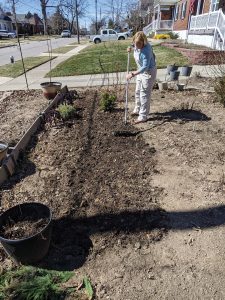
We tried to be normal suburbanites, I swear. It lasted a year—at which point we tilled up the backyard and planted everything from tomatoes and onions to eggplant. When the pandemic hit, we buried our front lawn in topsoil and put in native plants to support the neighborhood birds and butterflies. We ordered a small flock of chicks from Mt. Healthy Hatchery to raise in the basement shower stall and emptied our garage of leftover lumber to build a backyard coop. Like everyone else, we baked a lot of sourdough bread.

Photograph by Rodney Wilson
Working as an editor for Hobby Farms magazine at the time, I witnessed a wellspring of interest in self-reliance during the pandemic, and I loved seeing people get their first flock or bake their debut bread loaf. For all its horrors, the pandemic gave a lot of people the time and the will to exert some control over how they care for themselves. Urban homesteading had a real moment during those uncertain years.
And I think that moment can help us better understand what urban homesteading means to people who embrace the mindset. When supply chains strained during the pandemic and grocery shelves became unpredictable, it made a lot of sense to start a kitchen garden and capture wild yeast in a sourdough starter. I imagine the victory gardeners of WWII and my grandparents were after something similar when they broke soil to grow food. And today, as we collectively grapple with expensive grocery prices, I expect people to start eyeing their backyards yet again for garden space and, just maybe, a spot to keep a small flock of chickens.
EDITOR’S NOTE: Cincinnati was just named the seventh best U.S. city for urban gardening by LawnStarter. We’re also No. 4 in the country for the most community gardens per 10,000 residents.

Photograph by Rodney Wilson
Just as a home is not by definition a house, homesteading is not the same as housekeeping. In a way I feel like my family has tended our “home” across multiple properties, which can maybe explain why we keep tearing up yards to grow food.
If and when we move, I’m confident the property will have ample space for gardens and compost bins, just as I know I’ll check local ordinances to ensure backyard chicken flocks are permitted. I’ve also learned from our experience in this house and will seek out a south-facing roof so we can consider installing solar panels to deliver our electricity, just as we’ve worked to reduce our dependence on a faulty food system.

Photograph by Rodney Wilson
Home, as a concept, is too important to be subjected to full reliance on the frantic consumer capitalism of our modern age. Home should buck the notion that we become through buying; rather, it’s something we are allowed and empowered to make and sustain. Now more than ever, when volatility is the new norm for politics and market forces, home should be steady. And so, not in spite of but because we live within the chaos of a bustling urban core, we homestead.
And just as home means something slightly different to each person, homesteading can also look different for each of us. Is it growing herbs in a kitchen window for delicious meals? Of course. Building a sturdy chair to offer a neighbor during a porch chat? Heck yeah. Composting kitchen scraps to create Earth-friendly garden soil? For sure. Foraging mushrooms for a hyperlocal treat? Yes.
One of the most common things my wife and I hear when we’re working in the front garden is, “That looks like a lot of work,” to which we always quip, “It beats mowing!” And while we do spend sweaty hours cutting back sprawling hop vines and pulling weeds, I wouldn’t necessarily use the word work to describe our efforts. In tending our urban garden, we’re preserving what’s most important to us: our home.

Photograph by Rodney Wilson