



Photograph courtesy National Museum of African American Music
The National Underground Railroad Freedom Center will open its newest featured exhibition, Jubilation! Ambassadors on a Sacred Journey, on January 19, offering visitors a look at the origin and legacy of the Fisk University Jubilee Singers.
Traveling from the National Museum of African American Music, in Nashville, the exhibition serves as a tribute to the widely acclaimed student choral group that introduced the world to African American Spirituals.
Nashville’s Fisk University was founded in 1866 as a school for Black students, many of whom had shared experiences of poverty and slavery. Despite its lack of funding, Fisk University strived to give students a well-rounded and high-level education. Just five years after its founding, the school wrestled with the idea of closing its doors—it faced immense financial challenges after Congress cut funding for Black universities, and the school had yet to be incorporated with the United Church of Christ.
George L. White, Fisk’s treasurer and a music professor, had the idea of touring with a choir of nine students in an effort to raise money for the school. The Jubilee Singers traveled the route of the Underground Railroad, making their first stop on tour in Cincinnati at Mozart Hall, Seventh Street Congregationalist Church, and the Vine Street Church. The group performed spirituals passed down from enslaved ancestors, introducing these songs to new audiences. After performing in Cincinnati, the group continued traveling through Ohio cities like Oberlin and Cleveland, eventually making their way towards New England and Washington D.C.
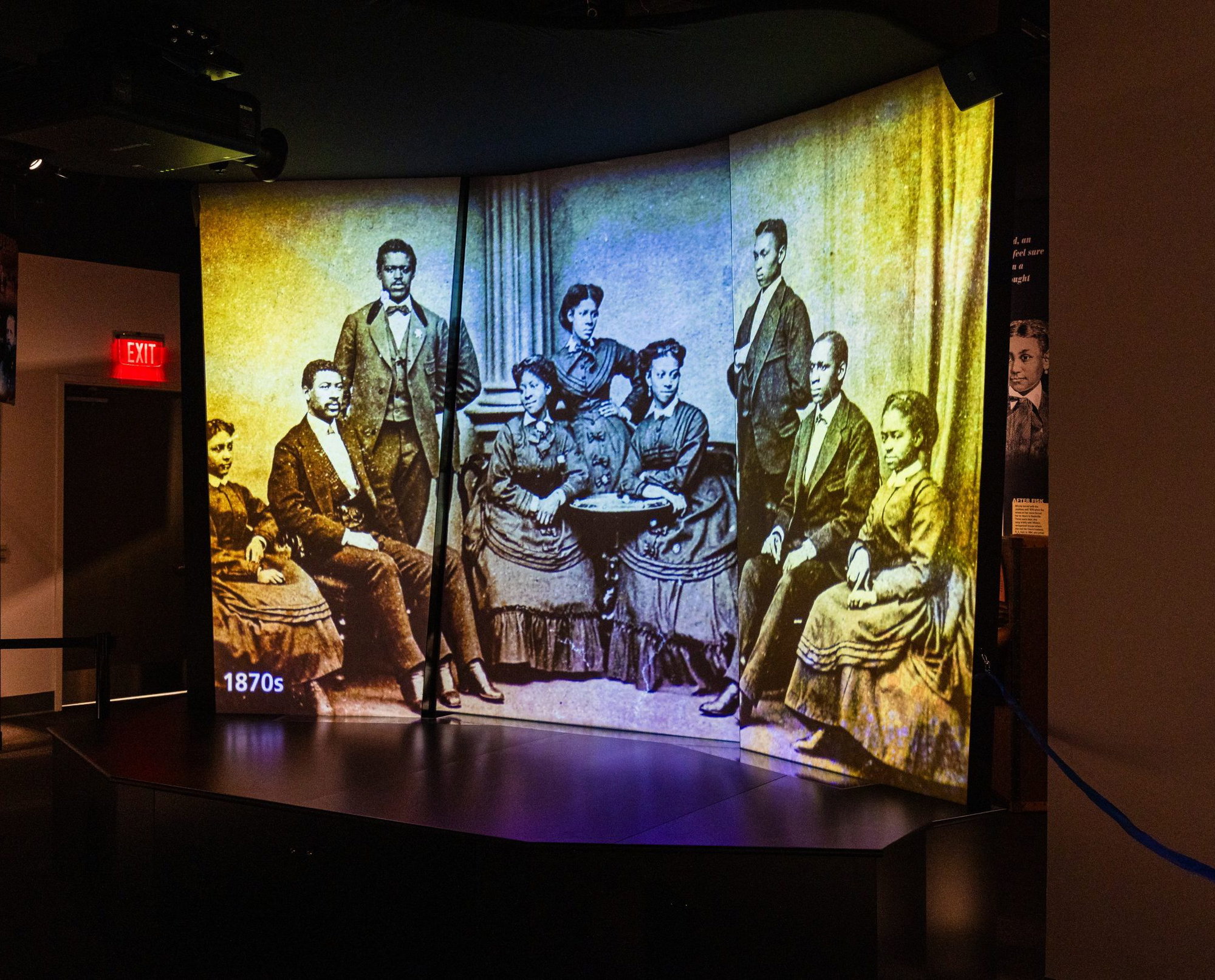
Photograph courtesy National Museum of African American Music
Some of their early performances were met with backlash from white audiences; the group encountered threats to their safety, were kicked out of hotels, and were judged harshly based on racial stereotypes. Yet, the group continued sharing their spirituals on tour, and audiences started to change their perspective.
“As the group traveled throughout the United States and even beyond, a lot of those proceeds went back to the school to be able to keep the school afloat throughout the 19th and into the 20th century,” says Shawnee Turner, vice president of interpretation and education at the Freedom Center. “So it was obviously revenue generating, but it also brought a lot of people to Fisk as students because it gained international notoriety.”
Through the years, Fisk University became an acclaimed HBCU (Historically Black College or University) and the Jubilee Singers remain an integral part of the Fisk’s culture. The school even celebrates Jubilee Day each year on October 6, the day the original singers left for tour. Generations of Jubilee Singers have performed for U.S. Presidents, historical figures like Mark Twain and Queen Victoria, and at major events around the world. Today, the Jubilee Singers are still an active choir and even won the Grammy for Best Roots Gospel Album with their release, Celebrating Fisk! (The 150th Anniversary Album), in 2021.
The highlight of Jubilation! is the group’s historical sound, continued resilience, and worldwide impact.
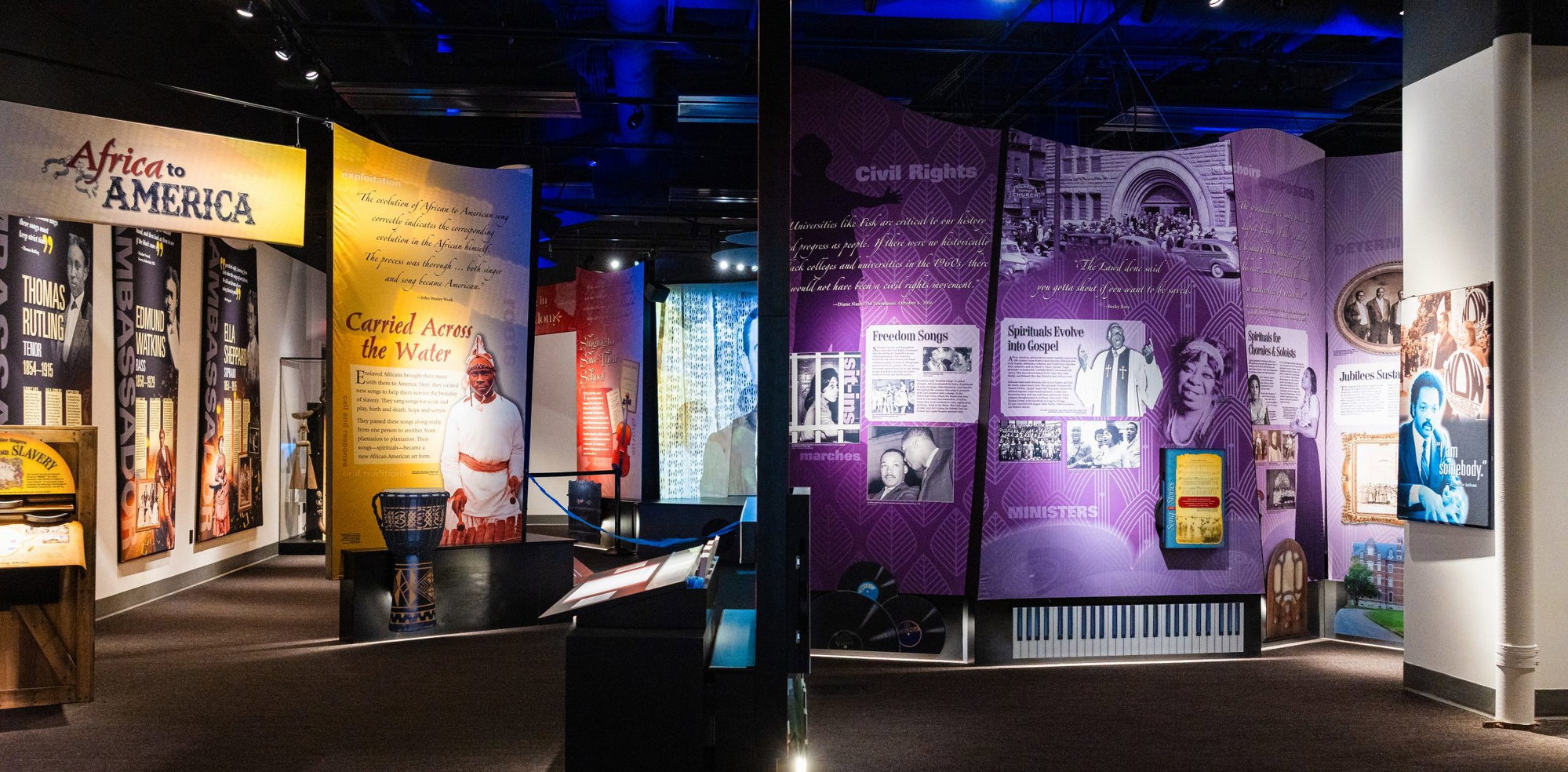
Photograph courtesy National Museum of African American Music
“Africa to America,” the first theme highlighted in the exhibit, explores the origins of the spirituals sung by the chorus, examining the spirituals’ roots in African musical traditions and the creation of these songs during enslavement.
“As you start to understand where a lot of Black spirituals come from, they’re obviously coming from enslaved traditions of music as storytelling, but it also taps into West African roots of music too,” Turner says, adding that the exhibition will examine how these spirituals have played a role in society. “Think about how those trends and those histories and passions and narrations and oral traditions build into the Black culture and sound.”
The second thematic section, “Learning and Freedom,” takes a look at the challenges faced by the singers, highlighting the discrimination students encountered throughout their travels in the U.S., and the obstacles that come with low wages and exhaustion on tour.
“It’s hard to read,” says Turner of audience reviews from the Jubilee Singers’s first tour, “That layer of racism, even in writing in Ohio, was so evident.”
“Rekindling the Spirituals” examines how later groups of Jubilee Singers transformed spirituals for a global audience through their world tours and historic performances.
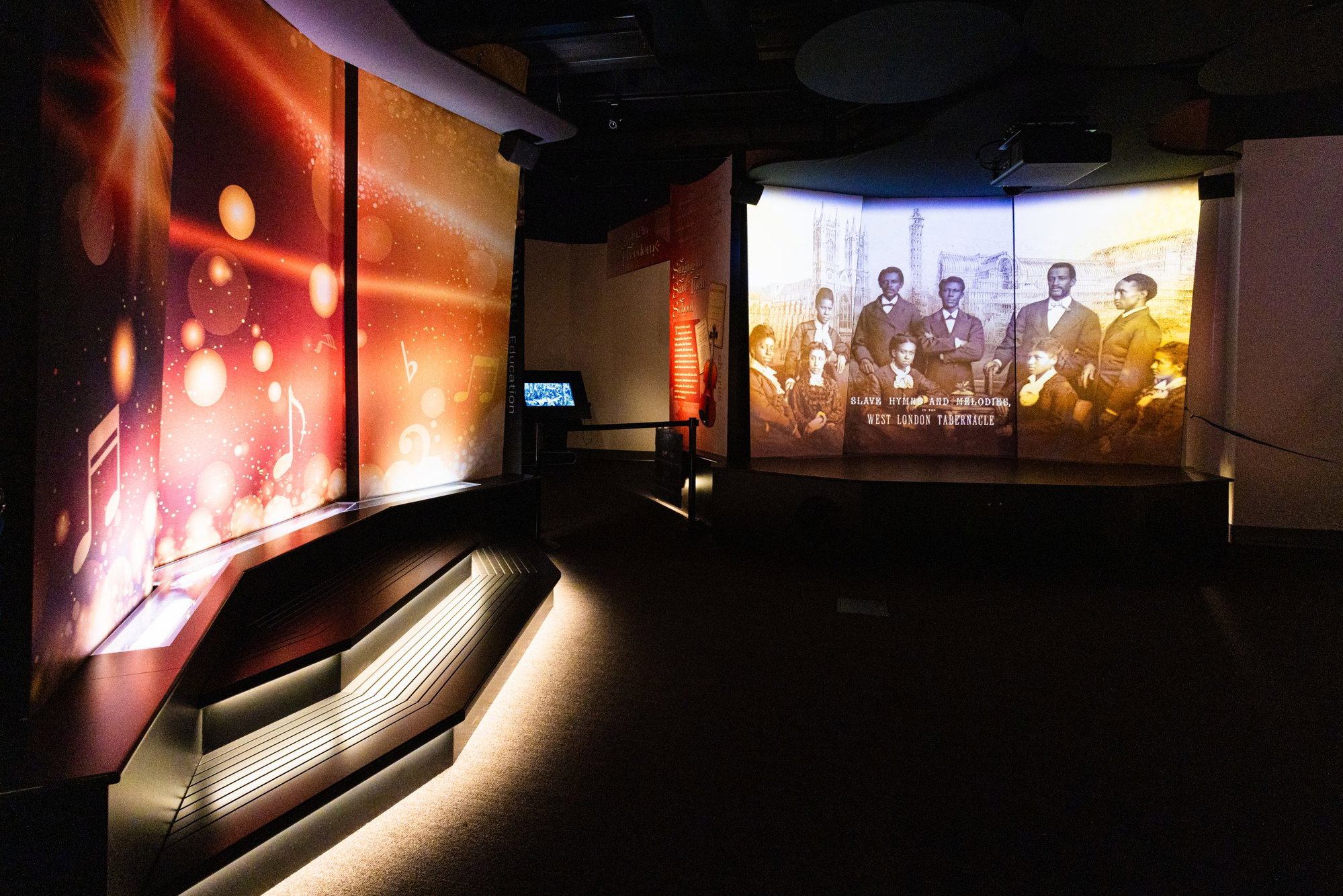
Photograph courtesy National Museum of African American Music
The final thematic section of the exhibit, “Forward in Faith,” details the ongoing legacy and impact of today’s Jubilee singers.
“The Jubilee Singers obviously had a full history with troupe after troupe entertaining people, but they’ve also played a role in the social justice movements of our time,” says Turner. “So, this exhibit really follows them from their inception through their contemporary troupe.”
The Freedom Center will also take an in-depth look at the group’s tours throughout the Greater Cincinnati area and members with local ties, including Jennie Jackson, one of the original Jubilee Singers.
“There are so many things that people can pull from this show that I really hope is an entry point to get more curious and realize that history isn’t scary or hard in any way. It’s just something we have to reckon with as people to help us find a better path forward,” says Turner. “It’s an interesting history because I think there’s a lot to learn from this one group of singers and their experiences that is both joyful and sometimes sad, but that’s okay.”
Jubilation! Ambassadors on a Sacred Journey will be available from January 16 to June 21 at the National Underground Railroad Freedom Center’s Skirball Gallery. The Jubilee Singers will perform at the Freedom Center on Sunday, January 18 at 4 p.m.