



PHOTOGRAPH COURTESY OF MAVERICK CHOCOLATE
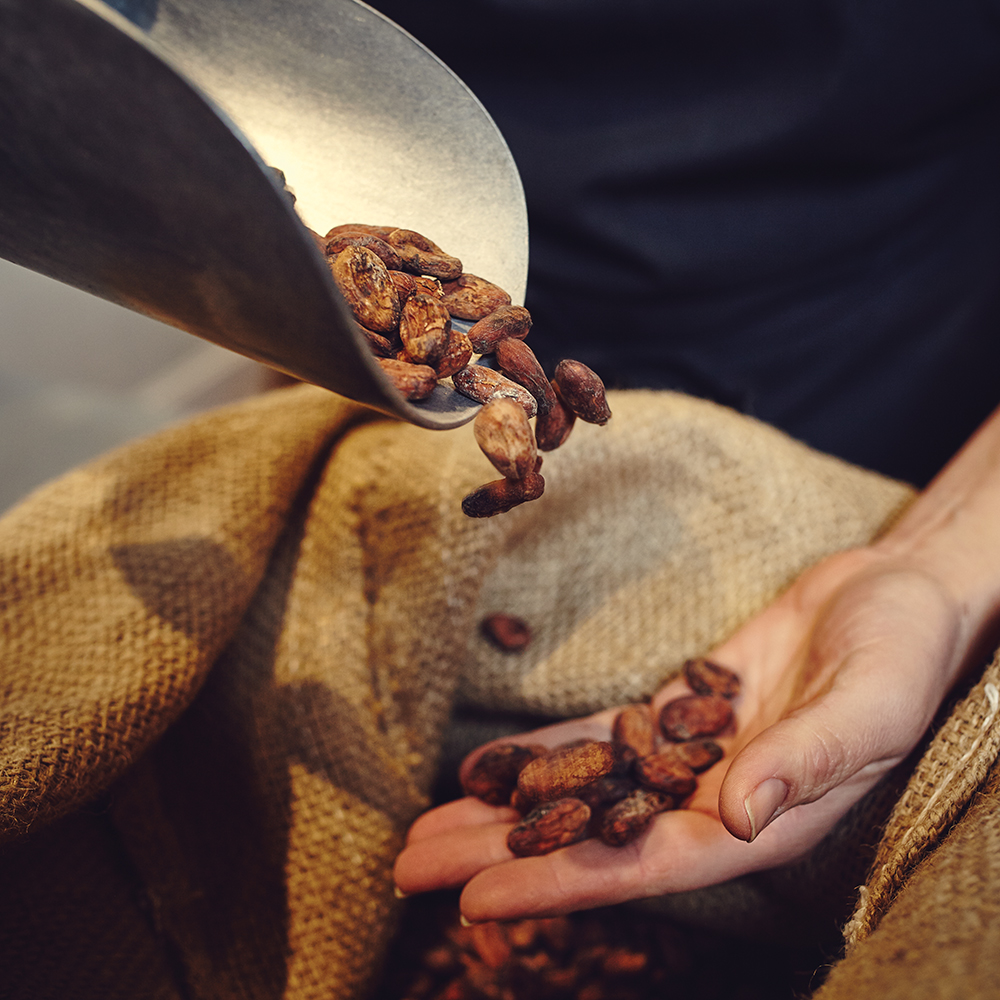
“It’s getting harder and harder every day to try and do the right thing,” laments Paul Picton, owner of Maverick Chocolate Company, during a recent meeting of the Cincinnati chapter of Slow Food USA. For his business, that means importing organic cane sugar from Brazil. What most people don’t realize is that white sugar is rarely vegetarian-friendly. Because of a wood shortage, it’s usually filtered through bone char—burnt cow bones. Picton pays a high tariff ($0.16 per pound) for the sugar he imports. Few are aware of this aspect of chocolate making, but like everyone involved in Slow Food, Picton wants to educate people.
The grassroots organization’s goals are to teach Americans about food sourcing, production, and labor practices; to defend food’s biological and cultural diversity; and to influence food policy in the public and private sectors. Such efforts reflect Slow Food’s motto of “good, clean, and fair food for all.” The international movement started in 1986 when McDonald’s opened a location in Rome, near the historic Spanish Steps. When America’s archetypical corporate giant opens an outpost in one of Old Europe’s most iconic spots, it’s bound to draw protestors. In this case, the protests turned festive. Activists prepared pasta and passed it out to onlookers, while chanting a slogan that translated to “We don’t want fast food! We want slow food!”

PHOTOGRAPH COURTESY OF SLOW FOOD CINCINNATI
Fast forward 38 years, and Slow Food International is active in more than 160 countries and Slow Food USA has chapters in more than 80 cities. Cincinnati’s chapter, established about 10 years ago, works to educate consumers about the food they eat, and to support and promote businesses that align with the movement’s values. One of the most salient ways they promote said businesses is by handing out the “Snail of Approval” awards.
According to Eduardo Rodriguez, Cincinnati chapter president, the awards recognize businesses (including restaurants, farms, and “food artisans” like Blue Oven Bakery) that embody the movement’s motto. In this case, “good” refers to businesses that provide wholesome, flavorful food; “clean” means the business practices organic and sustainable methods of sourcing and/or growing; and “fair” means that the business offers fair wages, treats employees with respect, treats animals with respect, and gives back to the community.

PHOTOGRAPH COURTESY OF SLOW FOOD CINCINNATI
One of the first local Snail of Approval recipients was The Wildflower Café and Wine Shop in Mason. “I’ve got the snail sticker on my door,” says Wildflower’s owner Todd Hudson. “It’s the only award I care about, because it’s legit.”
Slow Food USA goes to great lengths to ensure that recipients aren’t merely paying lip service to concepts like local sourcing and organic farming. “They came out to inspect the restaurant,” Hudson recalls. “They even went in the walk-in and checked inventory.”

PHOTOGRAPH BY CATHERINE VIOX
For him, working closely with local organic farmers doesn’t just ensure sustainability. It ensures a richer, tastier product. “The beauty of farm-to-table is that when you eat food that is grown in healthy soil, it has more nutrient density,” Hudson adds. “As with wine, nutrients equal flavor.”
To ensure a more flavorful Cincinnati, the local chapter offers several events and classes throughout the year. Recently, Mom ’n ’em Coffee & Wine hosted an event called “Slow Grain,” where Jon Branstrator of Branstrator Farm in Clarksville, Ohio, discussed regenerative agriculture (that is, using organic farming methods to restore spent soil, a key tenet of the slow food movement) and displayed a few varieties of his heritage wheat and cornmeal, with Mom ’n ’em Owner Tony Ferrari and team crafting a tasting menu out of Branstrator’s products.

You’ve probably seen the words heirloom and heritage on product labels and restaurant menus. The terms refer to plants or livestock that were developed before the advent of industrialized farming and genetic modification. They’re much rarer than their factory-farmed counterparts and, not surprisingly, tend to be richer in nuance, nutrients, and flavor.
Slow Food International identifies and preserves such varieties through its The Ark of Taste catalog. More than 6,200 foods are identified, with the U.S. contributing 386 of them. Ohio contributions include the “Buckeye Chicken,” developed by Mrs. Nettie Metcalf, of Warren, in the 1890s. Part catalog, part chronicle, The Ark of Taste tells the story of the world’s most endangered food products.
Climate change, deforestation, industrial farming—as well as less ominous factors like migration and changes in consumption—continue at a rapid clip, endangering more and more foods. Which is why the Cincinnati Slow Food chapter presses on with new ways to educate and inform, such as plans for a “slow wine” tasting at Taste on Elm and Conserva, a baking class based on sustainable grains at Cincinnati State’s Midwest Culinary Institute, and a December event to coincide with Terra Madre Day, a celebration of slow food.

PHOTOGRAPH BY CATHERINE VIOX
The group also has plans to educate some of our youngest producers and consumers. Rothenberg Preparatory Academy in Over-the-Rhine has a rooftop garden where Board Member Annie-Laurie Blair volunteers several times a month. Ferrari occasionally teaches cooking classes using produce found in the garden. (LaToya Bridgeman from Cooking for the Family works with local nonprofit La Soupe to teach similar classes to the parents.)
The board members’ passion for the movement is palpable. Well aware of the challenges, members realize that changing our city’s often toxic relationship to food will take some time. The best things always do.