



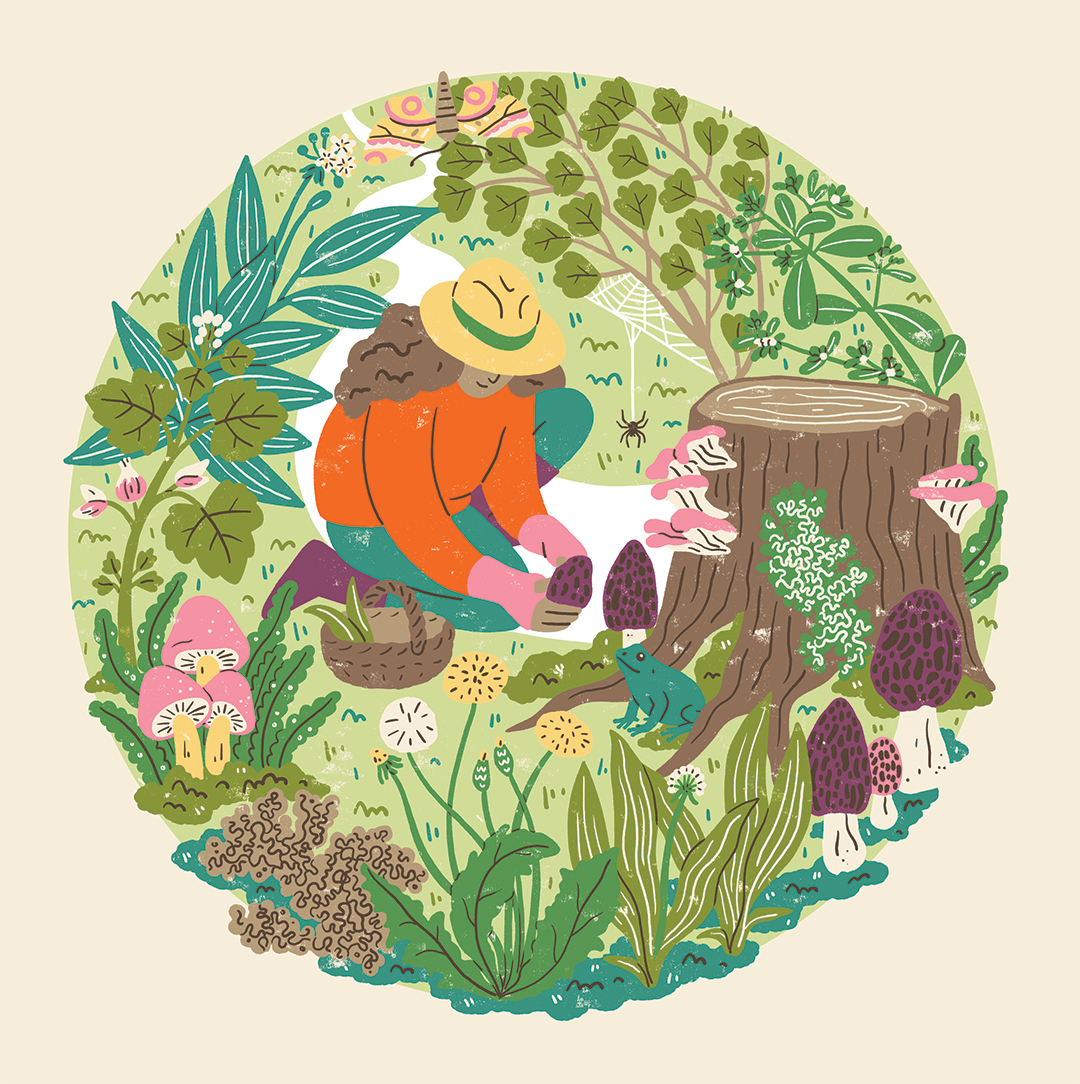
Illustration by Harriet Seed
Foraging is an ancient means of obtaining wild-growing food from our natural environs, though it’s a skill set most of us lack since grocery stores and restaurants do all the work for us now. Still, foraging can be a fun way to engage with nature and learn about her bounties. Also, bonus, it’s free food.
If you’re interested in giving foraging a go, it’s important to study up before popping a bushberry in your mouth. Needless to say, some things growing in the woods can be poisonous to humans, so get educated and don’t get sick. Head to the library to check out regional field guides and consider taking classes—the Civic Garden Center and Cincinnati Nature Center offer workshops and tours. Or ask an experienced forager if you can tag along.
Don’t rely on your phone to identify edible plants, though. ChatGPT should not be counted on for your safety, and there’s no app good enough to entrust with your life.
When you’ve found a place to forage (avoiding potentially contaminated spots), learn what commonly grows on the land, both edible and poisonous plants, as well as what time of year you can expect to find those plants. Start out by looking for plants you already know and can easily identify, such as dandelions or pawpaw trees. If you find something you believe is edible, cross reference in books to ensure the botany is correct—some plants that resemble edibles can cause harm. It’s also important to understand which parts of the plant you can safely eat. Common foraging finds in the Cincinnati area are morel mushrooms, garlic mustard, dandelions, ramps (wild leeks), wild garlic, and purslane.