



Collage by Jessica Dunham
Peering to the west as his surveying party paddled through the muddy waters, John Cleves Symmes saw an opening in the tree canopy along the shoreline. It was just as he’d pictured it in his mind. This bow of land marking the confluence of the Great Miami and Ohio rivers is where he imagined placing the capital city of the million acres he’d bought from the new government of the United States of America.
When Symmes splashed ashore in the fall of 1788, he became Cincinnati’s first west-sider. He was just one of many Revolutionary War veterans who had staked their lives and fortunes in the cause of freedom and hungered for a piece of the new Northwest Territory.
The treaty ending the American Revolution had doubled the size of the original 13 colonies, placing the new nation’s western boundary at the Mississippi River. No one had consulted the Shawnee or the Miami people already living here, but the land rush was on. Access to Ohio was the reward for soldiers whom Congress hadn’t paid and couldn’t pay. And speculators like Symmes gobbled it up, re-selling to anyone wanting to start a new life on the frontier.
There are more than 1,200 Revolutionary War veterans that we know of buried in southwest Ohio, specifically in Warren, Butler, Hamilton, and Clermont counties, says Michael Gunn, past president of the local chapter of Sons of the American Revolution. They’re scattered in large cemeteries like Spring Grove and small family plots. Dozens are probably buried under Washington Park in Over-the-Rhine. There are likely at least two buried under the Smith/Edwards exit ramp off of I-71.
Gunn, a retired chemist with a Ph.D. in safety management, became interested in his genealogy 20 years ago and got hooked when he discovered he was descended from two Revolutionary War soldiers. He’s now one of Ohio’s foremost experts on identifying the burial sites and histories of these patriots. “My goal is simple,” he says of his quest. “Find them, mark them, and honor them.”
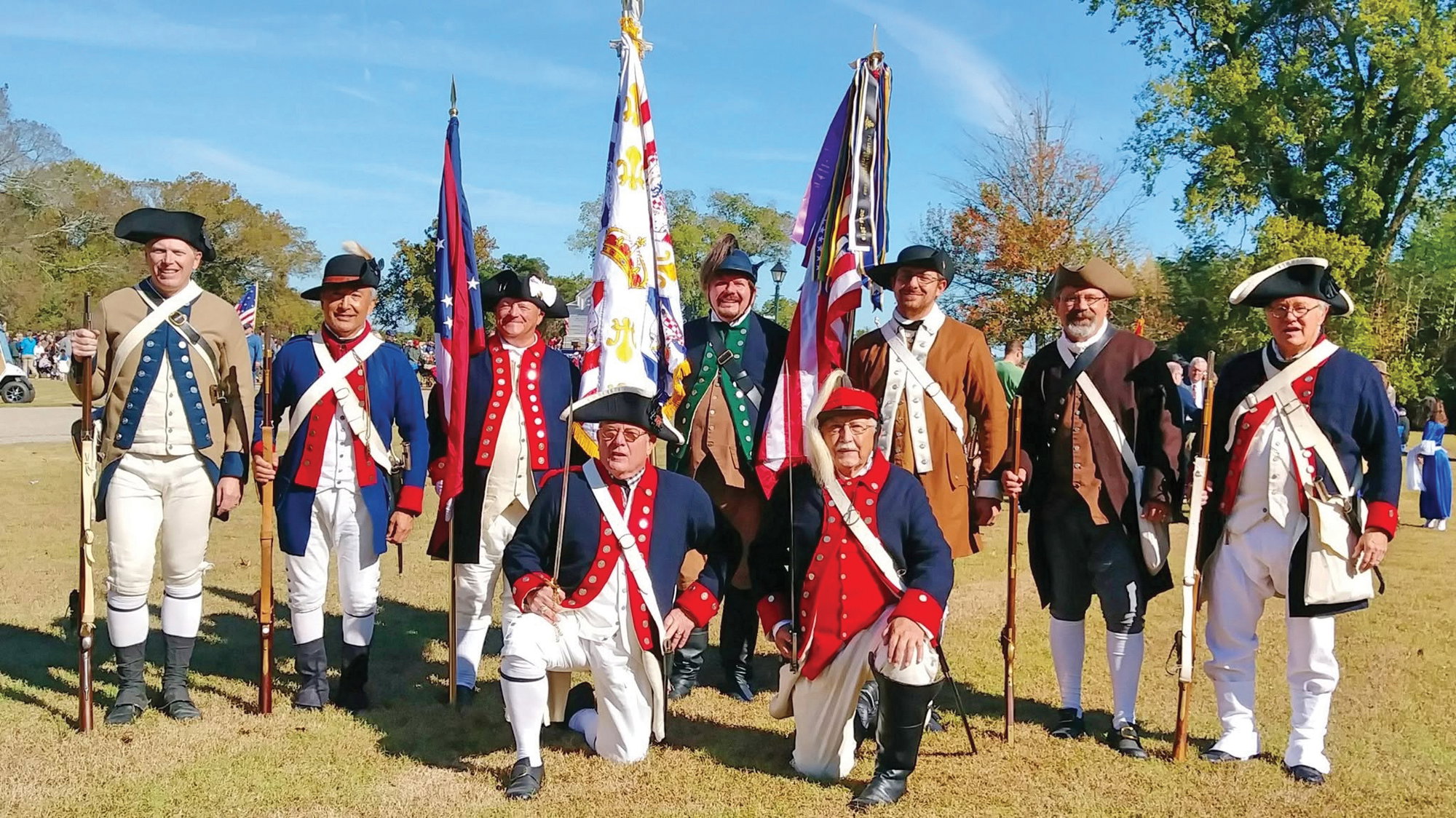
To that end, the local Sons of the American Revolution chapter marks and honors five patriots each year with a ceremony, a plaque, and a musket salute. It’s recognition, Gunn says, of the sacrifices these men made in war and the adventurous spirit they brought here in settling Ohio.
When the war formally ended in September 1783, thousands of American soldiers were expected to return to their homes and resume life as it had been. But the world had changed for the better and the worse—they’d won their freedom from the British monarchy, but many possessed only the tattered clothes on their backs and had no money in their pockets.
“Not only had they sacrificed their time, but they’d also sacrificed their opportunity,” says John Zimkus, historian and educational director at Harmon Museum in Lebanon. “All those years away from home meant they hadn’t farmed. They hadn’t learned a trade. They hadn’t saved any money, and the money that was circulating out there wasn’t worth anything.”
The United States was independent and broke, but the treaty with Britain added roughly 430,000 square miles of land to the new nation. For the soldier who had lost all those years carrying a musket, Ohio was a good place to start over.
Photograph courtesy Sons of the American Revolution Cincinnati Chapter
The British cannonball hit with an explosive force that rocked the small gunboat and sent splintered wood across the lake. Benjamin Rue, then 24, knew his USS Philadelphia was doomed to sink to the bottom of Lake Champlain. He swam to shore, evaded capture, and went on to fight in future battles at Trenton and Princeton. America lost its first-ever naval skirmish, the Battle of Valcour Island in upstate New York, but it delayed the British just enough to thwart their plans to sail down the Hudson River to New York City and isolate the rebellious New England colonies.
After the war, and a few years after the Native Americans in Ohio had been forced to cede their homelands, Rue, now in his early 50s, made the leap. The Treaty of Greenville “guaranteed” peace, and with it came an influx of settlers. Rue reasoned they’d need a place to sleep, drink, and eat, so why not go too?
He would build the Crossed Keys Tavern, a building that still exists about six miles east of Lebanon on the grounds of Camp Kern. “It was mostly just a sleeping place,” says Zimkus. “You were just getting a piece of the floor or, if you got a room, you were sharing it with strangers.”
A few years later, with the nearby Golden Lamb Inn suffering from management and financial issues, Rue accepted an offer to manage it back to health. He was an esteemed community leader and, when he died, received a full military funeral. But where?
“No one knows where he’s buried,” says Zimkus, who has spent a lot of time poring over records in search of the veteran’s grave. “The obituary that ran in the local newspaper doesn’t say.”
Rue had a family, but their gravesites are unknown as well. “My guess is it’s within five miles of here [Lebanon], and there was a cemetery next to Crossed Keys, so they could be there,” he suggests.
Zimkus believes it’s more likely that Rue is buried in another church cemetery that, years later, was purchased by the city and subsequently sold to a car dealership. Is it possible that Benjamin Rue, a patriot who fought in our nation’s first naval battle, is buried under a Chrysler showroom?
Photograph courtesy Joyce Browning
When Mary Dunlevy’s widowed mother took a British officer as her husband, Dunlevy was disgusted. Though barely a teenager, she detested the Crown’s control of New York City and was appalled at what she viewed as her mother’s betrayal. Determined to cut ties, Dunlevy left her family to live with a young New Jersey doctor and his family, never to see her mother again.
Joyce Browning likes to talk about the American Revolution’s “herstory.” While the men fought, the women nursed, farmed, spied, and raised families. They were indispensable, holding a stressed society together, she says, and when the war ended they weren’t deterred by further hardships in the Ohio wilderness.
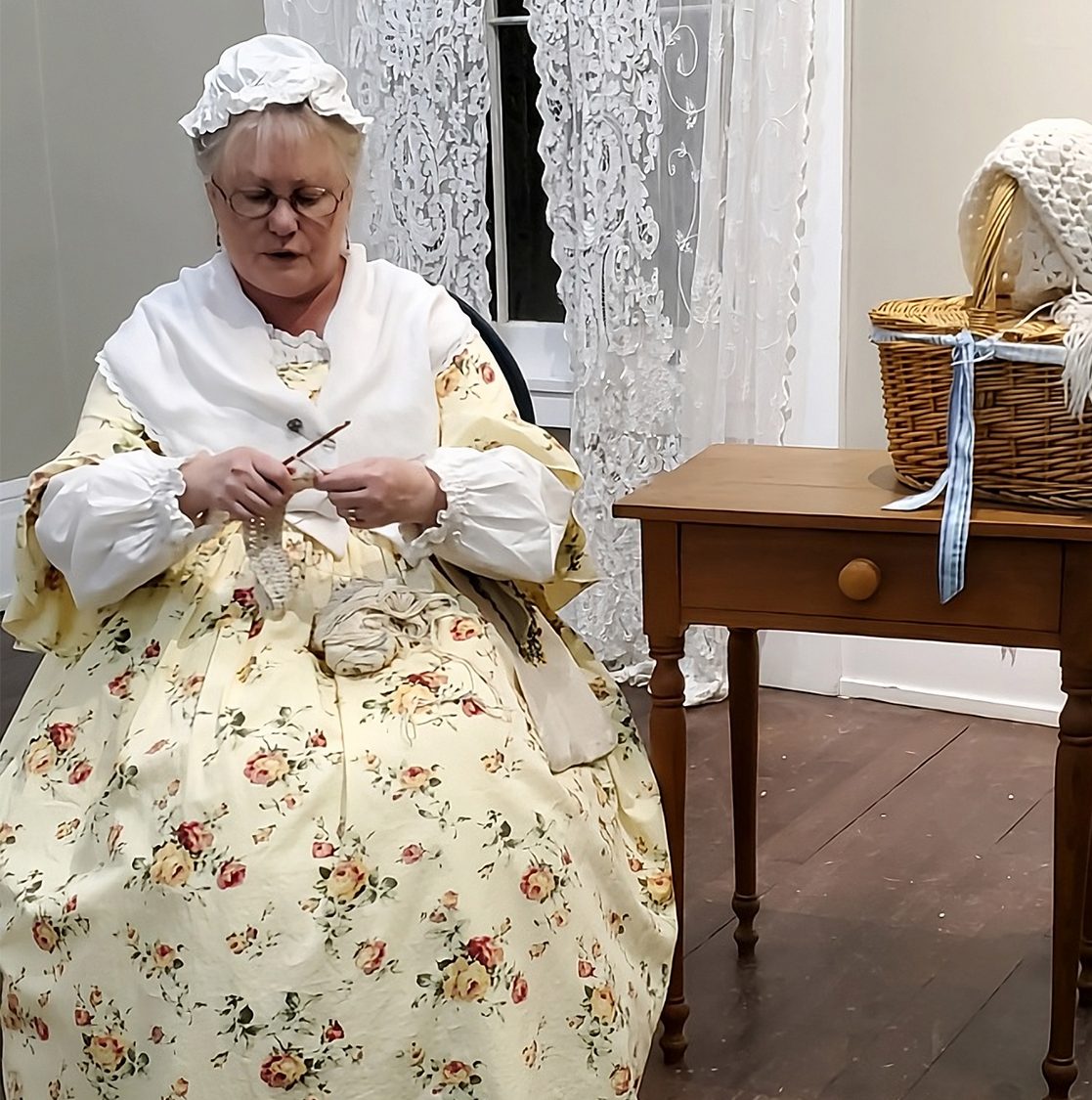
Browning, a retired naturalist and unofficial historian with Great Parks of Hamilton County, channels that spirit when, dressed in period attire, she presents Dunlevy to civic and church organizations. “She was a strong woman with a lot of grit who knew what she wanted and weathered many a storm that came her way,” she says. “Maybe it was because she was born at sea emigrating from Scotland. Even then, she was picking the time when she was to be born.”
Dunlevy followed that New Jersey doctor, Caleb Halstead III, to the war’s front lines and assisted him in treating diseases, extracting bullets, amputating limbs, and evacuating the most seriously wounded. On return trips to the front, she was a supply officer, bringing as much food and ammunition as her buckboard could handle.
Browning, who has done extensive research on Dunlevy’s life, tells the story of her defense of the Halstead home when British troops barged in and began looting. “She held her ground and demanded they leave when one of the soldiers pulled out his sword,” says Browning. Dunlevy, not yet 16 years old at the time, stared him down.
She was in New York City when General George Washington entered after the British evacuated the town at war’s end, joining hundreds who threw flowers in his path as he rode triumphantly down the streets. Independence won, it was time to settle down—and for Dunlevy that was in Ohio.
James Carpenter was an American soldier in the unit commanded by John Cleves Symmes, so it was natural that he joined Symmes’s mission to survey the new lands between the Great Miami and Little Miami rivers. Carpenter had married Dunlevy the year before and, awed at what he saw in Ohio, rushed back to New Jersey to gather her and all their belongings for a trip over the Allegheny Mountains. They got as far as Limestone, Kentucky (now Maysville), but Dunlevy was in the late stages of pregnancy and could go no further.
Carpenter, who was an actual carpenter, continued on to join the Symmes group and would help build the settlement of Columbia, the area’s first permanent outpost (roughly the site of Lunken Airport today). But his work over the freezing winter took a toll. Shortly after bringing Dunlevy and their daughter to the settlement and fathering a second daughter, Carpenter died, leaving Dunlevy alone in the wilderness with two small children.
“She could have left the cabin and moved inside Ft. Washington [downtown Cincinnati today], but she didn’t trust the soldiers there,” says Browning. “It was no place for a single woman and certainly not for her daughters, so she was bound and determined to stay in her cabin no matter how dangerous it was to be so far from the fort.”
Shawnee attacks on the Columbia settlement weren’t uncommon, so Dunlevy converted a vegetable cellar below her cabin’s floorboards into a subterranean bedroom, putting her children there each night. She would stay up most of the night listening for trouble. Her plan was to run six miles to the fort for help in case of an attack, and the children were instructed to stay below the floorboards.
“Cabins all around her were hit,” says Browning, “but I have a feeling the Native tribes thought Mary was just a little crazy and left her alone.”
Dunlevy met her second husband, Francis Dunlevy, at the fort when he started a school for boys there. He had something practically no one else in Ohio country possessed: a college degree. They married and decided to move to Lebanon to start a second school in what is now Warren County. Francis would become a circuit judge, an ardent abolitionist, and one of the drafters of Ohio’s state constitution.
Mary Dunlevy rests now beside him in Lebanon’s Pioneer Cemetery, recognized as one of the first women to live in the land between the Miami rivers. “Mary was a witness to history,” Browning says. “That’s why our ‘herstory’ is so important to remember.”
Isaac Anderson was a battle-scarred survivor and a master escape artist who would have made Houdini proud. Luckily for historians, he was also a disciplined writer, journaling much of his turbulent life.
The Irish immigrant enlisted as a Continental soldier when just a teenager and fought in dozens of battles, the most notable being the pivotal 1777 American victory at Saratoga, New York. He spent his last 40 years of life as one of Cincinnati’s first merchants and Butler County’s earliest farmers.
Two months after Saratoga, Anderson was lying on a snowy battlefield and presumed dead. A musket ball had ripped through his cheek and out the other in a skirmish near Philadelphia. When the British came back the next day, they took him prisoner and treated his wounds. Six months later, as the British hastily evacuated Philadelphia, Anderson feigned illness and took advantage of the confusion to escape. Within 10 days, he was firing a musket at his former captors in the Battle of Monmouth.
Anderson saw the Ohio country early as a soldier, part of a 107-man battalion mustered by George Rogers Clark, who was intent on ending British rule of the west by taking Ft. Detroit. But Clark’s larger force got a head start floating down the Ohio from Wheeling, West Virginia, and Anderson, part of an ill-fated smaller force, was ambushed near what is now Aurora, Indiana. It was a massacre, but Anderson survived and once again was held as a prisoner of war, this time by a confederation of Native warriors aligned with the British.
Anderson was taken by land, canoe, and sloop to Montreal over a three-month journey and spent six months in a British jail there. He once again escaped his captors and walked through hostile territory back to Pennsylvania. You couldn’t keep Anderson down.
But that march at gunpoint through Ohio country to Montreal got him dreaming. He’d seen the lush forests, the rich soil, and the navigable rivers. After the war ended, Anderson packed up his family and moved to Losantiville, the settlement next to Ft. Washington, where he bought a log cabin at the corner of Walnut and Front streets (now part of Smale Park) and became an 18th century entrepreneur. He opened a general store and a tavern, went into the brick manufacturing business, and started a moving company for the steady stream of new settlers arriving by flatboat at the Public Landing.
When the Symmes Purchase was finalized and land sales opened up, Anderson was in line, claiming his piece of the American dream at the confluence of Indian Creek and the Great Miami River near what is now Ross. He farmed there with his wife and 11 children and is buried in nearby Venice Cemetery.
Symmes could have retired comfortably to his New Jersey home after the Revolutionary War and resumed his career as a distinguished lawyer. And he did for a while, eventually serving on the New Jersey Supreme Court. But the restlessness and risk-taking that led him to foment rebellion in his community before the first shots were fired at Lexington and Concord beckoned him to a new adventure, and he saw an opportunity in Ohio real estate. No matter that the land belonged to the Shawnee and the Miami people.
The U.S. government sold Northwest Territory land for two-thirds of a cent per acre, which seemed like a good deal to Symmes, even if he hadn’t yet laid eyes on it. He put together a group of politically-connected investors, ditched his judicial robes, and aimed for the setting sun.
“It was the beginning of land fever, so I think it’s fair to consider him the father of the western movement in the old Northwest Territory and certainly the Cincinnati land rush,” says Tom Ratterman of the Harrison-Symmes Memorial Foundation Museum. “Kentucky was already settled at that point, but Ohio was wild.”
Ratterman notes that Symmes had a conciliatory view of the Native Americans living on “his” land. His surveyors described especially rich soils in the northern part of his purchase around what is now Hamilton, and Symmes dreamed of transporting those crops down the Great Miami River to his settlement at the Ohio River. For that to happen, he would need peace.
“But some of his surveyors were mostly Kentuckians,” says Ratterman, “and when they came across an Indian village, they just wanted to kill them.” When Symmes wouldn’t allow it, many headed back home to where, sadly, there was an established legacy of violence between settlers and the Native population. John Filson, the surveyor who had laid out the Losantiville settlement, stayed on briefly but, after another disagreement with Symmes, also left for Kentucky. Filson didn’t make it home, and his body was never found.
Symmes, like all land speculators, was controversial in his time. His surveys were less than exacting, his contracts were somewhat imprecise, his record-keeping would make any auditor blush, and he occasionally sold the same parcel of land to multiple people. He spent a lot of time in his later years in court litigating claim disputes, and with the interruption of settlements due to the Indian Wars and a reduced land agreement written after the Treaty of Greenville was signed, he was never able to secure the full million acres he’d initially purchased.
The east-west Symmes Line runs just north of Lebanon on what is now Monroe Road. Symmes’s original purchase got cut back to approximately 311,000 acres when his money ran out. And his capital city at the confluence of the Great Miami and Ohio rivers didn’t work out either. “It was the geology,” says Ratterman. “The last Ice Age cut a low valley there that looked good, but it constantly floods.”
Symmes moved his settlement north of the confluence and built his personal home in what is today Cleves. The home is gone now, consumed by a fire in 1811 that destroyed many of the records and contracts that provided legal fodder for early 19th century litigants.
Ratterman, who studied literature about Symmes and owns one of his original signatures, notes that the arrival of General William Henry Harrison to the region, just a soldier at the time, provided not only security from Shawnee attacks but family drama as well. Harrison fell for Symmes’s daughter, Anna, but Symmes refused to grant permission for them to be married. “He can neither bleed, plead, or preach, and if he could plow I’d be satisfied,” Symmes reportedly said. The couple married without Symmes’s permission, and while the relationship eventually improved, Symmes was less than pleased with his new son-in-law, the future ninth President of the United States.
Symmes’s dream of a bustling city on the Ohio River was eclipsed by the growing metropolis alongside Ft. Washington, where Losantiville, rechristened Cincinnati, became the Queen City of the West. But there’s one more story about Symmes that Ratterman says is left uncredited.
Ratterman produces a book with the original letter printed inside, dated June 19, 1791, from Symmes to fellow land speculator and Speaker of the U.S. House of Representatives Jonathan Dayton, asking his opinion as to whether Losantiville should be renamed Cincinnata or Cincinnati. Schoolkids studying Ohio history are taught that the name change came from General Arthur St. Clair, governor of the Northwest Territory. But was it actually Symmes who came up with the idea?
“He and St. Clair didn’t get along, but they were together often,” says Ratterman. “It’s clear that Symmes, either jointly or as a nomination to St. Clair, did in fact name Cincinnati. St. Clair simply made it official.”
Maybe, but for one sentence in the letter: “…as far as my little acquaintance with cases and genders extends, I think the name of a town should terminate in the feminine gender.” It seems that Symmes was lobbying for Cincinnata. St. Clair, an original member of George Washington’s Society of Cincinnati during the war, apparently thought otherwise.
Ohio would officially become a state in 1803, and Symmes died 11 years later and was buried in Congress Green Cemetery in North Bend, a west-sider to the end. His daughter and son-in-law are buried nearby at what is now the William Henry Harrison Tomb State Memorial.
Earlier this spring, more than 300 people attended a ceremony at Venice Cemetery in Ross honoring Anderson and three other American Revolutionary War veterans who defeated the British and then settled the newly won lands in Ohio. “This is important,” says Gunn. “These patriots gave us a chance, and we need to honor them. It makes us stronger when we see all the colors of the kaleidoscope of our beginnings. It helps us realize we are still one people.”