



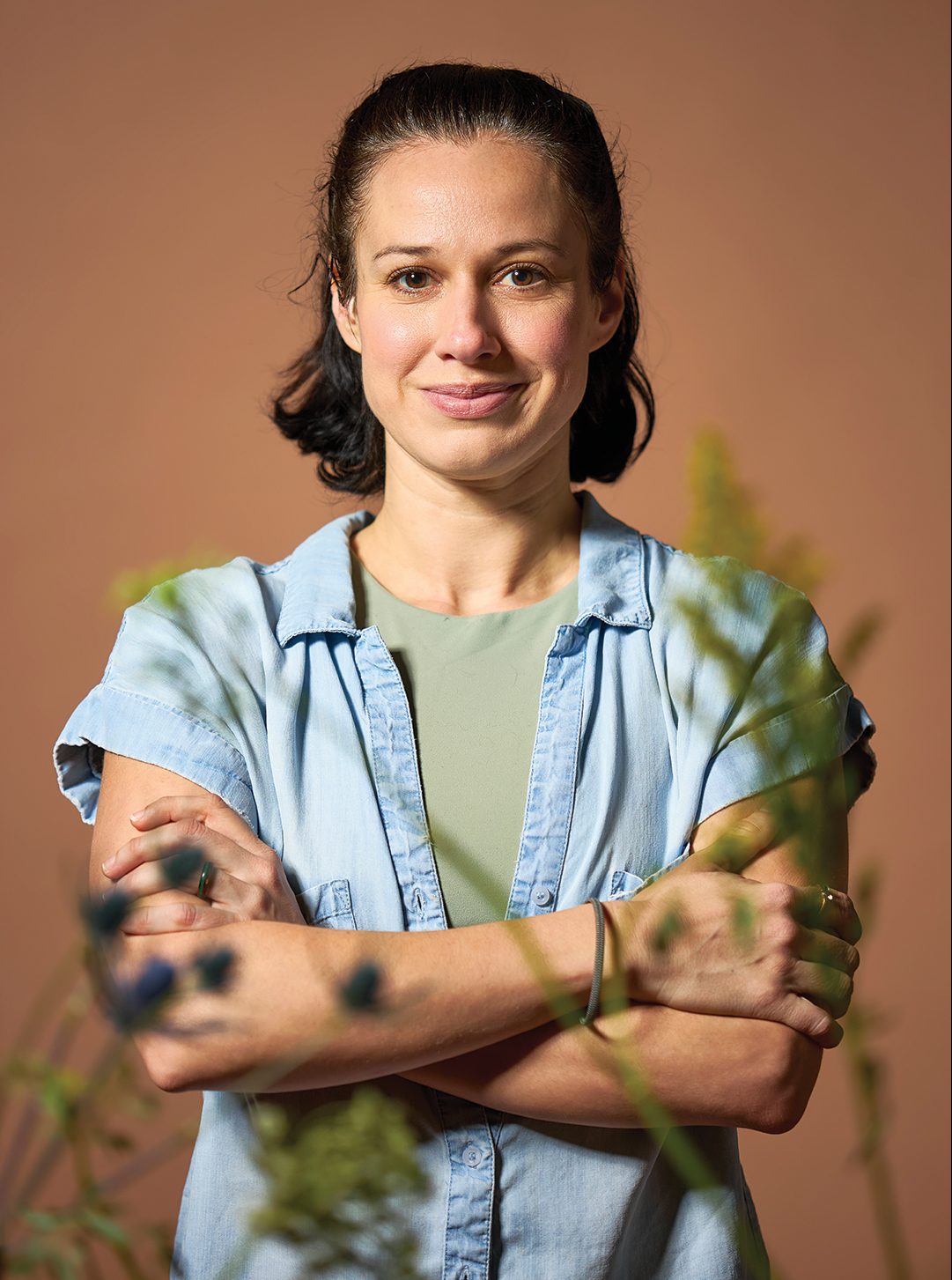
Photograph by Andrew Doench
Caitlin McWethy has always had a strong love for the outdoors. Growing up in Virginia Beach, she’d spend her summers covered in sand and eating delights of the sea caught by her fisherman father. “I didn’t fully realize how rare that experience is these days or how much of a learned skill, often passed down from our elders, obtaining food from the land really is,” she says.
As McWethy got older and moved away from the coast, she replaced crabbing, fishing, and clamming with plant-based adventures. Her foraging began during the pandemic, when she stumbled across Alexis Nikole Nelson’s Instagram feed @blackforager, where videos feature tips on foraging, including identifying edible versus non-edible plants and how to make maple syrup during the wintertime. “She is an incredible wealth of knowledge, joy, and history in every aspect of foraging,” says McWethy.
Foraging is primarily something McWethy does for fun, an excuse to walk through the woods and foster a deeper connection with the local environment. Everywhere you look, she says, there’s something edible—you just need to know how to identify and prepare it.
One of her foraging favorites is mushrooms: chicken of the woods, maitake, lion’s mane, resinous polypore, and giant puffballs. She’s still on the hunt to find a moral mushroom, a mushroom with an edible, honeycomb-shaped cap that makes it distinct in the fungi world. She also enjoys searching for pawpaws, serviceberries, and spicebush.
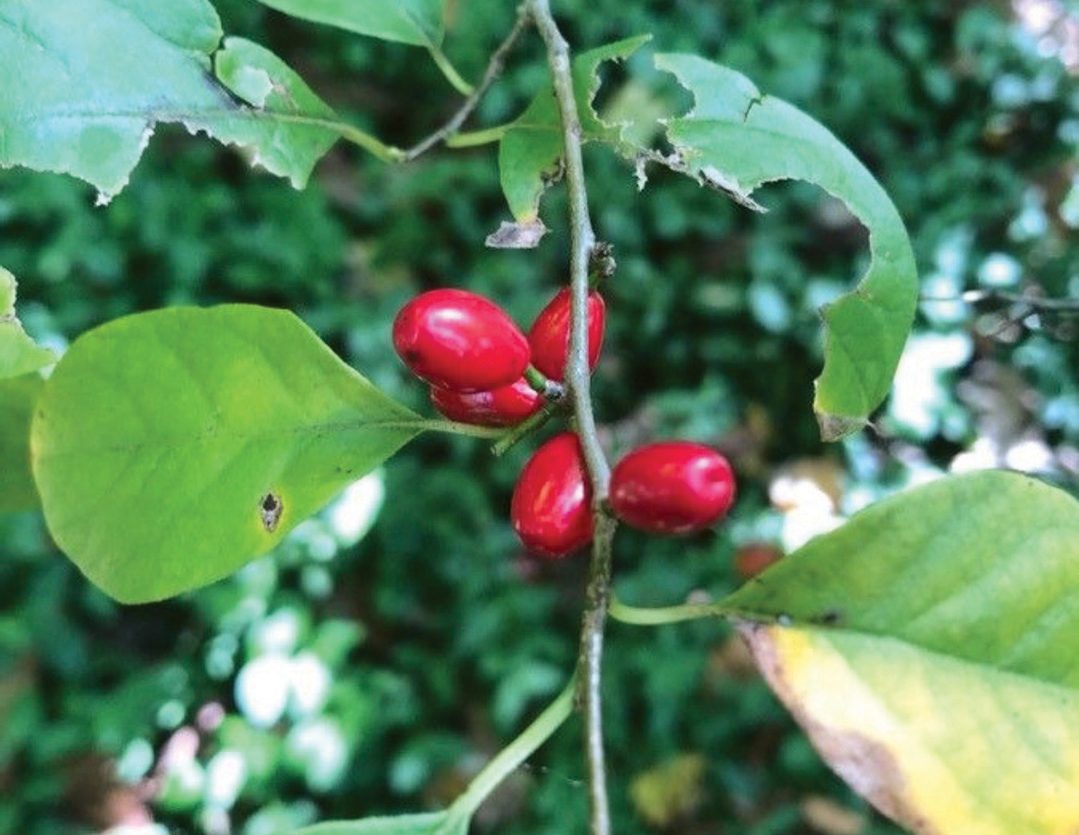
Photograph courtesy Caitlin McWethy
Foraging has given McWethy a deeper connection to local nature. “The most significant benefit to me is simply moving at the pace of curiosity in one of the many green spaces around Cincinnati,” she says. “I know every persimmon tree on public land here, and honestly I get more satisfaction from simply knowing those trees like old friends than I do from eating their fruit, although that’s good too.”
She says a forager has a responsibility to leave more than they take. In Cincinnati, foraging from public lands is generally not allowed, and the natural protected spaces where foraging is legal are small. She believes there could be a benefit to regulated foraging in the same way hunting is regulated and kept to certain seasons. “These spaces need protection so they’re here long after us,” she says. “At the same time, some of these regulations have roots in exclusionary and racist policies that historically kept communities off of land that once helped sustain them.”
In her day-to-day life, McWethy is an actor, performer, and director. She’s been acting professionally for more than 15 years, including eight years with Cincinnati Shakespeare. Following the pandemic she shifted to more commercial, voiceover, and film work and discovered her own love of storytelling, no matter what the medium. She is directing The Ravenside Occurrence at Know Theatre in Over-the-Rhine March 26 to April 18.