



Illustration by Qu Lan
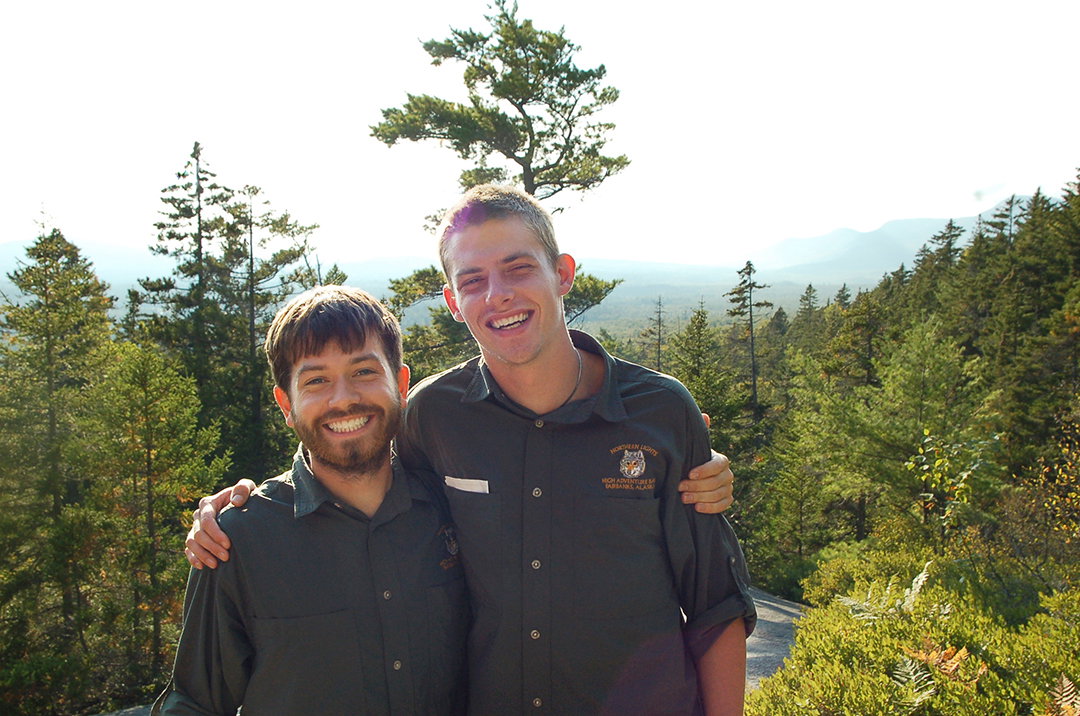
Bryan Wolf was 25 years old and admittedly directionless in life when he agreed to hike the Appalachian Trail with his best friend Joe White in 2006. Eager for an adventure, they packed their backpacks and traveled from Cincinnati to the northern trailhead in Maine, where they began walking 2,175 miles toward Georgia.
“It took a mere 10 days to decide to go home,” says Wolf, describing a rough start. They called their families from the first trail town and relayed their plans to quit. In the morning light, though, they awoke with an urge to give it another shot, without any pressure to finish—and 170 days later they completed the trail.
“It wasn’t easy, of course,” Wolf says. “We’d nurse injuries. I’d call home for an advance from work. We found ourselves crying and then laughing and then crying again on the miles that seemed to never end.”
Their lives were forever changed, Wolf says. White fell in love on the trail with Wolf’s cousin Emily, who joined for part of their trip. The two got engaged within months of returning, and the hiking duo became a trio, exploring other parts of America’s vast wilderness together.
That hike also turned them into small business owners. In 2010, the trio began leasing a retail space in downtown Milford after cold-calling a bunch of vendors and maxing out 13 credit cards, naming the shop Roads Rivers and Trails. It’s still going strong today and employs 20 people.
Photograph courtesy Bryan Wolf
“The funny thing about the trail is that you’ll probably never find what you’re looking for, but you’ll find everything else,” says Wolf. “I didn’t expect to find patience, perseverance, and confidence, but those qualities would be the biggest takeaways from the endeavor.”
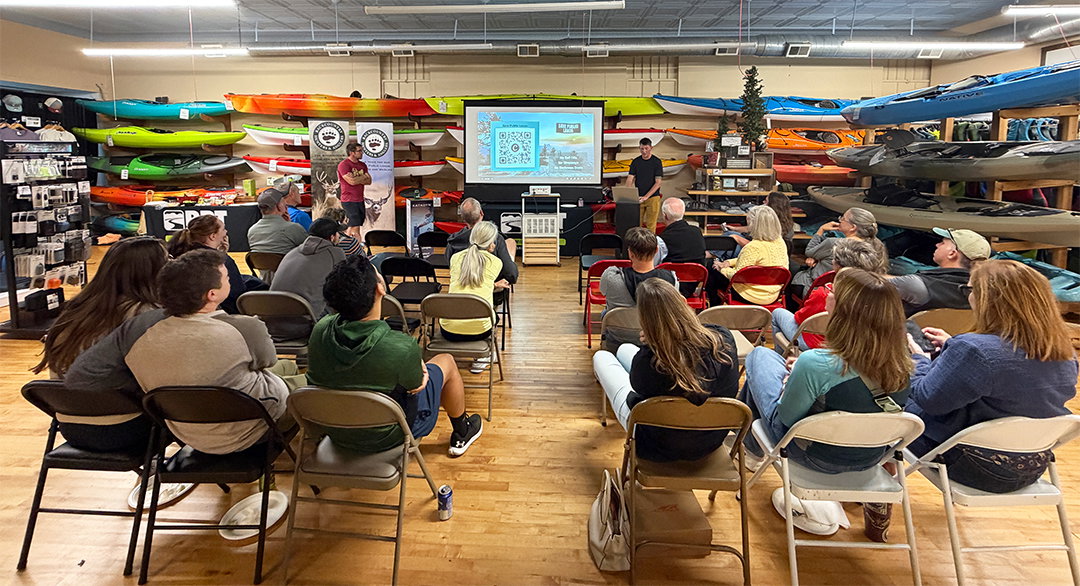
It’s troubling, then, Wolf says, to be spending so much time lately defending the significance of these life-changing experiences and the public land where Americans often have them. Every six months for the past two years, he’s hosted a Public Lands Town Hall at the store to discuss what we can do about an evolving list of threats to public lands.
Topics at September’s meeting range from federal budget cuts at agencies like the U.S. Forest Service and National Park Service, talk of closures of research centers, and censorship of science and history. They also discuss the federal government’s rescission of the Roadless Rule, which could remove national designation for roadless areas across the country, mostly areas out west but also parts of Kentucky’s Red River Gorge and Indiana’s Hoosier National Forest.
On the agenda, too, are proposed revisions to the Endangered Species Act and the Clean Water Act that critics say could dismantle key protections and recent expansion of leases for oil and gas exploration and logging on public lands, including parts of Alaska but also within Ohio’s only national forest. “It feels like death by a thousand cuts,” Wolf says.
Photograph courtesy Bryan Wolf
President Trump and his administration have worked quickly in his second term to reposition American priorities and spending, increasing funding for the military, border security, and immigration enforcement while cutting what he’s called “futile, ineffective programs in a bloated Washington, D.C., bureaucracy.” The idea is to fuel new private-sector investments via tax reforms, deregulation, and a renewed focus on American innovation.
Within his first few months back in office, Trump began setting that course with dozens of executive orders, including many that involved public lands: “Unleashing Prosperity through Deregulation” (E.O. 14192), “Immediate Expansion of American Timber Production” (E.O. 14225), and “Immediate Measures to Increase American Mineral Production” (E.O. 14241), among others. With Congressional approval, Trump’s discretionary budget for fiscal year 2026 increased military spending by 13 percent while cutting nearly 23 percent in funding in the government’s nonmilitary programs and offices, including many that manage America’s 640 million acres of federal public lands—about one-third of the country’s land mass.
The budget request for fiscal year 2027 proposes an even greater increase in military spending, another 44 percent, to $1.5 trillion, while cutting deeper into nonmilitary budgets and staffing and eliminating funding for some programs entirely, including the Forest and Rangeland Research program within the Forest Service. The agency began a major reorganization after last year’s budget cuts, when staffing dropped from 33,680 full-time equivalents in 2025 to 30,210 in 2026. The 2027 budget request proposes cutting FTEs to 11,787, a 65 percent decrease in two years.
Fiscal year 2027 officially began on October 1, but, at press time, Congress and Trump had yet to finalize the budget. Anticipating an impasse, the parties passed a short-term funding bill in September to keep the federal government operating through December 11 at Fiscal Year 2026 funding levels. That action was intended to avoid another government shutdown like last year, which became the longest in history.
Threats to public lands are nothing new, says Ohio State University Assistant Professor Gabe Karns, a wildlife ecologist and ecolab land manager who’s worked for the School of Environment and Natural Resources and studied Ohio’s ecosystems for 15 years. “We’ve actually seen just about all of this before,” he says, “though maybe not all at once or to this degree or intensity.”
He trusts that the value of these lands—to human well-being, the health of the planet, and the American economy—will ultimately safeguard them from destruction, but he worries that the drain of resources, left unchallenged, could lead to quick destruction of some public lands and the slow decline of others.
“What happens when something constant and stable gets worse and worse through time?” Karns asks, “Then you shine a flashlight back on it in 10 or 20 years and say, See how pitiful that thing is? We should get rid of it.”
Dustin Lindley doesn’t want to see that happen on a single acre of the public lands he’s come to love, whether it’s deep in the foothills of Appalachia, in Ohio’s Wayne National Forest, or someplace in the wilds of Colorado, New York, or Washington state. “With the ability to roam, you learn how to quiet yourself,” says the Milford resident, who organizes the Roads Rivers and Trails meetings with Wolf. “Things slow down the longer you stay, and you’re it. Just you out there.”
Lindley’s love for the outdoors spawned from Sunday afternoons fishing with his Grandpa Bill on Lake Mattoon in central Illinois. The routine forged a strong bond between them and sparked Lindley’s appreciation for natural places. When his son was around 3, Lindley taught him to fish and, a few years later, he taught his daughter. With the kids now in high school and college, the family continues to fish and hunt together.
Away from the trappings of modern society, like technology and traffic, Lindley says the land challenges him in inimitable ways, recharges his batteries, and provides time to contemplate life. “People don’t think of that land as theirs, but it truly is their property,” he says. “It’s so wonderful and unique, and we have a lot of it.”
Photograph by shrirampatki via Adobe Stock
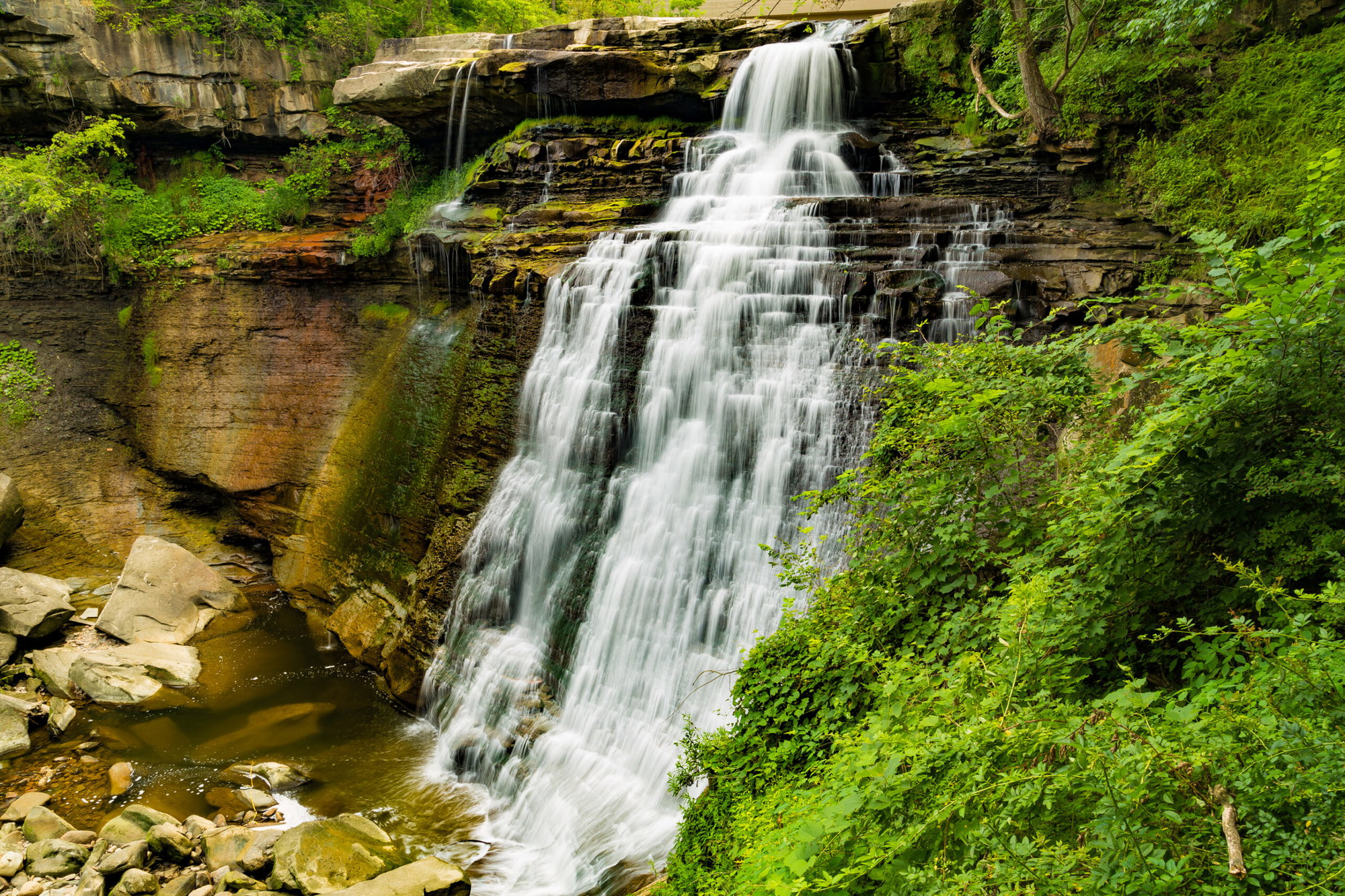
Americans’ collective ownership of federal public land is equivalent to roughly 22 states of Ohio. Alaska alone contains more than 222 million acres, with the remainder spread across the country, as diverse as Cuyahoga Valley near Cleveland to the Florida Everglades. Smaller plots of public land dot the map, containing landmarks or structures with historic or cultural significance, like a Civil War battlefield or the childhood home of President William Howard Taft, preserved as a museum in Mt. Auburn.
Today’s total acreage is a fraction of the 1.8 billion acres once in the public domain and held in trust for the benefit of the general public. Any discussion about their creation must first recognize some cruel beginnings, says Karns. “When teaching about public lands, eventually I will get excited about what they entail, the opportunity they hold, and the resources they harbor,” he says. “But you can’t gloss over the darker parts of history.”
Before 1492, when settlers, speculators, miners, and others began to arrive on the North American continent, an estimated 10 million Indigenous people called these lands home. Newcomers, backed by European governments and then their successor, the United States, took the land from the Native peoples, and historic accounts portray various forms of violence—from distributing blankets used by smallpox patients to Native communities to governments paying monetary bounties for each Native person killed. Historians estimate that by 1900 the Native American population had fallen below 300,000.
The federal government began adding land to the public domain in 1781, when New York agreed to surrender its claim to unsettled territory extending westward to the Mississippi River, according to a history compiled by the Public Lands Foundation. The other colonies followed New York’s lead, and by 1802 all territory west of the colonies from the Appalachian Mountains to the Mississippi River became public domain lands.
Subsequent decades saw the U.S. claim all the lands westward to the Pacific Ocean through the Louisiana Purchase, Mexican Cession, and Gadsden Purchase from Mexico, bringing the public domain lands to a height of almost 2 billion acres. Next came a series of actions by Congress to disperse two-thirds of those lands to individuals, corporations, and states. Ohio, for instance, became the first state created out of the public domain in 1803, and millions of acres were distributed in the West to encourage settlement and development.
An era of conservation swept across the country at the turn of the 20th century, championed by President Theodore Roosevelt, who created the U.S. Forest Service in 1905 and passed the Antiquities Act of 1908 to give presidents the executive authority to declare historic landmarks, prehistoric structures, and other objects of significance as national monuments on public land. Roosevelt himself created 18, including the Grand Canyon in Arizona and Devil’s Tower in Wyoming. He’s also responsible for creating five national parks, 55 national bird sanctuaries and wildlife refuges, and 150 national forests.
More protections were added for some of America’s wildest public lands in 1964 with the passage of the Wilderness Act, which safeguarded more than 100 million acres from roads, motorized vehicles, and activities like logging and mining. President Nixon signed the Endangered Species Act into law in 1974 to prohibit harming or killing species threatened with extinction.
Some endangered species, including the Indiana bat, call southeast Ohio’s Wayne National Forest home. The more time Lindley spent there the more devoted he became to conservation. That interest—and the desire to meet other enthusiasts—led him to join the nonprofit organization Backcountry Hunters & Anglers, which formed out west but today has chapters in every U.S. state and several in Canada.
Its mission is to enhance access to hunting and fishing for all people, Lindley says, and protect habitats that support healthy fisheries and territory for waterfowl and other game. “We rely on clean water and clean air and clean land and view it as absolutely necessary to continue the traditions of hunting and fishing in this country,” says Lindley, who’s volunteered to chair the Ohio BHA chapter for five years.
The organization’s national membership is split nearly equally politically, Lindley says, with about one-third identifying as Republican, one-third as Democrat, and one-third as Libertarian. “So we can’t get political,” he says, “but these are the actions of our elected officials.”
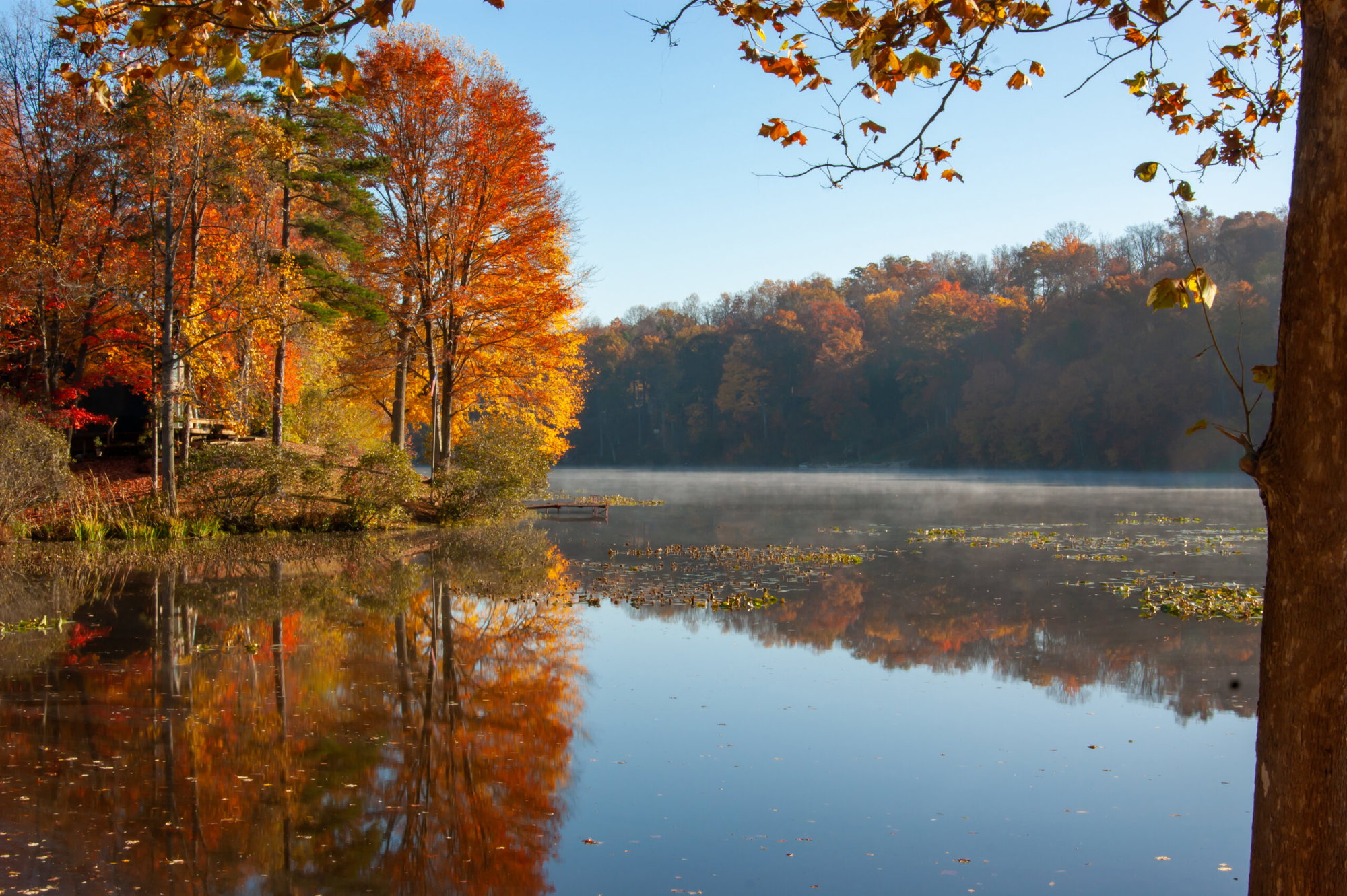
Photograph by Jeff Williams via Adobe Stock
Backcountry Hunters & Anglers opposes many actions by the Trump administration, including its proposed revisions to the Clean Water Act, which critics fear would remove protections from thousands of miles of ephemeral streams and acres upon acres of wetlands. These habitats, when healthy, support biodiversity and have been proven to act as natural filters, cleaning water and helping to retain it to prevent flooding.
After receiving 220,000 public comments on the revisions, some in favor and others arguing against a narrower definition of “waters of the United States” and other points, the U.S. Environmental Protection Agency issued a supplemental explanation of the revisions in September and allowed another 30 days for public comment. The EPA is expected to adopt a final rule at some point next year.
Lindley says he’s particularly concerned with the expansion of oil and gas leases in Wayne National Forest for hydraulic fracturing. More commonly known as fracking, the process typically involves injecting water, sand, and/or chemicals into a well to break up underground bedrock and free up oil or natural gas reserves for energy production. The U.S. Bureau of Land Management began leasing 40 parcels totaling 2,777 acres of the Wayne National Forest on September 15 for more than $11 million and has identified another 40,000 acres with leasing potential.
The Trump administration has also identified 80 percent of Wayne National Forest as suitable for logging, part of the U.S. Department of Agriculture’s goal to ramp up American timber production by 25 percent. Portions of Daniel Boone National Forest in Red River Gorge and Hoosier National Forest also have acreage earmarked for potential logging.
As with many of these topics, it’s not as simple as something being good or being bad, Karns says, and must be analyzed on a site-to-site basis. “I actually hold very strong feelings that Ohio’s Wayne National Forest would be far better off with more logging,” he says, explaining that the wildlife living in mature forests in the region are doing relatively well compared to species that need a young forest as habitat.
Logging can achieve a better balance and prevent wildfires, he says, and with the right combination of experts the federal government could decide where logging makes the most sense. But that collaboration isn’t guaranteed, and he worries about who will be informing the federal decisions.
“One thing this current administration has made very clear is that good science on climate change is not wanted,” says Karns, calling climate change “an X factor” that must be considered. “You can never quite predict with perfect clarity how climate change is going to influence different events, but you can appreciate that, because of changes through time, it probably will.”
Trump’s Attitude Toward Science and history are among Crystal Davis’s biggest concerns as senior Midwest regional director for the National Parks Conservation Association, a nonprofit formed in 1919 to advocate for America’s public lands. NPCA is one of several plaintiffs in an ongoing lawsuit filed against the Trump administration related to what NPCA sees as censorship of history and science.
The lawsuit stems from Executive Order 14253, “Restoring Truth and Sanity to American History,” which, among other directives, sought to “ensure that all public monuments, memorials, statues, markers, or similar properties . . . do not contain descriptions, depictions, or other content that inappropriately disparage Americans past or living (including persons living in colonial times), and instead focus on the greatness of the achievements and progress of the American people.”
The order led to changes in signage at various National Park Service properties, including the removal of panels at George Washington’s House in Philadelphia that told the story of Washington’s slaves. “If you look across the map at these national parks and monuments, they tell a story of all of our past, complex but honest,” says Davis.
She says she’s unaware of any altered signs in Ohio or Indiana in her region, but says “it is literally a Carmen San Diego hunt to figure out what is happening.” Parks continue to experience record tourism and face a $24 billion backlog in deferred maintenance—including an estimated $120 million at Cuyahoga National Park, $71 million at Mammoth Cave National Park, and $45 million at Indiana Dunes National Park— all while staffing has been reduced by 25 percent since 2025, says Davis. “We know that parks have historically been a bipartisan issue, and we’re going to need some legislative leadership from both sides of the aisle right now,” she says.
John May has felt the absence of his federal counterparts in Red River Gorge, where he serves as chief of Wolfe County Search and Rescue. The volunteer organization, which May has been part of since its formation in 2003, has made approximately 1,600 rescues in the Clifty Wilderness popular with hikers, campers, and climbers.
All four of his point people at the U.S. Forest Service are gone, says May, including a longtime director he heard had retired. The Forest Service had been working on a campsite system in parts of the gorge deteriorating by overuse, but May has no idea what might be happening at this point. There are rumors employees at the three district offices may be moved out of state.
“There’s been so much change,” says May. “I really don’t even know who to call there anymore if we need something.”
It’s frustrating, he says, as he sees the area get busier and busier, with people leaving garbage, cutting down trees, and etching in the sandstone. “If you drive down there any weekend, it’s pretty apparent that it’s super crowded,” he says.
News stories about federal layoffs, increased logging, and the Roadless Rule rescission get people in his community talking on social media, May says, but he thinks a lot of his neighbors are unsure what to believe. He does know that, if it came down to it, any proposal to develop public lands in the gorge would be met with fierce opposition.
“Not just from locals,” he says, “People come from all over to visit the area, so I’m sure people will not be at all happy.” The Forest Service declined three separate requests for an interview to discuss changes on their public lands.
Back in Milford at the Public Lands Town Hall, Wolf reminds participants that Americans spoke loudly when Utah Senator Mike Lee tried to sell off millions of acres of public lands in his home state a couple of years ago and came together to squash the effort. In a similar fashion, citizen groups are fighting plans to allow iron ore development in the Boundary Waters of Minnesota as well as reduce the Bears Ears National Monument, culturally significant tribal lands in Utah, by 91 percent. These and other actions are expected to be hashed out in court for years to come.
“We all need to just be more engaged,” says Wolf. “If you’re not participating, then you’re just going to be disappointed by the results.”
Karns has spent a lot of time with politicians, serving as a volunteer member of legislative committees with various nonprofits through the years, and he suggests that anyone wanting to share an opinion— no matter what it is—have a conversation with elected officials at all levels. Face to face is best, he says, followed by a phone call and a letter. Email is better than nothing.
“Tell them a personal story,” says Karns, like Wolf’s life-altering experience on the Appalachian Trail or Lindley’s experiences fishing with his grandfather and then his kids. “I know it doesn’t feel that way sometimes, but they’re all people. We’ll continue debating and pushing and pulling around the same topics, maybe with a few new actors. It’s a long game. We’re taking some quick rapid hits right now, but thankfully conservation is core to human well-being.”