



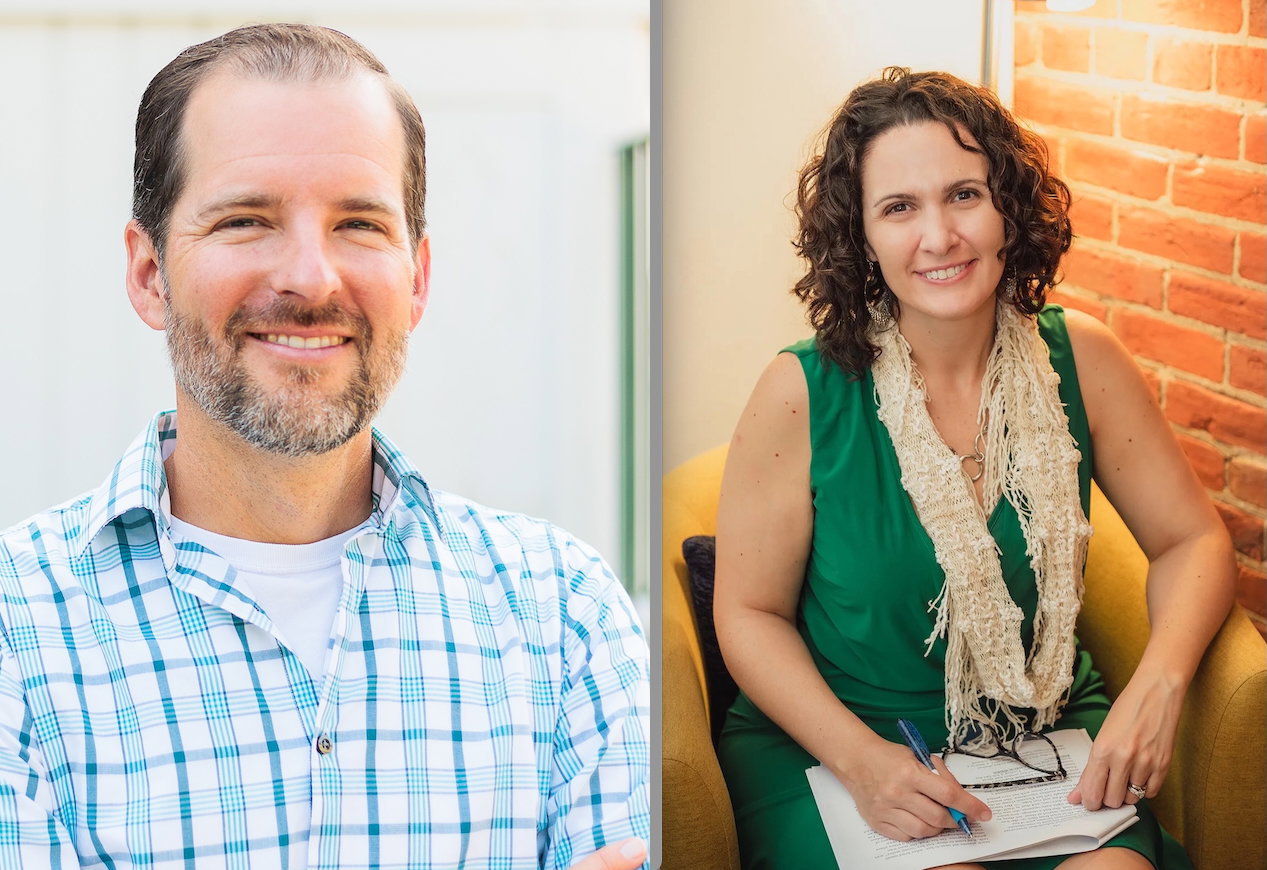
Jason Hentschel and Sarah Stankorb are Wyoming residents who have been reading each other’s writing for years. Both write about Christian faith, albeit for different audiences. Hentschel is pastor of Wyoming Baptist Church and has a PhD in Theology from the University of Dayton, and he’s enduringly committed to the Christian faith. Stankorb is a professional journalist with a growing body of work exploring why women leave the church and how they’re mistreated within it.
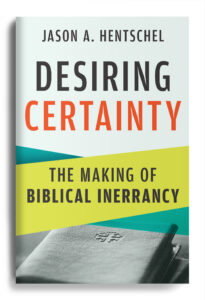
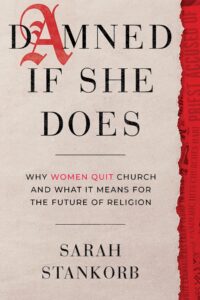
Both published new books in September: Stankorb’s Damned If She Does: Why Women Quit Church and What It Means for the Future of Religion (Broadleaf Press) and Hentschel’s Desiring Certainty: The Making of Biblical Inerrancy (Eerdmans Publishing).
The writers and neighbors host a joint book talk at 7 p.m. November 10 at Wyoming Community Coffee. In anticipation of their event, I ask them to answer questions about each other’s books.
Sarah, what’s one thing that readers should know about the new book by Jason Hentschel, Desiring Certainty: The Making of Biblical Inerrancy?
Jason’s book is a highly readable history that helps unwind the mystery for a lot of us about how we got here—and the underpinning for how a lot of American evangelicals view the Bible. He shows the conflict between ideas and the tensions that grew inside the faith, doing so while still preserving some patience and compassion for the reasons why people so desperately want to be so certain about God and their place in the world. But he’s also honest about the ways such an impulse to cling to certainty eventually falls apart.
 Given your own vantage point as a reporter studying women in conservative faith communities, did anything particular about Jason’s book stand out to you? What do you think of his mission to create more dialogue across believers through this book?
I’ve interviewed so many women raised to believe there was one “right” way of being a Christian, based on one true understanding of the Bible. Holding that “truth” meant that those who led their churches were able to wield great authority. I think in my reporting I’m downstream from the consequences of what happens when that authority is claimed by the wrong people. I know how such authority can be weaponized. It’s so helpful to know the history of inerrancy and to think through how such claims to truth developed.
Dialogue is something I am hoping for, too. Claims to absolute, certain truth shut down all conversation. Shifting authority to a community-based model seems safer and braver to me. Dialogue opens the door to new ideas and to testing whether belief is based in faith or logic or fear. For some, it can be scary, but I also imagine it’s healthier to have enough faith in your faith to stretch it out and be open to learning something new.
What’s one pattern in religious life in the U.S. today that both of your new books address?
I think both books are confronting different aspects of our current crisis of truth. We’re in an information age where deep fakes are common, where data flies at us all day but often with very little wisdom. We’re also in a moment where one version of this faith—authoritarian, Christian nationalism with in-built claims to inerrancy—has sucked up a lot of oxygen and for a lot of people has come to represent the whole of Christianity. It doesn’t.
Desiring Certainty opens a door for considering religious truth without pretending at inerrancy. At least that’s what I took from it. Damned If She Does documents ways people, women especially, are experimenting and testing out new spiritualities—some after fleeing churches where inerrancy and false authority caused a lot of damage. For many of my sources, after years of being told what they had to believe, there is a certain lightness in that search.
I think both books open up paths to thinking about spirituality that acknowledge this a pluralistic country and we can find community across different beliefs or even contentedly test and debate side-by-side in healthier ways. There are alternatives.
Jason, what’s one thing that readers should know about Damned If She Does by Sarah Stankorb?
Sarah’s book is raw and honest. I’m a pastor, and in the church world we often talk about demographics—who’s coming, who’s going. But those are just numbers. Sarah invites us to meet the real people behind those numbers, and those real-life stories change everything. I left this book eager to be a better pastor, but most of all I left this book eager to be a better listener.
 How does a framework or conception of the Bible as inerrant impact women in the evangelical church?
I like to say that the big issue today surrounding biblical inerrancy—a fancy word for saying that the Bible is without error in everything it teaches—is not what inerrancy is but what inerrancy does. And what inerrancy does is it writes off other voices and other perspectives on Scripture and Christian faith as aberrant without actually listening to what they have to say. This weaponization of Scripture has impacted women and minorities most of all as it typically works to uphold a white, patriarchal view of reality.
But what happens when this view of reality is challenged by personal experiences and genuine stories of clergy abuse, moral failure, and the political prostitution of the faith—all issues Sarah analyzes in her book? The answer is why women have been quitting the church.
If your books went out for dinner in Cincinnati, where would they go and what would they order? Would they have fun together or get into a lively disagreement, or both?
I love this question! I’d suggest Mellotone, the Over-the-Rhine brewpub housed in the old St. Paul’s German Evangelical Protestant Church, which is a mouthful in itself. An absolutely beautiful setting for dinner, especially for two books talking about deconstructing faith. I would like to think Sarah’s book would order Mellotone’s own Unlimited Devotion, a West Coast style pilsner. The stories of these women who left the church but didn’t leave faith itself, much less their desire for the divine, are simply beautiful and immensely hopeful. Desiring Certainty would order a cocktail, The Last Word, because it hopes it’s the last word on inerrancy. A book can dream, can’t it?
Seriously, though, it would be a good conversation with some lively disagreement around the question of truth and where we can presume to find it—to the point where, I like to think, there would be a second get-together awfully soon.