



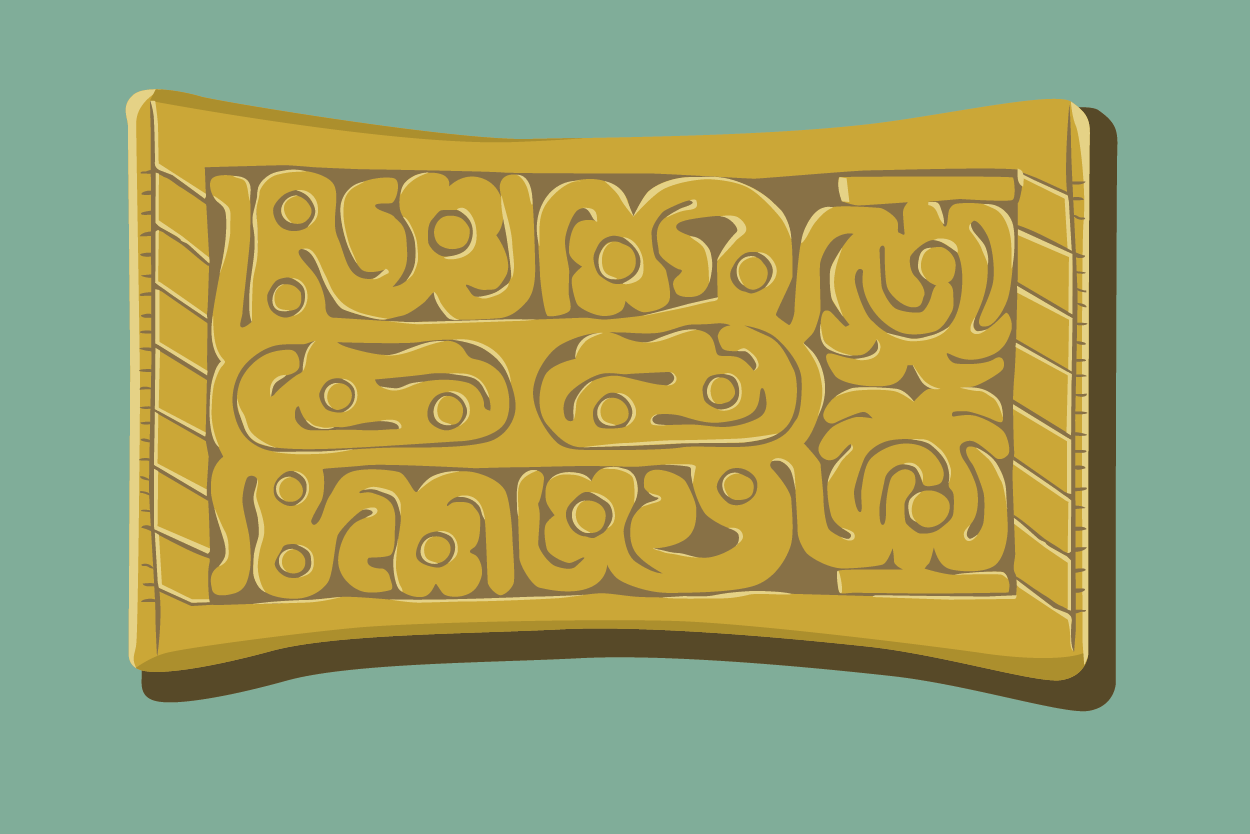
Illustration by Brittany Dexter
It’s a 5-by-3-inch piece of fine-grained sandstone carved with curving, swirling lines and dots in the center of its field and a series of diagonal and straight marks along its edges. Pulled from a mound on the west side of downtown in 1841, we don’t know exactly which Indigenous person made it, what tribe they represented, or what it was used for. “This object was never meant for you or I to ever see,” says Tyler Swinney, Cincinnati Museum Center’s NAGPRA (Native American Graves Protection and Repatriation Act) manager and tribal liaison.
Even though “Native history is U.S. history,” Swinney notes that Americans today can have a difficult time understanding that. “There are different ways of knowing,” he says, pointing out that initial interpretations of objects like this one were being made by people with no reference to, framework for understanding, or even basic respect for Native peoples. And laws and guidelines requiring the protection of Native sites and the repatriation of Native objects did not begin to exist until 1966’s National Historic Preservation Act. NAGPRA didn’t come along until 1990. As Swinney says, “This is history you have to really work to learn.”