


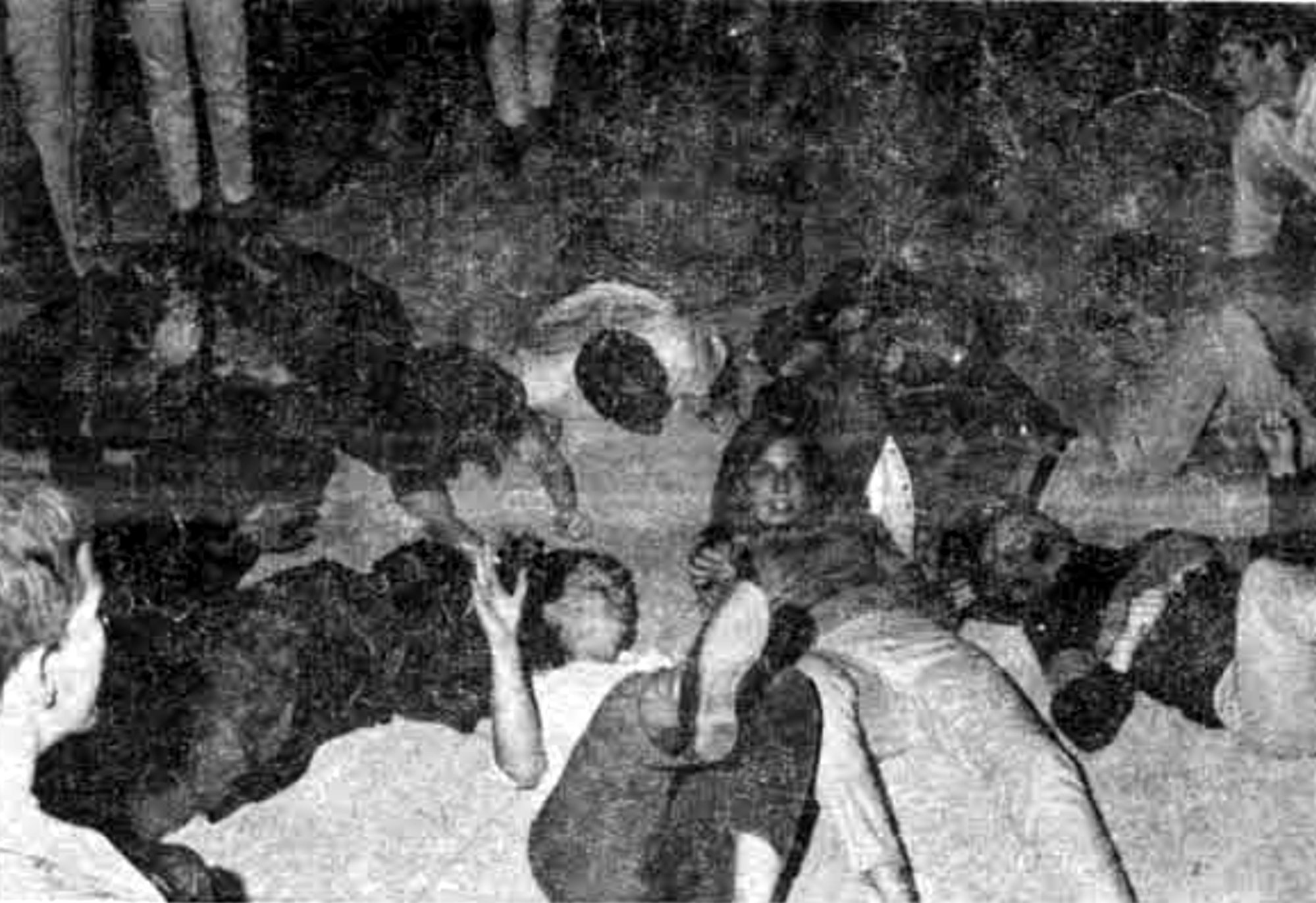
From "University of Cincinnati News Record," January 13, 1966
Surely, you have enjoyed that cinematic classic, National Lampoon’s Animal House. Surely you remember the toga party at Delta House. Surely you savored the jumpin’ jive of Otis Day & The Knights. If so, you will recall John Belushi, as Bluto, screaming, “Gator!” as everyone drops to the floor and writhes in frantic ecstasy.
Did you know that scene just might possibly have been inspired by an incident in Cincinnati?
Bluto’s shout was the cue for everyone to do The Alligator, a dance performed lying on the floor involving a lot of wriggling and groping. A dance by that name is referenced in the song, “Land Of A Thousand Dances,” a hit for Cannibal and the Headhunters in 1965 and for Wilson Pickett a year later.
“Land Of A Thousand Dances” was composed in 1962 by Louisiana R&B singer Chris Kenner and “Alligator” may have been invented by him simply to rhyme with Mashed Potato. There is scant evidence that such a dance actually existed in 1962. Most of the other dances in Kenner’s recital were fairly well known in the 1960s: the Pony, the Chicken, the Mashed Potato, the Watusi, the Twist, the Fly, the Jerk, the Tango, the Hand Jive, etc.
A search for mentions earlier than 1966 of the Alligator as a dance comes up dry, outside of some mentions of an Alligator Dance performed by the Seminole tribe. Most of the dances Kenner lists had been introduced or promoted by a song, as in Chubby Checker’s “Do the Twist” and “Pony Time,” Dee Dee Sharp’s “Mashed Potato Time,” and The Orlons’ “Wah-Watusi.” Although there are many songs titled “Alligator,” none describing a floor-crawling dance landed on the charts.
Which brings us to Cincinnati, in the wee hours of Saturday, March 5, 1966, at 78 West McMillan Street and a hopping nightspot called the Neb-Bish Club (usually spelled Nebbish in the newspapers). According to the Cincinnati Post [March 7, 1966]:
“Police say three women, all employed as secretaries, came to District 5 police station at 12:30 a.m. Saturday and complained about the dancing at the Nebbish. Police also received five telephone complaints, mostly from girls who said they considered the dancing obscene.”
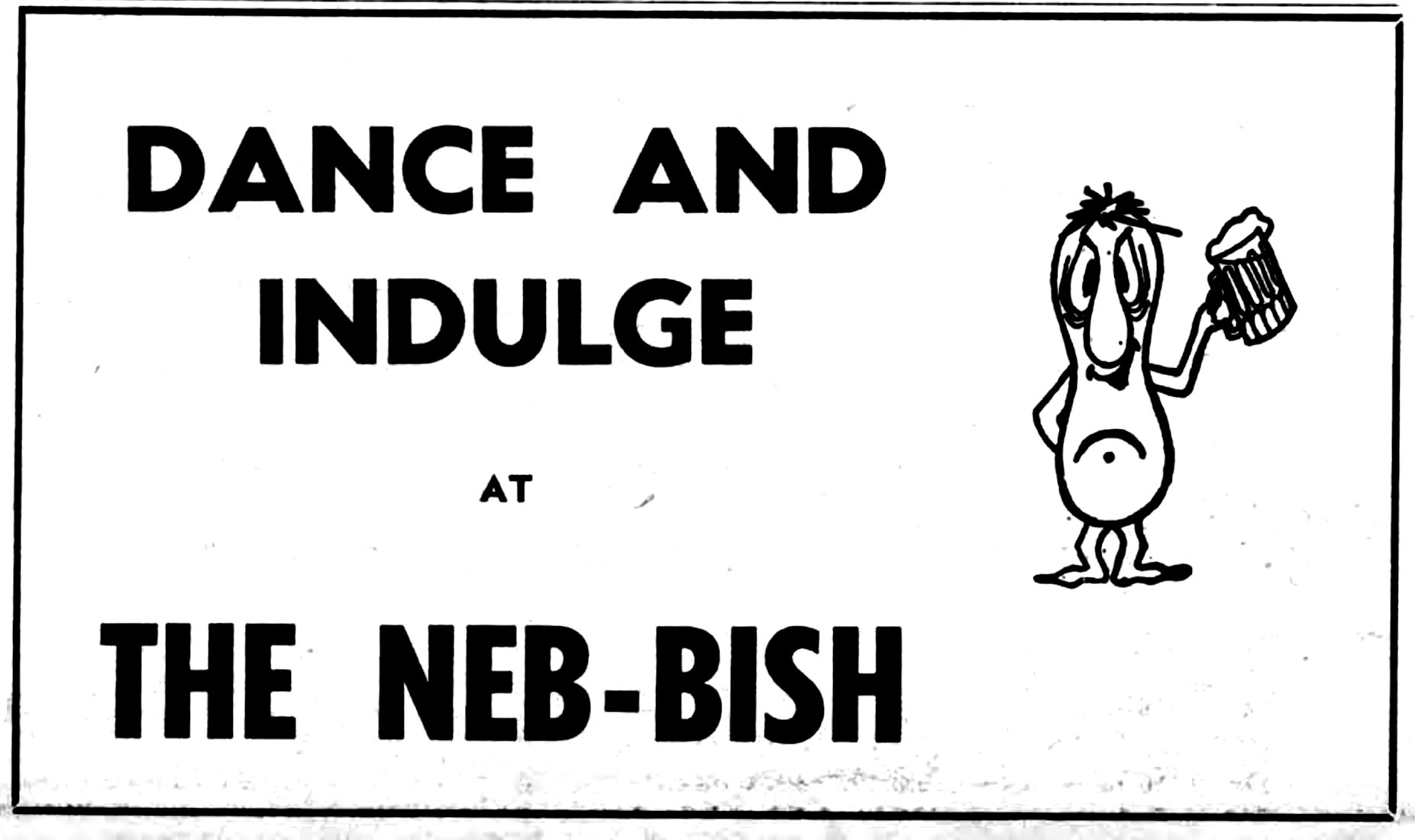
From "University of Cincinnati News Record," March 10, 1966
The Cincinnati Enquirer [March 8, 1966] describes a very lively scene at the Neb-Bish that morning:
“Detective Cary U. Neville and William Meredith and a patrolman said they had to shoulder their way into the establishment through a fight that was issuing from inside. They said the couple during their dance ‘seemed to go wild in their gestures’ including rubbing each other’s body with their hands.”
The officers told the court they met with “belligerence” from the dancing couple, the bartenders, the owner and the outside crowd, who apparently stopped fighting just long enough to protest the arrest. The arresting officers radioed for backup to clear the sidewalks.
(Pause for a moment and ask yourself: How long had this couple been squirming on the floor? Once they started dancing, three secretaries had time to be offended, get to their car and drive to District 5. Police had time to radio for a car to investigate, the police car had time to drive from somewhere, the officers had time to “shoulder their way” into the club and the pair were still dancing?)
In any event, the couple in question, Howard Blevins, 19, a UC student from Groesbeck, and Diana Peace, 23, a UC secretary from Westwood, denied in court that the dance was suggestive or obscene. The court dissented and each was fined $100 and costs.
The judge hearing the case, John W. Keefe, decided that individual fines were not enough. He told the Enquirer that the Alligator dance was “offensive and abhorrent to the concepts of morality and decency” of Cincinnati:
“I realize that some young people today are engaging in some pretty wild dances, but what took place on this occasion, before a large number of other patrons, apparently largely college students, would be considered too raw, even in the worst type of skid row joint.”
Judge Keefe telephoned Donald Cook, director of the Ohio Department of Liquor Control, and demanded that he impound the liquor permit issued to Norbert G. Monning Jr., manager of the Neb-Bish. A hearing on the charges took place at the Ohio Liquor Commission in Columbus, Ohio, that April. The evidence induced wry grins, according to the Enquirer:
From "Cincinnati Enquirer," April 27, 1966
“Gary Neville, specialist in the Cincinnati Police Department, found he couldn’t describe orally in an adequate manner the contortions of the couple arrested. To the amusement of the commission and audience, he stood in the witness box and worked his body this way and that in an effort to get his story across.”
The commission suspended Monning’s license, but he appealed and remained in business despite the dancing complaint and despite previous citations for selling alcohol to a minor. For reasons perhaps related to the Alligator incident, Monning changed the name of his bar to Someplace Else later that year.
Curiously, the March arrests were not the first report of Alligator dancing in Cincinnati. The News Record, student newspaper of the University of Cincinnati, two months earlier, reported in the 13 January 1966 edition on 500 students attending a party in the Siddall residence hall on campus. While Ivan and the Sabers provided the musical accompaniment, quite a few students tried out what the newspaper labeled the “latest dance craze.” No arrests were made and there is no evidence the university administration took any action. In one story, the Enquirer noted that the Alligator had been danced at other Cincinnati bars, “mostly where a college crowd gathers.”
The Cincinnati Alligator arrests made national headlines, with newspapers in Atlanta, Washington DC, Memphis, St. Louis, Pittsburgh, Houston, Santa Barbara, Los Angeles and even Toronto reporting on the case.
All that publicity, naturally, led to copycats around the country. By May of 1966, the Miami Herald ran photographs of Alligator dancers thrashing around on the floor without incident or arrests. The mayor of Boise, Idaho, shut down a teen dance hall in April 1967 on complaints that 15 youths were doing the Alligator. A teen club in Bradenton, Florida, dismissed allegations that dancers there were guilty of dancing the Alligator.
All the evidence seems to suggest that the Alligator had been circulating among college students for some time. Until a Cincinnati judge got his shorts in a bunch, however, the dance was largely unknown to the adult population. It is not out of the question that Judge John Keefe inspired the writers of National Lampoon’s Animal House.