



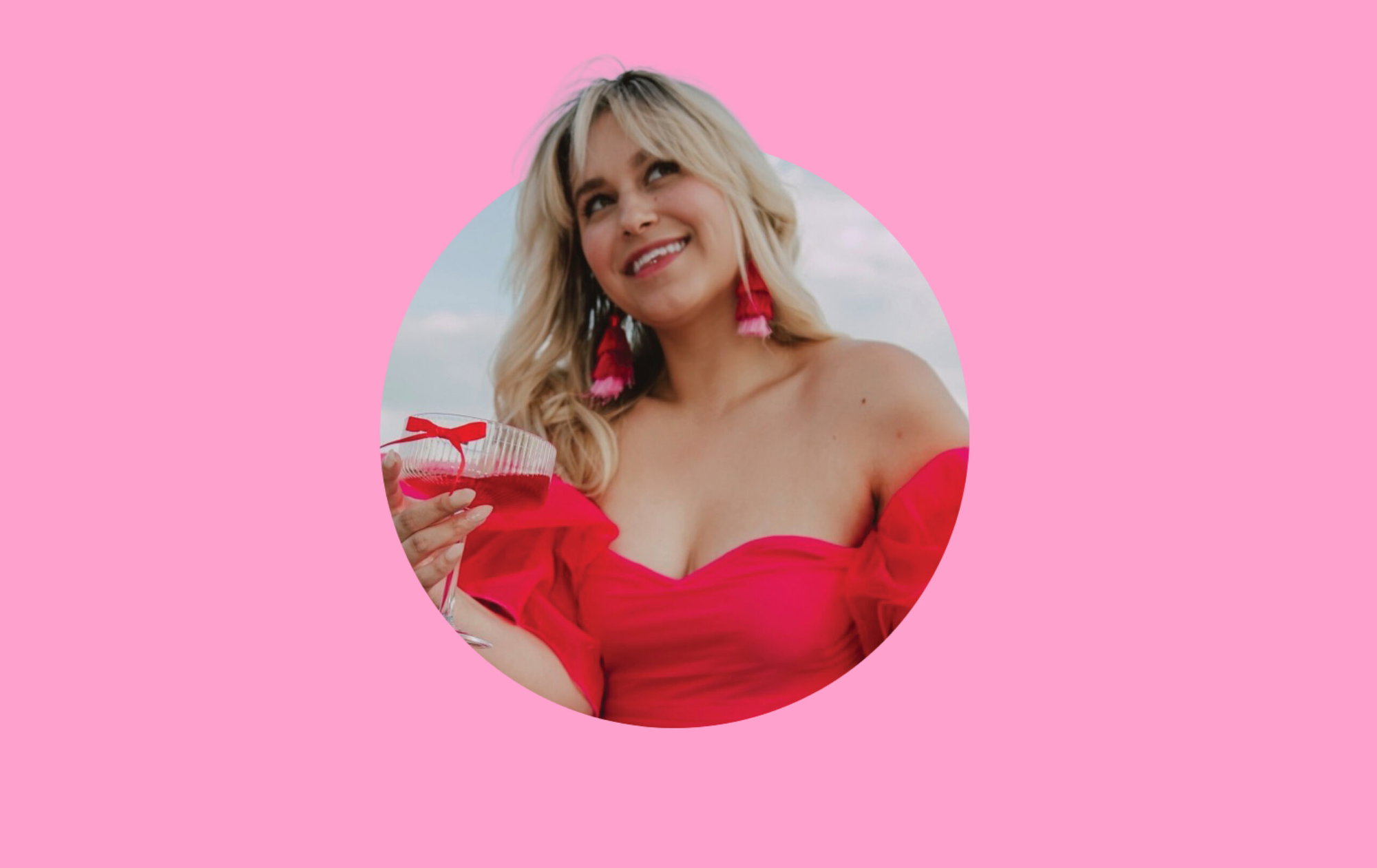
Photograph courtesy Lolli Nicodemus
In the years since she departed her conservative religious upbringing, Lolli Nicodemus has moved into Cincinnati proper, stepped into the world of dating and relationships, and started a podcast to document it all. Sex and the Cincy, a play on Carrie Bradshaw’s newspaper column, has found a robust community of Cincinnatians who are opening up about their own dating experiences—and Nicodemus takes it all in stride. Since the podcast kicked off in February 2025, it reaches about 4,000 listeners an episode, where Nicodemus discusses everything from first-date disasters to deep dives on love and heartbreak.
Nicodemus sat down with Cincinnati Magazine to share how the suppression she felt growing up led her to host candid and public conversations about the world of modern dating today.
What’s the inspiration of Sex and the City and how it relates to your podcast?
I grew up in a very small town. Everyone knows each other, but I also had the element of growing up in purity culture. Dating, sex, relationships—it was never on the table to talk about. I’m able to now—after a five-year relationship—reclaim my singleness. I watched Sex and the City for the first time as I was exiting my relationship, and it just inspired me.
Coming from a culture that’s not very outward about sex and dating, how did you come to a point where you felt comfortable talking about your sexuality?
It was just a lot of me starting to question myself and wonder, “Why am I so nervous to ask these questions—even at the doctor’s office?” Like birth control, for instance. I wasn’t even sure how to keep myself safe because it just was not talked about. With my friends, I found that door open a little bit, and they were very receptive to allowing me to have these conversations and talk openly, and it was a way for me to break the ice for myself.
How old were you when that transition started happening?
In 2017, so I would have been in my early 20s.
What was the reaction like in your community and in your family to you opening up in this way?
The community that I was in was a very strict religious community [Jehovah’s Witnesses]. My dad was an elder in this sect. Basically, I came out and I told them I no longer wanted to subscribe to their rules and I no longer morally aligned with what they were doing, so I got shunned in 2018 from the community, from my family. The reaction was harsh, but it was also one that I was prepared for. I tell people it was the easiest-hardest decision I’ve ever made because I knew where I aligned wasn’t there, and it wasn’t where I was going to grow. But I also knew what it meant. It meant leaving everything. But it’s worth it to be able to live authentically and not be disingenuous with how I want to live my life.
What does it mean to be shunned?
Basically, when you’re in this organization, you’re not allowed to associate with anyone on the outside. I was homeschooled. All of my community, my friends, everyone that I grew up with—one week I was there, the next week, I lived on my own and I was completely shunned from them. It was like a light switch. I saw my mom one day at the grocery store and she just left her cart in the middle of the store and walked away. That happened right after I got shunned.
Have you seen your family since then?
I haven’t. It’ll be 10 years next year.
How are you doing today?
Just building a community—that’s so important to me because I grew up so heavily immersed in community. Being an elder’s daughter meant I was always surrounded and coddled by that community, and so now being able to build one with the podcast and socials feels like I’m regaining that same feeling that I haven’t felt in so long. Plus, I have a core group of my girls. There’s four of us, so very Sex and the City–coded. Being able to know unconditional love and support now has just been incredible. Of course, there’s still moments where I wish I could connect with my family, but at this point, I’m proud of what I’m building.
Coming up on 10 years, where have you found community since then?
A really big part of my story is that as I was exiting that community, I met my boyfriend of five years and jumped from that relationship with my parents to a relationship with him. That was my first step into associating with “worldly people,” or people on the outside. So I was learning how to date, and dating was scary, because they say people on the outside are meant to hurt you. I had to really come to terms with that. I had my boyfriend for five years, and naturally met his friends, who [became] my friends. That’s why now, I’m such an advocate for women and also men not having their partners’ friends be their [only] friends. My relationship ended in 2023, so all of those friends were gone again, so it felt like restarting again. Finding community is really about going into spaces where you feel your most confident and your most comfortable and even curious, and you’re gonna meet those people.
Let’s get into how the podcast came to be. Where did the idea start?
I was literally in the bedroom of my ex and I’s house—we had this little spare room, and me and my best friend at the time just recorded, for fun, our [dating] stories. We have really good banter, and I loved to have these conversations and put on our PJs, pour a glass of wine, and just chat. I just had fun recording, and I would send them to my friends, and they’re like, “You have to put this out there.” So in November 2024 is when I started marketing [the podcast]. I started recording these episodes, I was going through a crazy situationship, so I had all the content I needed, and just started recording. Then I had my launch party in February 2025. I had 50 spots available and I had 80 people show up. I knew I had something here.
So there were four months between when you started marketing and when you launched the podcast—you knew you wanted this to be big from the get-go.
Yeah, I want to be like the next Alex Cooper. That’s the goal.
Who was the demographic you sought at the time?
I thought it was going to be girls in their 20s to 30s who are single and having a good time. But I also recorded with men before I went live—I want to give men, also, a space to air their grievances and talk. Maybe they’re confused about something she said, or a text message. I didn’t know if they were gonna bite, but my demographic now is almost 50-50 men and women. This is for everyone. I have every gender, every sexual orientation, and I love it so much.
How do you approach having guests on the podcast?
I think honestly, this is a podcast for everyone who dates and everyone who experiences relationships. My approach has been really interesting. A lot of podcasts do like to have video—and someday I would love to be able to do that—but it’s been really cool to build this feeling where we record in a room where there’s no cameras. Let’s have a bottle of wine. Come in your sweatpants, and we’ll just talk like friends. They feel more comfortable, they’re not worried about what they look like, they’re not worried about talking about intimate details on camera. They want to be anonymous, they’re more than welcome to. I just want them to feel like they’re hanging with a friend.
Why do you feel like it’s important to have this platform for people to talk about sex and dating openly?
I was actually just at an event this past week, and this lady came up to me and she said, “I felt like you were telling me my own story, and I felt so seen.” That’s what I want. I want people to feel like they’re not alone because dating can be really rough, but I also want to bring back the fun in dating and not just make it a chore. When I’m able to open up and say the struggles I’m having, I don’t leave it at the struggle. I always try to have a solution or a fun anecdote to the issues that we’re facing in dating.
How has your impression of the dating scene in Cincinnati changed since starting the podcast?
Cincinnati is small, but I think what’s incredible is that Cincinnati has so many different communities. I’ve been trying to encourage myself and other people to date outside your type, date outside your usual, because you never know what could come from that as well.
Where are your favorite places to meet people?
I encourage people to go where you would want to be. For me, I’m not gonna go to The Banks at 11 at night and probably meet someone that I would want to hang out with. But I know some of my girlfriends who would love that. For me, it’s probably like a pottery class, or reading a book at Washington Park, walking around Findlay Market feeling really cute. Go where your people would be, and where you would naturally find a friend. Go into it platonically. And also initiate. It’s just a fun way to break the ice and even just build your community. It doesn’t have to end in anything, but exercise that muscle. I love meeting people.
You’ve recently entered your 30s. What advice do you have for dating in your 20s?
I actually gave out advice where I told people to have a limit on your first date, make it an hour, and have an out if you want it. But now, that’s changed for me. I was sucking the fun out of dating by feeling like if it’s been more than an hour, I gotta dash. Put on the outfit, meet with your friends beforehand for a little pre-drink, then go out and have fun because then either way, you get the outfit, you hang out with your friends. If the date sucks, it sucks. You still had a good time. You still had a great story probably to tell afterwards. Make it about you and the rest will come, but don’t latch on to expectations.
Coming from the culture you did, is there ever any reckoning you have to do with yourself in talking so publicly about dating, or have you come to take it fully in stride?
There is definitely hesitation. There’s a lot of things that I have put out. For instance, I do have an episode about losing my virginity, and there was a hot moment where I released it and I had a little bit of, “Was I too straightforward?” It’s just that past coming back and that very subservient girl I was raised to be coming back and getting a little nervous. But that trepidation is just the anxiety of being seen for the first time. That episode specifically, you’ll notice a switch in how open and honest I am about sex and dating after that, because I had that experience of just e-mails pouring in and saying that this helped them with religious guilt and trauma.
Have the men you’ve dated ever had a reaction to what you do?
I’m actually doing this experiment right now where I don’t lead with that. I’m just trying to say I’m in social media, because I want them to hear me first. I’ve found that either they can be really intimidated by it because here’s a girl that’s like, “Welcome to the girls’ locker room where we talk about everything,” and maybe they don’t want to hear other dates I’ve been on, or they don’t want to hear other experiences I’ve had. It’s going to take an interesting person to be super down with it and clown with it, but that’s who that person is just gonna have to be.
Have you had people from your past reach out to you since you left, or have maybe found your podcast?
Definitely. It’s so interesting because when you leave the community that I’ve left, you can go one of two ways. Sometimes, people will go down a more destructive path, and then others will really commit themselves to their passions. I’ve had a few friends who have reached out. Seeing them married or happy in their lives, maybe they’ve got tattoos now—because that was not allowed—seeing them live authentically is the whole thing to me. They’re proud of me, I’m proud of them. We all have this consensus that yes, having the community together is really nice, but that shouldn’t be your only community. We’re just cheering each other on from a distance.
What other big goals do you have for your brand?
I would love to build a little network of relationship-esque podcasts. I also wrote a book about my upbringing and coming out of purity culture that’s going to go through my upbringing. I want to be that big sister, that voice for the people whose voices were silenced for so many years, because I will never be quiet about these things again.
Sex and the Cincy is available wherever you listen to podcasts.