



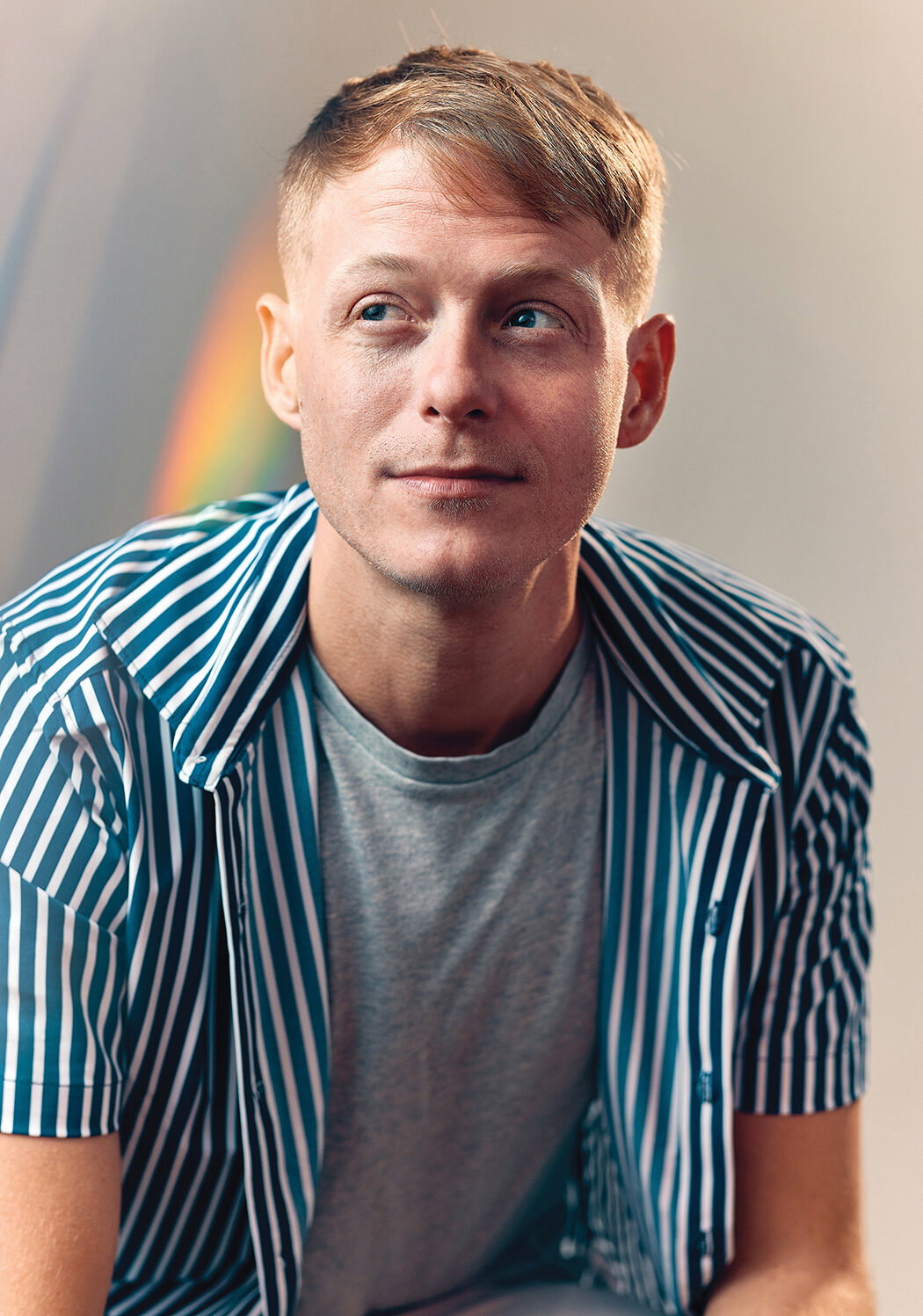
Photograph by Devyn Glista
How do you conduct research for a book on queer people who lived during a period when being queer was illegal? You learn the lingo—often hateful, usually vile— of the times.
Jacob Hogue spent five years researching and writing Cincinnati Before Stonewall: The Untold Queer History of the Queen City (Arcadia Publishing). He originally intended to start a podcast that would spotlight his friends, but as he began to research the project, he saw he had a larger story to tell.
Hogue is the history and legacies chair for Cincinnati Pride and the creator of Queen City Queer History, an Instagram project that shares “untold Cincinnati LGBTQ+ history.” “As I started to research the queer history of Cincinnati, I realized nothing existed before the 1970s. It’s like queer people came out of nowhere.”
Cincinnati Before Stonewall covers the history of LGBTQ+ people in Cincinnati from the Civil War until the late 1960s, just before the Stonewall Riots in New York.
In addition to interviews, Hogue turned to newspapers’ digital archives, medical textbooks, and lavender listings. But he couldn’t use modern terminology to talk about LGBTQ+ people. Instead, he scoured dated vocabulary like “masquerading” (cross dressing), “singular discoveries” (queer people, as in “A singular discovery of a man dressed as a woman was found”), and “degraded creature” (due to obscenity laws, Hogue says, newspapers could not speak sympathetically about LGBTQ+ people).
Hogue purposely included some lighthearted stories in the book because so much of what he found was cruel and dehumanizing. One of the most difficult chapters in the book, though, tells of a double suicide that the news painted as a story of hypnotism—that one boy hypnotized the other boy to kill himself.
“The reporting was horrible,” he says. “It introduced me to this idea that bad endings were a prerequisite in order for queer people to be introduced into main society.”
The book ends with the birth of activism, and Hogue is already at work on a post- Stonewall follow-up. “We only have so much time to tell our stories before they’re lost.”