



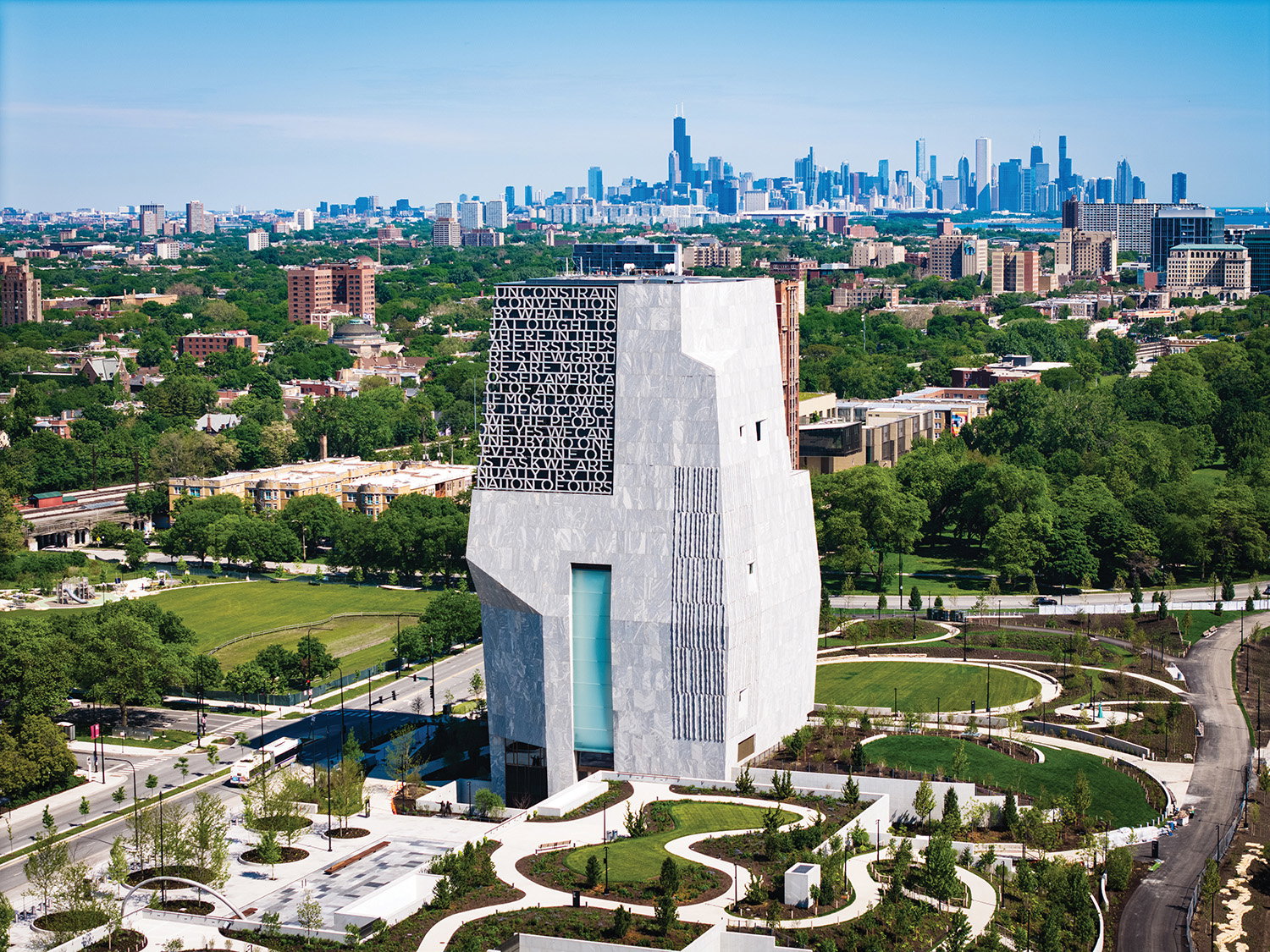
Photograph courtesy stock.adobe.com/606Vision
Presidential Moves
After several years of delays, the Obama Presidential Center finally opened in June. Located in Jackson Park—just south of Hyde Park, the neighborhood where the former president got his official political start representing Illinois’s 13th Legislative District—the museum, library, and education hub is chock full of information tracing his historic run to the White
House. The demand for tickets remains incredibly high, but if you don’t manage to snag one, you can always explore the outdoor spaces of the 19.3-acre campus that are open to the general public. The John Lewis Plaza (named for the Civil Rights icon and former Georgia Congressman) serves as the gateway to the museum while the Eleanor Roosevelt Fruit and Vegetable Garden represents both Roosevelt’s and Michelle Obama’s interests in gardening and health and wellness. In addition, most of the center’s more than 28 commissioned art installations are in public areas, so take a gander ’til your heart’s content.
Get on the Bus
Self-taught historian and TikToker Shermann “Dilla” Thomas runs Chicago Mahogany Tours, home of the Bronzeville Bus Tour. Known as the “birthplace of Black History Month”—Dr. Carter G. Woodson first launched his “Negro History Week” initiative in 1926 at the Bronzeville YMCA—the neighborhood served as an anchor for thousands of Black Americans moving north during the first and second waves of the Great Migration. Thomas’s tour includes Eighth Regiment Armory (the building that housed the nation’s first all-Black military regiment), the Supreme Liberty Life Insurance Building (headquarters of the first Black-owned life insurance company in the north), and Pilgrim Baptist Church, the birthplace of gospel music.
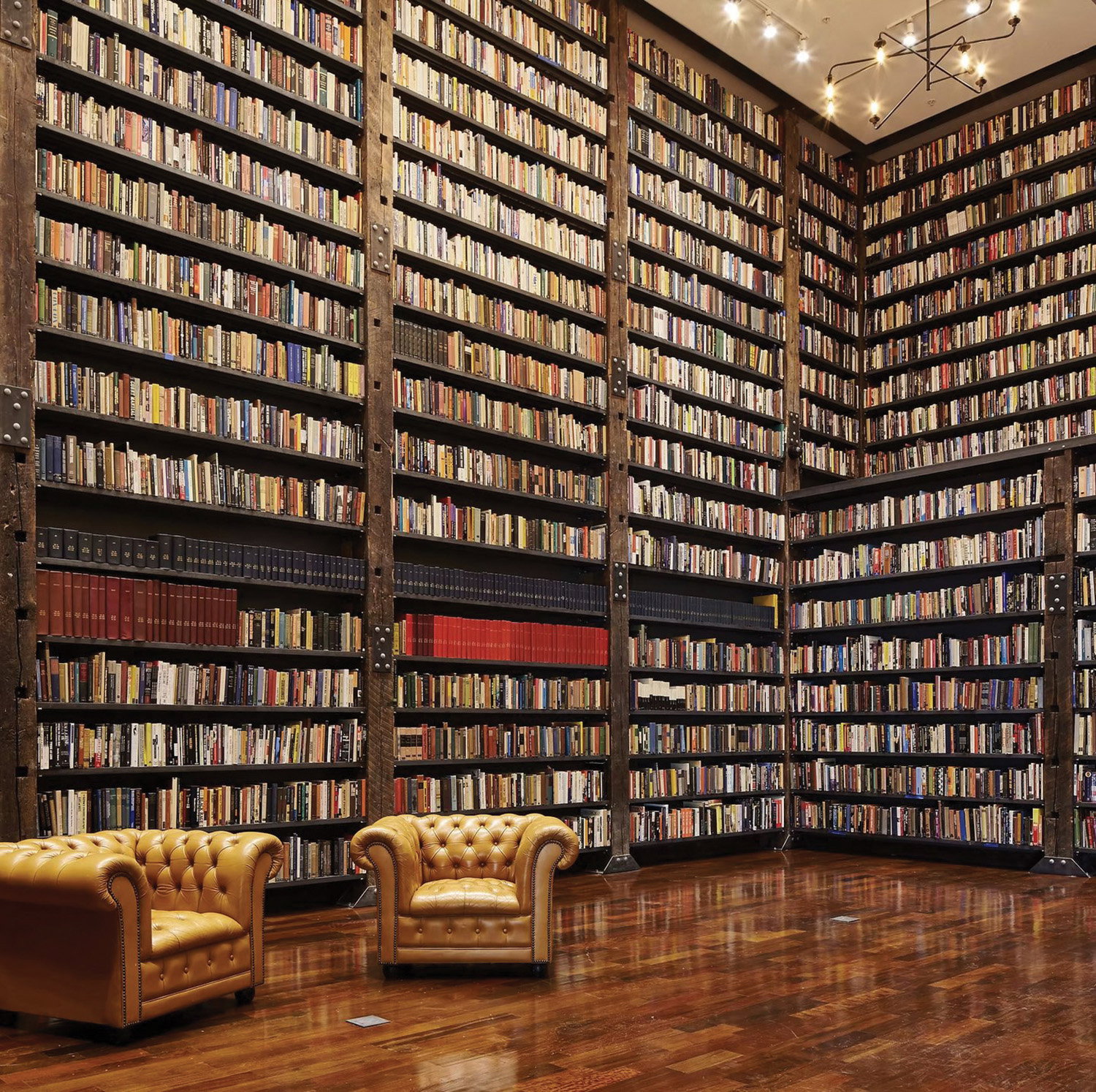
Photograph courtesy Stony Island Arts Bank
I’ll House You
The art gallery/media archive/community center Stony Island Arts Bank holds several culturally significant permanent exhibitions that explore Black Chicago history. Founded by Theaster Gates, a visual arts professor at the University of Chicago, it’s home to the personal collection of legendary house music DJ Frankie Knuckles. The Bronx native moved to Chicago in the late 1970s, where he was the resident DJ at the West Loop nightclub The Warehouse, pioneering the sound that would eventually have him known the world over as the “godfather of house.” While you can’t play any of the nearly 5,000 LPs and 12-inch records in the Stony Island collection (they’re only for archival purposes), the museum hosts listening sessions and other programming that will give you the chance to catch a groove.
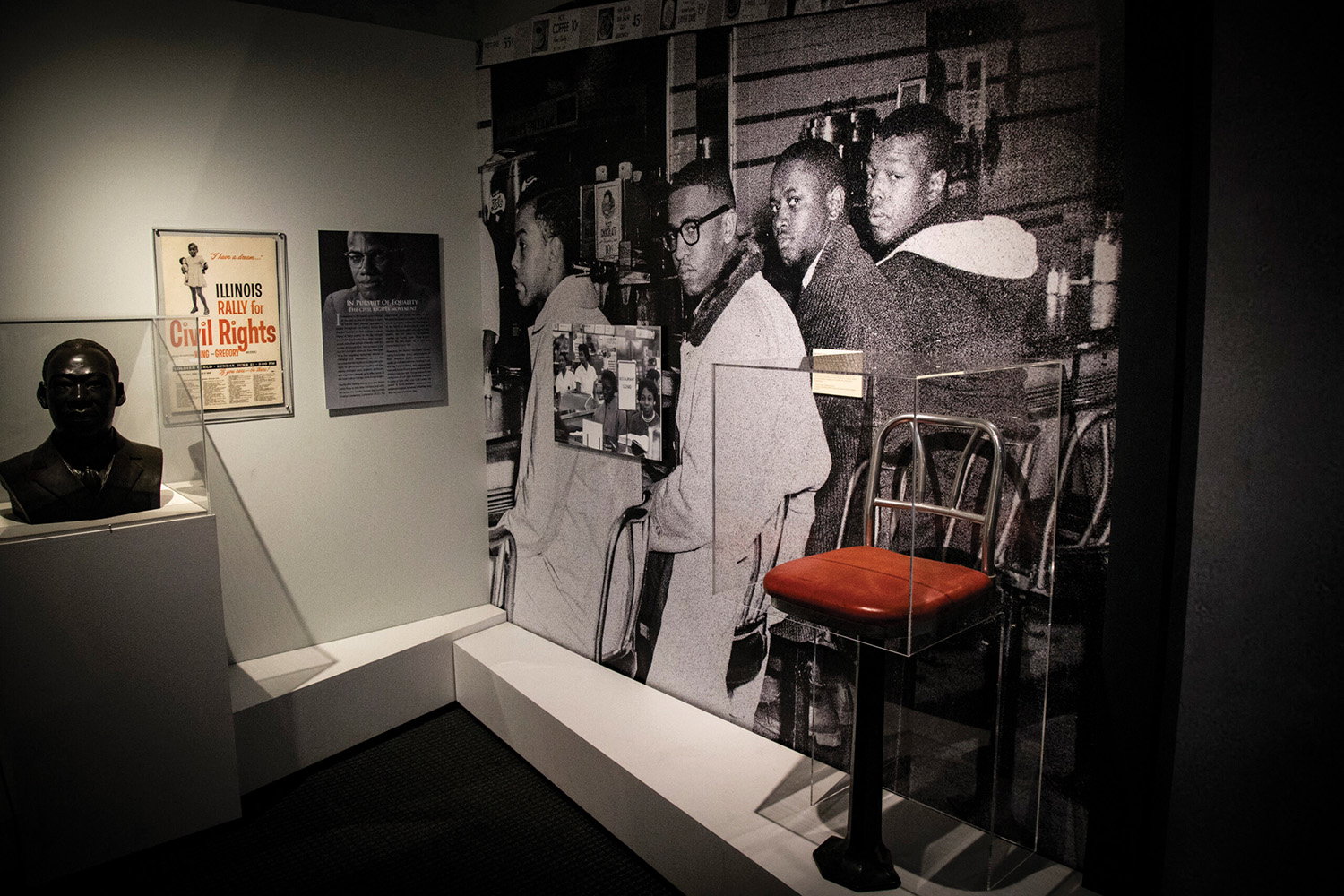
Photograph courtesy DuSable Museum
Where Art Thou?
Downtown Chicago is dotted with prestigious art museums, but there’s something with a little more flavor south of the Loop. Named after Jean-Baptiste Pointe DuSable (the Haiti-born man widely regarded as the first permanent settler of what would become Chicago), the DuSable Black History Museum and Education Center features more than 15,000 pieces of Black art, from paintings and sculptures to print works and historical memorabilia. Since 1961, the museum has amassed a permanent collection of works by prominent 19th- and 20th-century African American artists, such as painters Henry Ossawa Tanner, William A. Harper, and William Edouard Scott. Artifacts include investigative journalist/anti-lynching crusader Ida B. Wells’s desk, author/poet (and Dayton, Ohio, native) Paul Laurence Dunbar’s violin, and the historic papers of W.E.B. Du Bois.
Finger-Licking Good
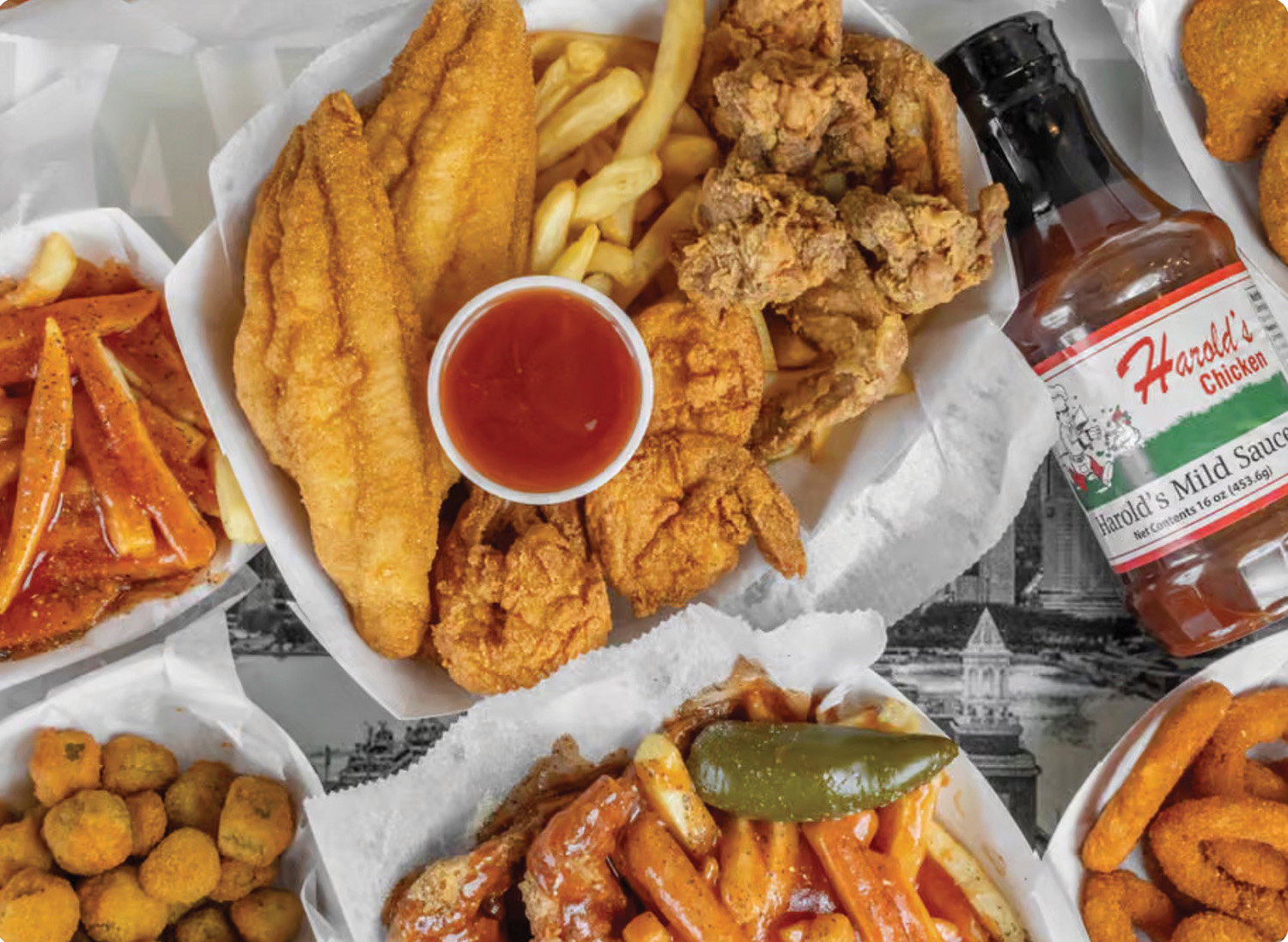
Any south sider worth their salt will tell you that a stop at Harold’s Chicken Shack is a must. After moving from Alabama in the early 1940s, African American entrepreneur Harold Pierce and his wife Hilda opened their first Harold’s at 47th Street and Greenwood Avenue in 1950 (This location is closed today but the chain currently has 45 locations in eight states.) No meal here is complete without some Chicago mild sauce, a condiment that’s equal parts sweet, tangy, and spicy.